TETRA TECH ESI, INC.
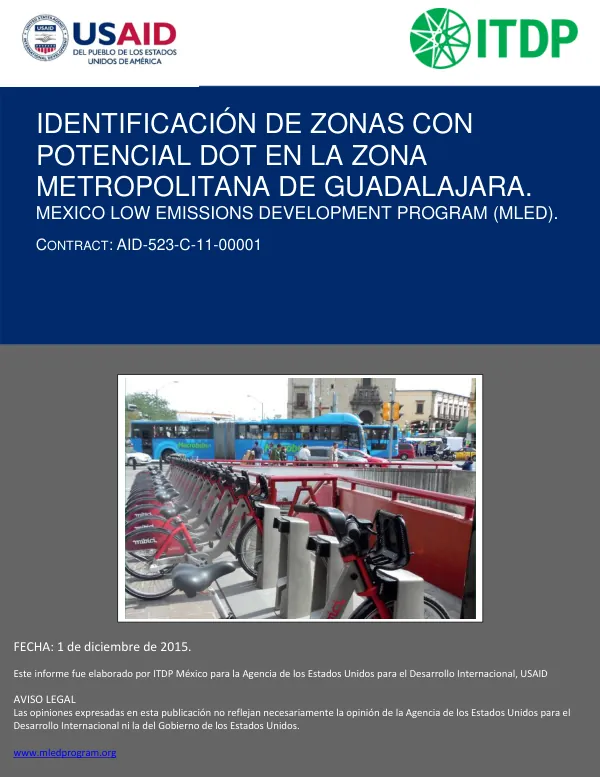
Identificación de zonas con potencial DOT en la Zona Metropolitana de Guadalajara
The Zona Metropolitana de Guadalajara (ZMG) is a rapidly growing urban area in Mexico, with a population of over 5 million people.
2015 · 67 pages
Sign in to readA free account is required to download.
Abstract
The region is characterized by a high level of urbanization, with a dense network of roads and a growing demand for transportation services. The Ministry of Agricultural, Territorial and Urban Development (SEDATU) has initiated a program to promote Transit-Oriented Development (TOD) in the ZMG, with the goal of reducing greenhouse gas emissions and promoting sustainable urban development. The ZMG has a complex transportation system, with a mix of public and private transportation modes. The region has a well-developed public transportation system, including buses and a light rail system, but it also has a high level of car ownership and use. The transportation system is characterized by a high level of congestion, with traffic jams and long travel times common during peak hours. The region also has a high level of air pollution, with high levels of particulate matter and other pollutants. The ZMG has a number of challenges related to transportation and urban development. The region is experiencing rapid growth, with a high level of migration from rural areas to the city. This has put pressure on the transportation system, with a growing demand for transportation services. The region also has a high level of poverty and inequality, with many residents living in informal settlements and lacking access to basic services such as sanitation and healthcare. To address these challenges, the SEDATU program has identified a number of areas for TOD in the ZMG. These areas are characterized by a high level of density, with a mix of residential, commercial, and industrial land uses. They also have a high level of accessibility, with a mix of public and private transportation modes available. The areas identified for TOD are located near public transportation hubs, such as bus stations and light rail stations, and have a high level of walkability and bikeability. The SEDATU program has developed a number of tools and resources to support TOD in the ZMG. These include an implementation guide for TOD projects and policies, a supporting document on tools for TOD, and an estimate of the impact of urban development policies on reducing greenhouse gas emissions. The program has also established a methodology for measurement and verification of TOD projects, in collaboration with CTS-Embarq. The ZMG has a number of opportunities for TOD, including the development of new transportation infrastructure, the redevelopment of existing neighborhoods, and the creation of new mixed-use developments. The region also has a number of challenges to overcome, including the need to improve the quality of public transportation, to increase the density of development, and to reduce the level of car ownership and use. The SEDATU program has identified a number of areas for TOD in the ZMG, including the following: * The area around the Guadalajara International Airport, which has a high level of accessibility and a mix of residential, commercial, and industrial land uses. * The area around the city center, which has a high level of density and a mix of public and private transportation modes. * The area around the light rail system, which has a high level of accessibility and a mix of residential, commercial, and industrial land uses. * The area around the bus stations, which has a high level of accessibility and a mix of public and private transportation modes. The SEDATU program has developed a number of recommendations for TOD in the ZMG, including the following: * Improve the quality of public transportation, including the development of new bus rapid transit systems and the improvement of existing bus services. * Increase the density of development, including the redevelopment of existing neighborhoods and the creation of new mixed-use developments. * Reduce the level of car ownership and use, including the promotion of non-motorized transportation modes such as walking and cycling. * Improve the accessibility of the region, including the development of new transportation infrastructure and the improvement of existing transportation modes. Overall, the SEDATU program has identified a number of opportunities for TOD in the ZMG, and has developed a number of tools and resources to support the implementation of TOD projects and policies. The program has also established a methodology for measurement and verification of TOD projects, in collaboration with CTS-Embarq.
Related documents
Documents in this collection
 2015
2015USAID DEC
Modelación para la identificación de línea base y medias de mitigación de Emisiones de Compuestos de Efecto Invernadero para el Desarrollo Orientado al Transporte (DOT) en Guadalajara
Open record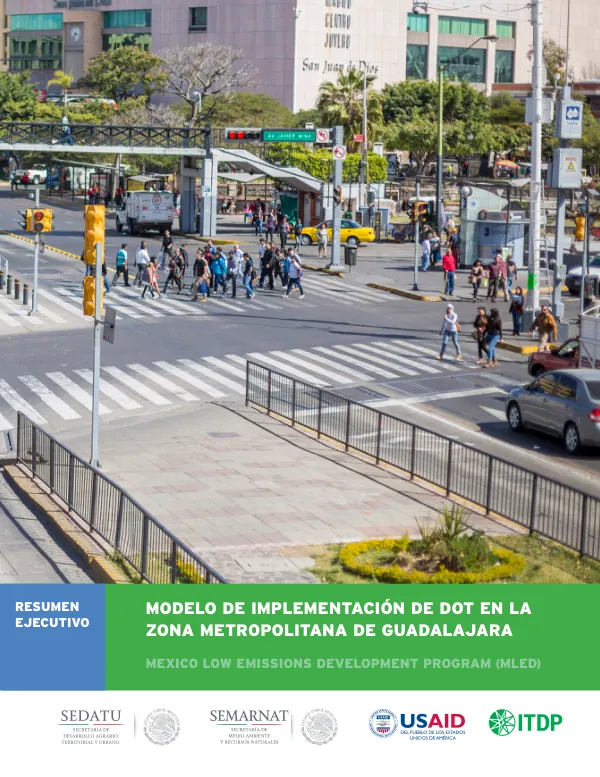 2016
2016USAID DEC
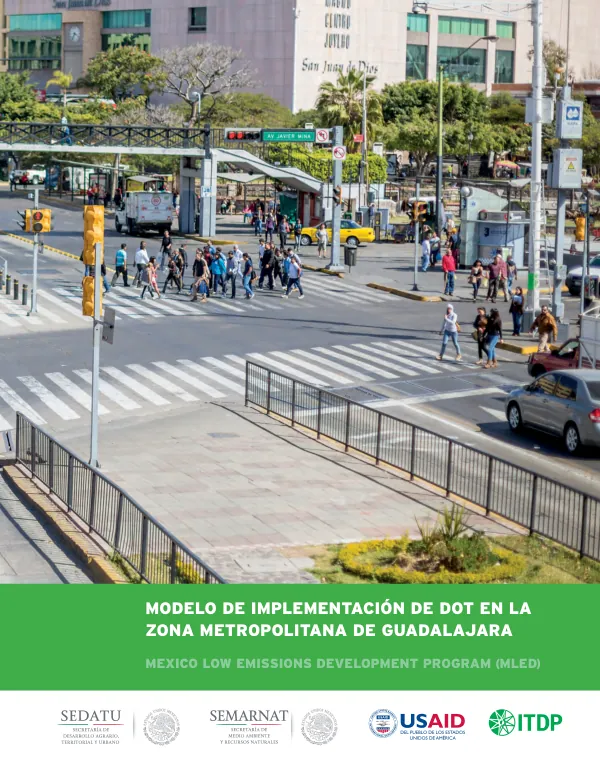
MODELO DE IMPLEMENTACIÓN DE DOT EN LA ZONA METROPOLITANA DE GUADALAJARA
Open record