USAID DEC
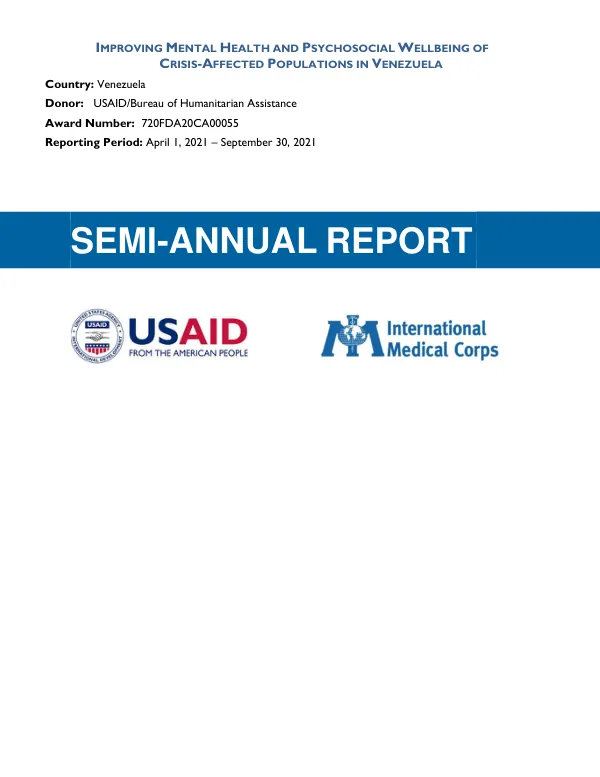
Improving Mental Health and Psychosocial Wellbeing of Crisis-Affected Populations in Venezuela
Sign inICRC
Improving Mental Health and Psychosocial Wellbeing of Crisis-Affected Populations in Venezuela
Mental health and psychosocial support services were provided to vulnerable populations in Venezuela through a program funded by USAID's Bureau of Humanitarian Assistance.
2021 · 25 pages
Sign in to readA free account is required to download.
Abstract
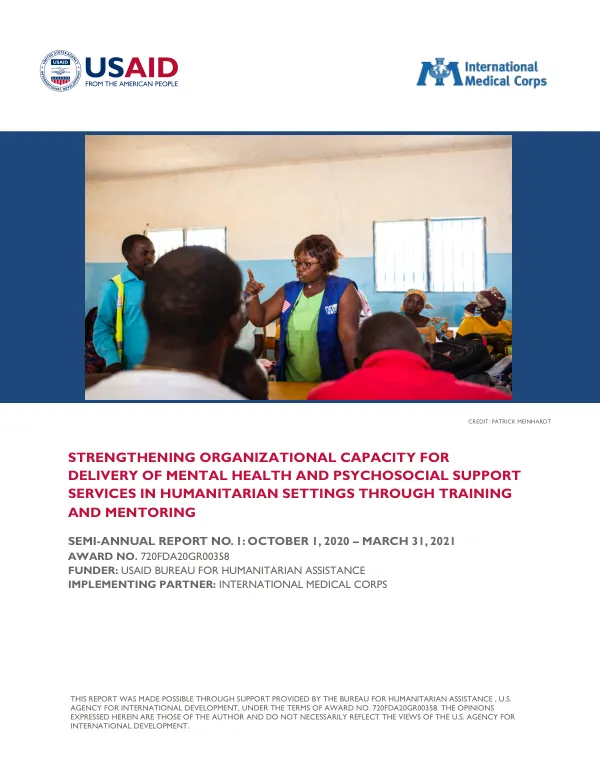
The program aimed to improve access to critical mental health services, contribute to the improvement of PAHO's existing information sharing initiatives, and develop a Psychosocial Support and Strengthening Program for the supported communities. During the reporting period, International Medical Corps (IMC) provided comprehensive mental health case management services to 420 people in emotional distress and with mental health conditions in five fixed centers and through two mobile units and a hotline. A total of 2,995 mental health case management services were provided, exceeding the target of 2,500. Additionally, 173 beneficiaries were linked and referred to additional support, and agreements were forged with MSF, HIAS, ICRC, and Save the Children. IMC also contributed to the improvement of PAHO's existing information sharing initiatives by supporting the Health Cluster in collecting information through surveys and analyzing and synthesizing the data provided by participating organizations. The number of humanitarian organizations utilizing information management services increased by 100%, with 32 organizations currently making use of these services, exceeding the target of 16. The Psychosocial Support and Strengthening Program aimed to improve positive behaviors, well-being, and quality of life in the supported communities. IMC conducted Life Skills, Youth Empowerment, and Early Children Development Programs, providing psychosocial support services to 1,314 individuals, exceeding the target of 1,050. Other PSS activities included sessions on Positive Parenting, Assertiveness and Conflict Resolution, Stress Management, and Psychoeducation. Regarding safeguarding and protection against sexual exploitation and abuse (PSEA), IMC's Venezuela country team actively participated in Protection cluster meetings and Gender-Based Violence sub-cluster meetings. IMC trained 243 individuals on Safeguarding Policies, including Child Protection and PSEA policies, as well as reporting channels. The country's security levels remain unstable, with protests and heavy rains posing significant security concerns. IMC's security team recorded several cases of homicide, murder, kidnapping, and shooting between and among gangs. Despite these challenges, IMC continued to provide mental health services and psychosocial support to mitigate the impact of these situations in the targeted communities. The population movement in Venezuela continues, with Venezuelans leaving the country to escape violence, insecurity, and lack of food, medicine, and essential services. Internally, a large number of displaced populations are moving from rural to urban areas seeking better living conditions, often abandoning family members and facing protection needs and child abuse. The program's objectives were met or exceeded, with all program objectives achieved during the reporting period. IMC will now transition to the implementation of its exit strategy, which will commence in October.
Related documents