DEPARTMENT OF AGRICULTURE
Integrating Variable Renewable Energy Into the Grid: Key Issues
The integration of variable renewable energy (VRE) into the grid is a critical issue for power system planners, regulators, and grid operators.
2015 · 2 pages
Sign in to readA free account is required to download.
Abstract
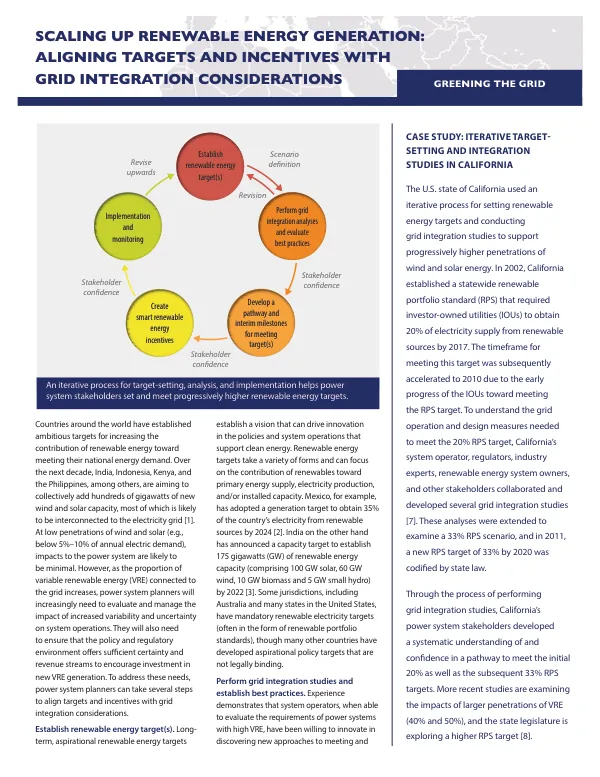
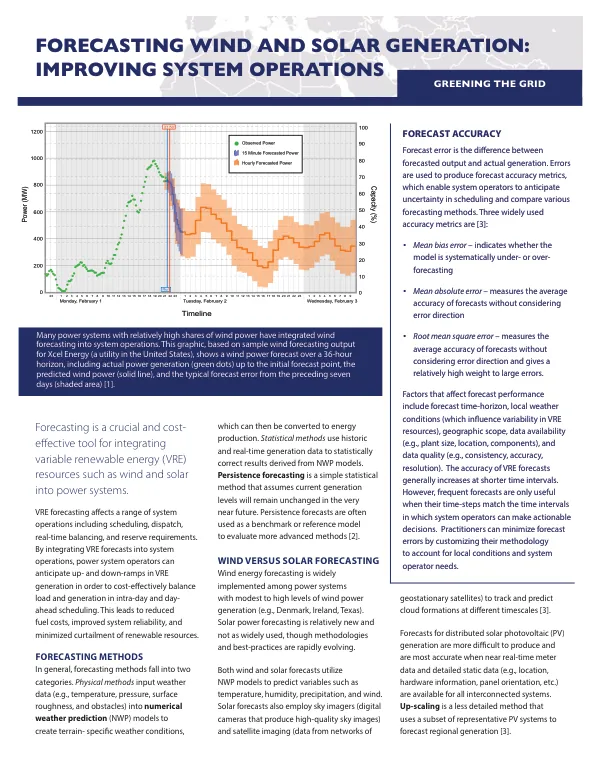
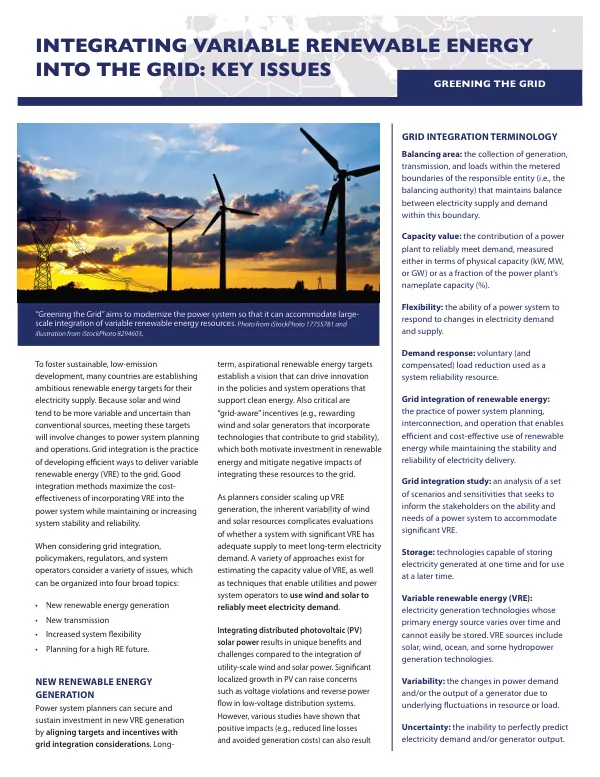
To foster sustainable, low-emission development, many countries are establishing ambitious renewable energy targets for their electricity supply. Meeting these targets will involve changes to power system planning and operations, particularly with the integration of solar and wind power, which tend to be more variable and uncertain than conventional sources. Grid integration is the practice of developing efficient ways to deliver VRE to the grid, maximizing the cost-effectiveness of incorporating VRE into the power system while maintaining or increasing system stability and reliability. When considering grid integration, policymakers, regulators, and system operators consider a variety of issues, which can be organized into four broad topics: new renewable energy generation, new transmission, increased system flexibility, and planning for a high RE future. Power system planners can secure and sustain investment in new VRE generation by aligning targets and incentives with grid integration considerations. Long-term, aspirational renewable energy targets establish a vision that can drive innovation in the policies and system operations that support clean energy. Grid-aware incentives, such as rewarding wind and solar generators that incorporate technologies that contribute to grid stability, motivate investment in renewable energy and mitigate negative impacts of integrating these resources to the grid. Integrating distributed photovoltaic (PV) solar power results in unique benefits and challenges compared to the integration of utility-scale wind and solar power. Significant localized growth in PV can raise concerns such as voltage violations and reverse power flow in low-voltage distribution systems. However, various studies have shown that positive impacts, such as reduced line losses and avoided generation costs, can also result from distributed PV. Scaling up VRE generation requires grid expansion and upgrades so that power systems can access high-quality solar and wind resources, which are often remote from existing transmission networks. A well-crafted combination of policies, rules, and procedures encourages investment in large-scale transmission expansion, improving the utilization of VRE and potentially deferring the need for network refurbishment. Accessing sources of operational flexibility becomes increasingly important in systems with significant grid-connected solar and wind energy. System operating procedures and market practices, such as the implementation of real-time forecasting, faster scheduling, and ancillary services, are often among the least-cost options for unlocking significant flexibility without significant investments in new physical infrastructure. Grid integration studies help establish the flexibility requirements and build confidence among investors and operators that the power system can be operated reliably at increased VRE levels. A grid integration study simulates the operation of the power system under various scenarios, identifies potential constraints to reliability, and evaluates the cost of actions to alleviate those constraints. Robust grid integration studies are based on significant stakeholder input, along with a broad set of foundational data. Determining the system-wide costs of integrating solar and wind power is much more challenging than production cost simulations to model unit commitment and economic dispatch. The full costs and value of VRE assets to the power system depend on dynamic and complex interactions among these generators and a system's loads, reserves, thermal generators, and transmission networks. Grid integration studies illuminate the obstacles and opportunities that wind and solar integration could pose to a power system, helping to dispel grid integration myths and misperceptions that inhibit large-scale deployment. These studies also lay the foundation for prioritizing and sequencing grid integration investments.