ACTION AGAINST HUNGER
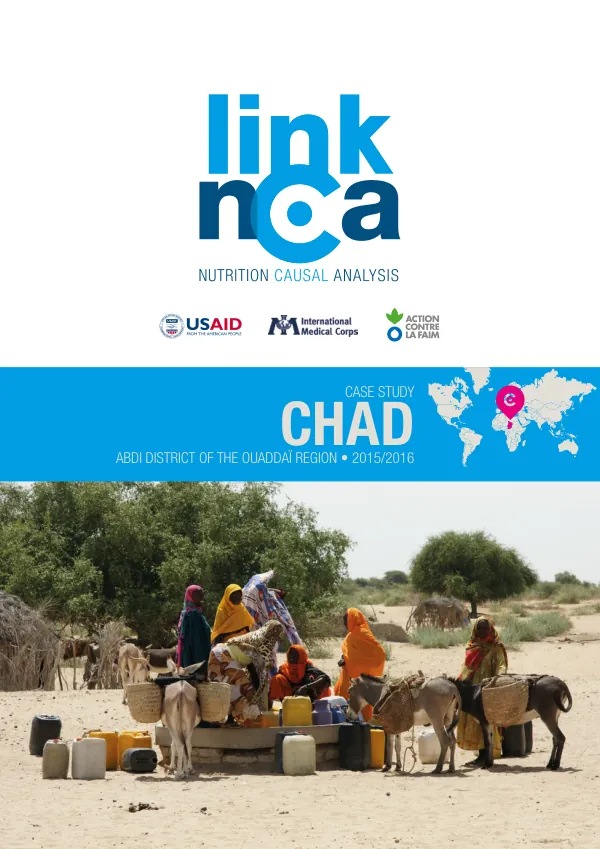
Link NCA Study: Chad - Abdi District of the Ouaddaï Region
The Link NCA method for conducting a nutrition causal analysis was developed by Action Against Hunger and a small group of researchers and technical experts, based on the UNICEF conceptual framework on the causes of undernutrition.
2016 · 12 pages
Sign in to readA free account is required to download.
Abstract
The methodology is a standardized means of analyzing the multi-causality of malnutrition, using a multisectoral, mixed-method approach that draws conclusions from a synthesis of results on nutrition causality. The Link NCA relies on qualitative methods, which are incorporated throughout the process, and quantitative methods from secondary data, SMART analyses, and risk factor surveys. The Link NCA is a structured, participatory, holistic, and multisectoral study that seeks to link stakeholders across different sectors, link risk factors and under-nutrition to identify pathways, link different sources of information to build a case for nutrition causality, and link the causal analysis to a programmatic response. To fulfill the criteria of being structured, local, and operationally feasible, each Link NCA aims to answer six study questions, including the prevalence and severity of wasting and/or stunting in the study population, the prevalence of known risk factors for under-nutrition among the population and key "nutrition vulnerable groups," and the causal pathways of undernutrition by which certain children in the population have become stunted and/or wasted. In the Abdi district of the Ouaddai region in Chad, a Link NCA study was conducted in 2015/2016 to determine the underlying causes and risk factors for undernutrition. The study used a mixed-method approach, combining quantitative and qualitative methods to evaluate the prevalence of undernutrition and its risk factors, and to address questions regarding how or why undernutrition/good nutrition occurs. The information from these multiple sources was then reviewed and triangulated through a participatory process to generate a general consensus on undernutrition causality in the Abdi district. The study found that the main factors causing food insecurity in Abdi were linked to low diversification of income sources, with 40.5% of the population suffering from severe food insecurity. The decrease in grain production in the area was also important, considering that 97.2% of the population practices agriculture. Soil depletion and birds frequently attacking crops were also major factors affecting production. The study revealed that locals are heavily dependent on local markets for food, especially during the lean season, and that there is a weak resilience of communities to external shocks on livelihoods such as irregular rains and flooding. The study also found that water is a major concern in Abdi, with only 28% of households having access to potable water. The Link NCA found that only 3% of households used a water source without risk for contamination, and that fecal matter contamination from humans and animals is a major concern. Only 12.9% of households have access to latrines, and proper hygiene practices are also an issue, with just 14% of women with children demonstrating having knowledge of proper hygiene practices. The results of the study showed that the main factors causing malnutrition in Abdi are linked to food insecurity, lack of access to clean drinking water, and poor hygiene practices. The study highlights the need for a comprehensive approach to address the underlying causes of malnutrition in Abdi, including improving food security, increasing access to clean drinking water, and promoting proper hygiene practices.
Related documents