USAID DEC
MaMoni Project Brief: Implementing National Guidelines on Use of Antenatal Corticosteroids to Prevent Complications of Prematurity
Sign inGOVERNMENT OF BANGLADESH
MaMoni Project Brief: Implementing National Guidelines on Use of Antenatal Corticosteroids to Prevent Complications of Prematurity
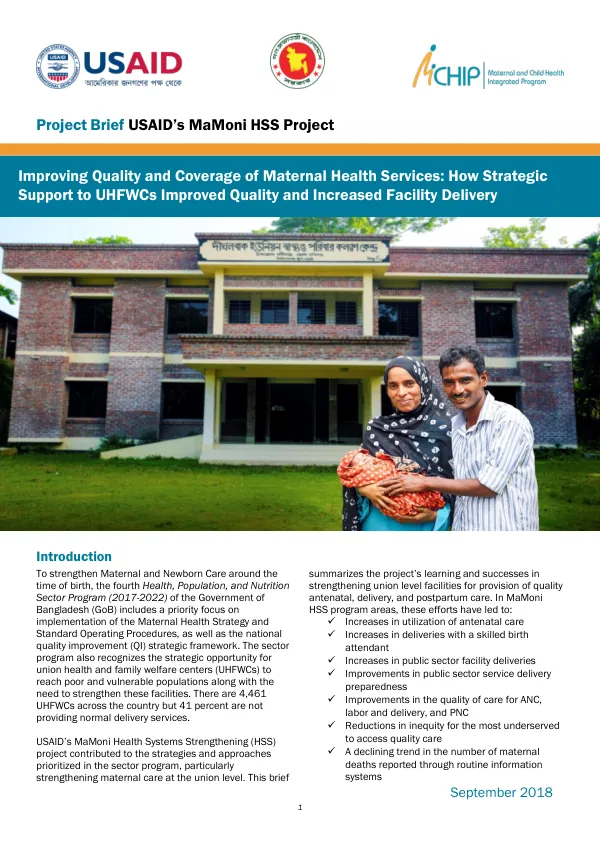
The Maternal Health Strategy and Standard Operating Procedures of the Government of Bangladesh (GoB) prioritize the implementation of maternal health services, particularly at the union level.
2018 · 13 pages
Sign in to readA free account is required to download.
Abstract
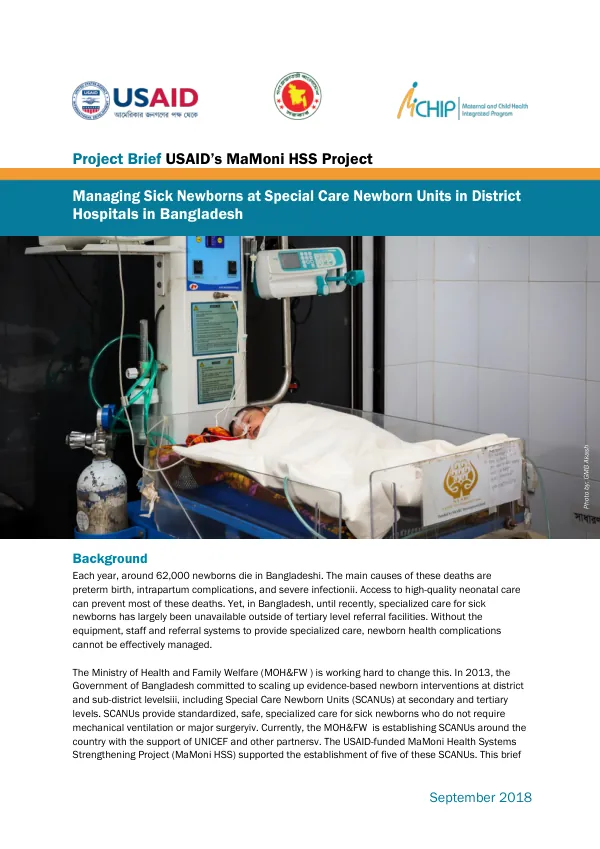
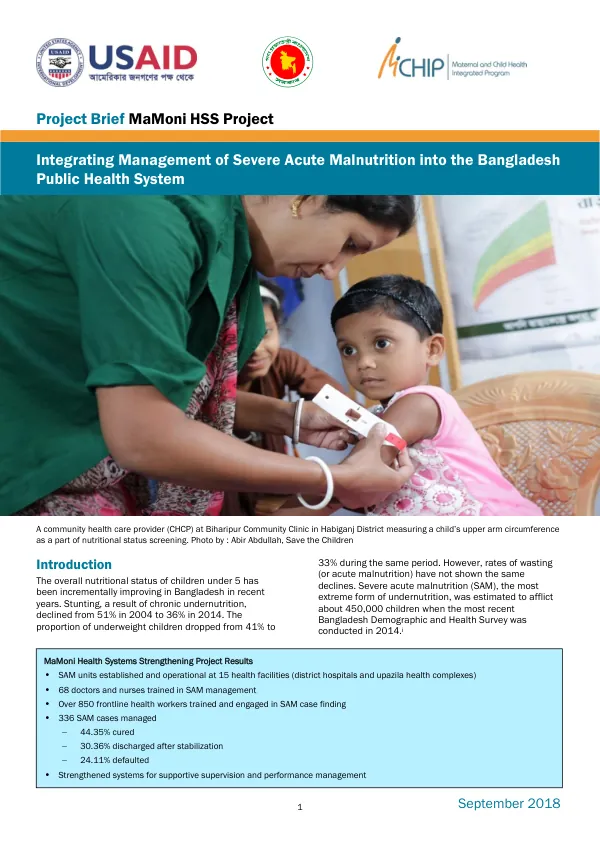
The fourth Health, Population, and Nutrition Sector Program (2017-2022) recognizes the strategic opportunity for union health and family welfare centers (UHFWCs) to reach poor and vulnerable populations. There are 4,461 UHFWCs across the country, but 41 percent are not providing normal delivery services. The USAID's MaMoni Health Systems Strengthening (HSS) project contributed to the strategies and approaches prioritized in the sector program, particularly strengthening maternal care at the union level. The project's efforts have led to increases in utilization of antenatal care, deliveries with a skilled birth attendant, public sector facility deliveries, and improvements in public sector service delivery preparedness. Additionally, the project has led to improvements in the quality of care for antenatal, labor, and delivery, and postnatal care, reductions in inequity for the most underserved to access quality care, and a declining trend in the number of maternal deaths reported through routine information systems. The GoB and MaMoni HSS partnership focused on health systems strengthening efforts at both national and district levels to improve maternal and newborn health outcomes. At the district level, high-intensity support was provided by the project to district managers in four districts - Habiganj, Jhalokati, Noakhali, and Lakhsmipur - which were prioritized because of their populations of rural and underserved communities as well as disproportionately poor health indicators when compared to national averages. The goal was to reduce maternal and neonatal mortality by improving the accessibility and quality of antenatal and delivery services for the rural poor. The project placed a major emphasis on strengthening a large number of strategically located UHFWCs to provide a package of maternal and newborn care services on a 24/7 basis. The challenges to quality service delivery were many, including poor physical infrastructure, limited availability and vacancies of health providers, and incomplete data. To address these challenges, the project provided targeted trainings for leadership and management, improved facility readiness, strengthened human resources, capacity building for integrated service packages, quality improvement initiatives, strengthened local government engagement, information systems, referrals to higher level facilities, and community engagement. The project's inputs for UHFWC strengthening included strengthened health management and leadership, improved facility readiness, human resources, capacity building for integrated service packages, quality improvement initiatives, strengthened local government engagement, information systems, referrals to higher level facilities, and community engagement. The upgrades included infrastructure repairs, updated equipment and supplies, and improved infection prevention and waste management systems. The project also supported facilities and commodity stores for logistics and supply management to improve availability of essential maternal and newborn health commodities.