TETRA-TECH, INC.
MAPPING ARTISANAL MINING SITES IN THE WESTERN CENTRAL AFRICAN REPUBLIC
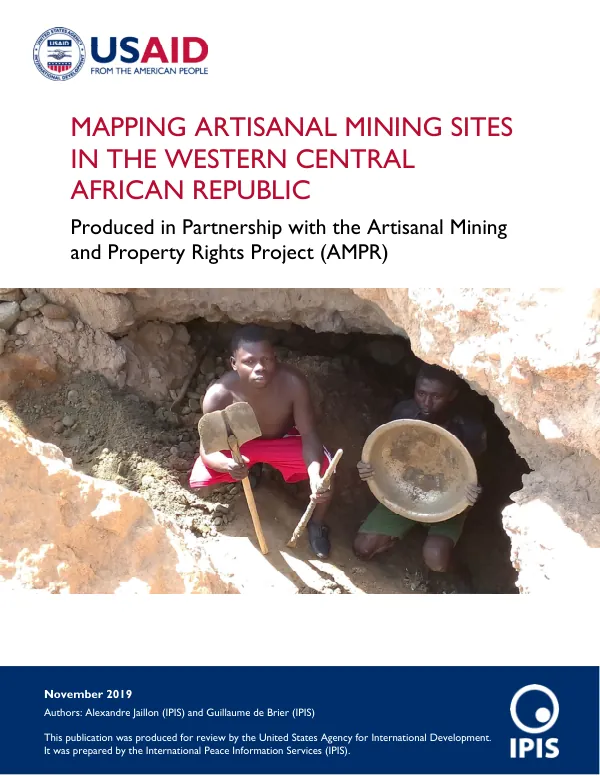
MAPPING ARTISANAL MINING SITES IN THE WESTERN CENTRAL AFRICAN REPUBLIC The artisanal mining sector in the Central African Republic is a significant economic activity, with thousands of workers engaged in gold and diamond mining.
2019 · 103 pages
Sign in to readA free account is required to download.
Abstract
The sector is characterized by a lack of formalization, with many miners operating without licenses or permits. The artisanal mining sector in the Central African Republic is also marked by conflict, with reports of violence and insecurity on mining sites. The Central African Republic has a long history of artisanal mining, dating back to the colonial era. The sector has grown significantly in recent years, driven by high gold and diamond prices. However, the sector is also plagued by problems such as mercury use, environmental degradation, and child labor. The artisanal mining sector in the Central African Republic is also characterized by a lack of formalization, with many miners operating without licenses or permits. The artisanal mining sector in the Central African Republic is a significant source of income for many households. However, the sector is also marked by high levels of insecurity, with reports of violence and conflict on mining sites. The sector is also characterized by a lack of formalization, with many miners operating without licenses or permits. The artisanal mining sector in the Central African Republic is a complex and multifaceted issue, with both positive and negative impacts on local communities. The study aimed to map artisanal mining sites in the Western Central African Republic, with a focus on the gold and diamond sectors. The study used a mixed-methods approach, combining quantitative and qualitative data collection and analysis methods. The study found that the artisanal mining sector in the Central African Republic is a significant economic activity, with thousands of workers engaged in gold and diamond mining. The sector is characterized by a lack of formalization, with many miners operating without licenses or permits. The study also found that the sector is plagued by problems such as mercury use, environmental degradation, and child labor. The study identified three main areas of focus: the Yaloké area, the Baboua area, and the Bozoum area. The Yaloké area was characterized by a high level of social dynamics and security, with many miners operating in a relatively stable environment. The Baboua area was marked by a high level of insecurity, with reports of violence and conflict on mining sites. The Bozoum area was characterized by a mix of social dynamics and security, with some miners operating in a relatively stable environment and others facing high levels of insecurity.