CATHOLIC RELIEF SERVICES ORGANIZATION
Matchmaking Events Connect Farmers with the School Feeding Market in Mali
SNV, a global development organization, has a long-term presence in 38 of the poorest countries in Asia, Africa, and Latin America.
2015 · 8 pages
Sign in to readA free account is required to download.

Abstract
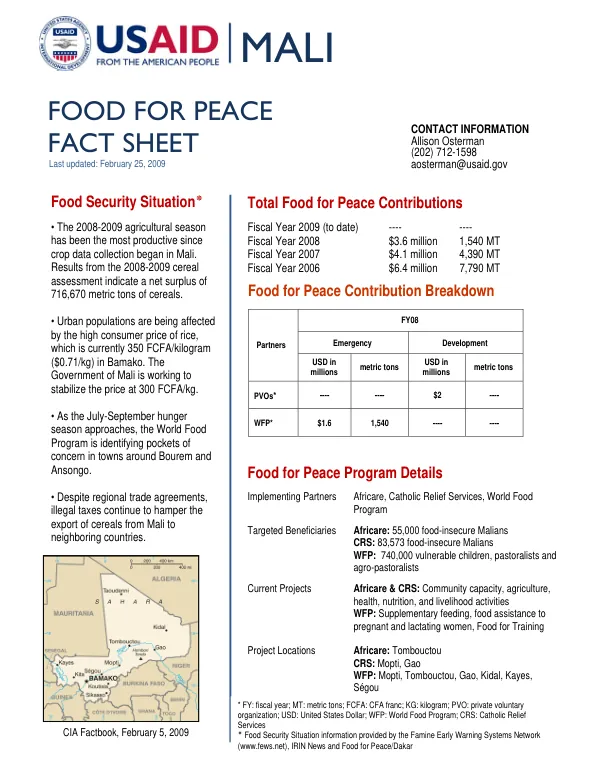
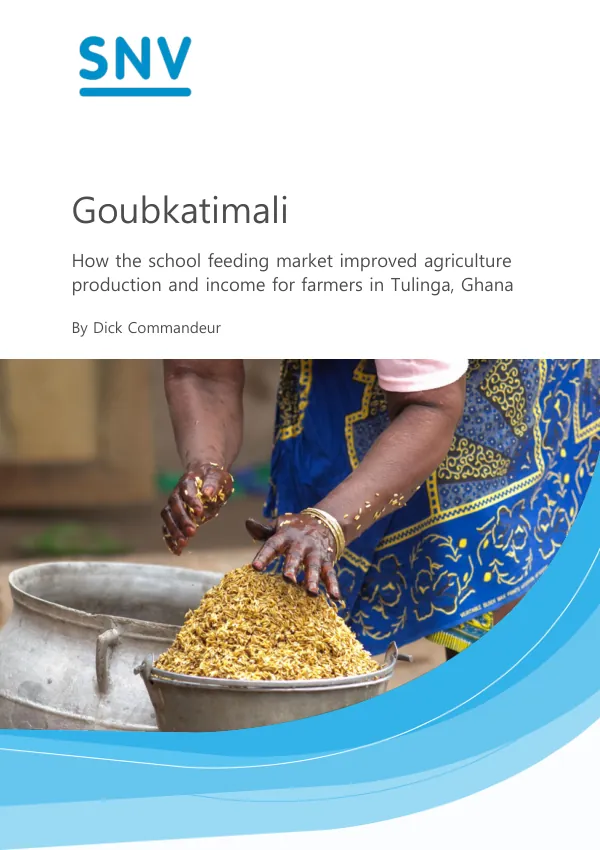
The organization works with local partners to equip communities, businesses, and organizations with the tools, knowledge, and connections they need to increase their incomes and gain access to basic services. SNV's global team of local and international advisors empowers communities to break the cycle of poverty and guide their own development. The Procurement Governance for Home Grown School Feeding (PG-HGSF) project is a five-year program funded by the Bill and Melinda Gates Foundation and implemented by SNV USA in Ghana, Kenya, and Mali. In Mali, PG-HGSF is implemented in 51 municipalities with the goal of involving 6,000 smallholder farmers in local school feeding programs, including at least 30% women. The project aims to pilot interventions that break down barriers preventing smallholder farmers from selling to the school feeding market. SNV Mali's matchmaking events have four goals: to develop business relationships between producers/traders and communes/CGSs in accordance with the national policy on school feeding, to ascertain school feeding demand based on needs per school term, to inventory potential supplies, and to discuss previous experiences and consider partnering scenarios among farmers, traders, communes, and/or CGSs. The events typically take place in a government building meeting room and last one to two days, with participants ranging from national to local stakeholders, including CGS members, commune mayors, decentralised government ministry officers, grain traders, farmer cooperative representatives, and CNCS officers. The Mali government allocates 100 francs (CFA, equivalent to about $0.20 USD) per pupil per school day meal. The meals should include cereals (carbohydrates), legumes (protein), and oil (fat). Oil and condiments to cook the foodstuff are typically provided by parents, either through cash or product contributions. The community is also responsible for paying the cook and supplying cooking wood. The commune mayors, in practice, often procure food on behalf of all school management committees—the Comité de Gestion Scolaire (CGS)—in his/her commune once per quarter. Mayors typically procure all foodstuffs from a single supplier with the capacity to provide all items needed, a combination of cereals, pulses, and oil, in one order.
Related documents