USAID DEC
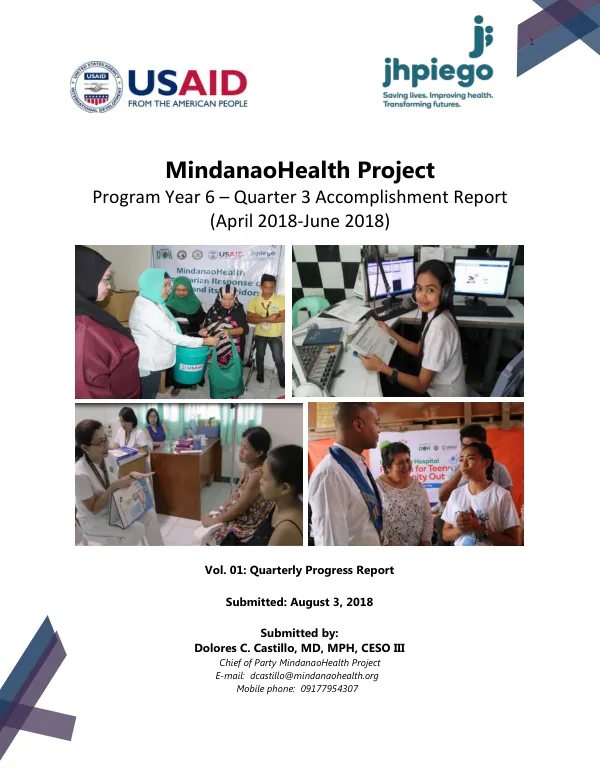
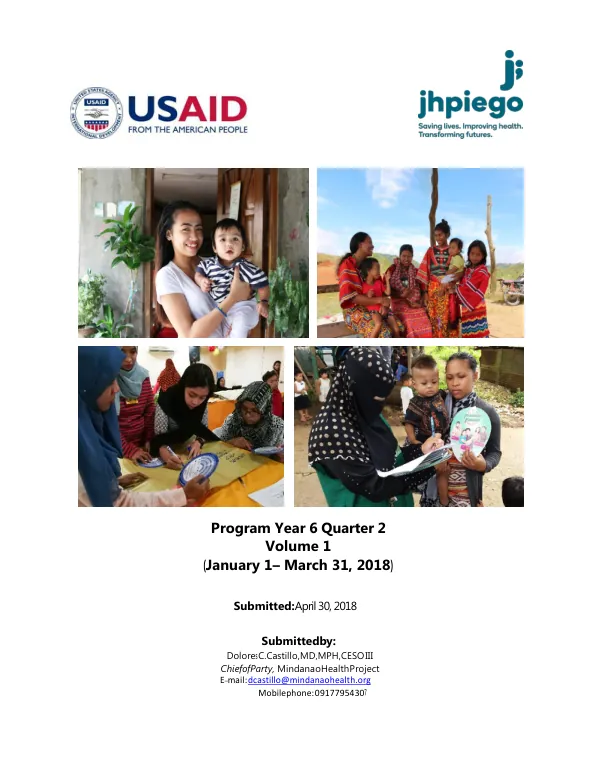
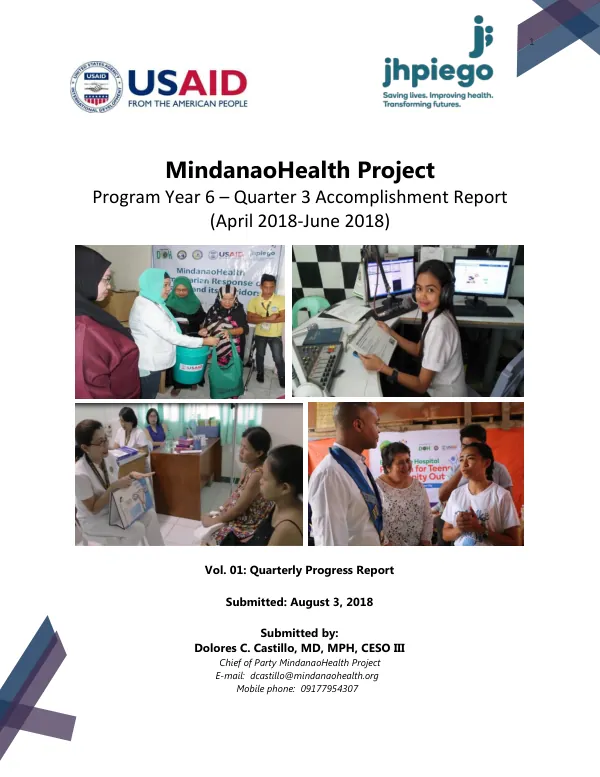
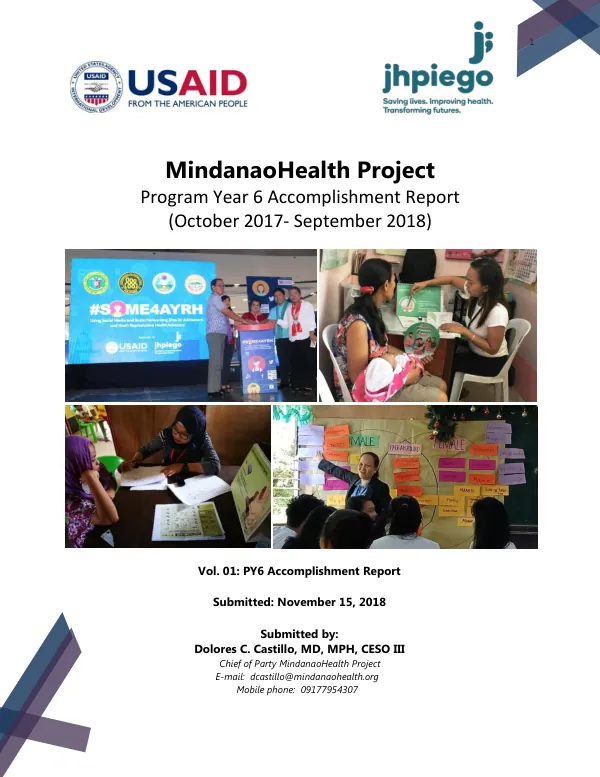
MindanaoHealth Project Program Year 6 Accomplishment Report (October 2017- September 2018)
Sign inJHPIEGO
MindanaoHealth Project Program Year 6 Accomplishment Report (October 2017- September 2018)
The MindanaoHealth Project is a USAID-funded initiative aimed at improving maternal, neonatal, and child health, as well as family planning services in the Mindanao region of the Philippines.
2018 · 181 pages
Sign in to readA free account is required to download.
Abstract
The program is implemented by Jhpiego, a non-profit organization, in collaboration with the Department of Health (DOH) and other local government units. The program's primary focus is on increasing access to family planning services, particularly in conflict-affected areas such as Lanao del Sur. Health providers in these areas continue to provide essential health services, including family planning, to women with unmet needs who face challenges in accessing services from health facilities. One of the key achievements of the program is the launch of the Social Media for Adolescent-Youth Reproductive Health (SoMe4AYRH) campaign, which aims to increase points of contact with young people through social media platforms. The campaign provides accurate, appropriate, and needed health information and services to adolescents and youth. The program also focuses on improving the quality of family planning services, including the provision of counseling and services to couples, men, women, youth, and adolescents of both sexes. Community health workers (CHWs) play a crucial role in providing family planning information, referrals, and services to the community. The program has made significant progress in improving health outcomes, including a 27% increase in household income among program participants compared to the control group. The program has also made efforts to address cross-cutting issues such as gender, sustainability, and environmental compliance. The program has updated its gender strategy to ensure that all interventions are gender-sensitive and responsive to the needs of women and girls. In terms of collaboration, learning, and adapting, the program has established partnerships with local government units, civil society organizations, and other stakeholders to ensure that the program is responsive to the needs of the community. The program has also established a system for monitoring and evaluation to track progress and identify areas for improvement. The program's management, administrative, and financial issues are overseen by the Chief of Party, Dr. Dolores C. Castillo, who is responsible for ensuring that the program is implemented in accordance with USAID's requirements and the program's objectives. The program's financial management is overseen by the Finance Manager, who is responsible for ensuring that the program's finances are managed in accordance with USAID's financial regulations. The program's high-level planned activities for October-December 2018 include the turnover of supply support to Marawi and its corridors in December 2018 and regional dissemination/turn-over activities in October-November 2018.