COASTAL RESOURCES CENTER
MSME Small Development and Management Training
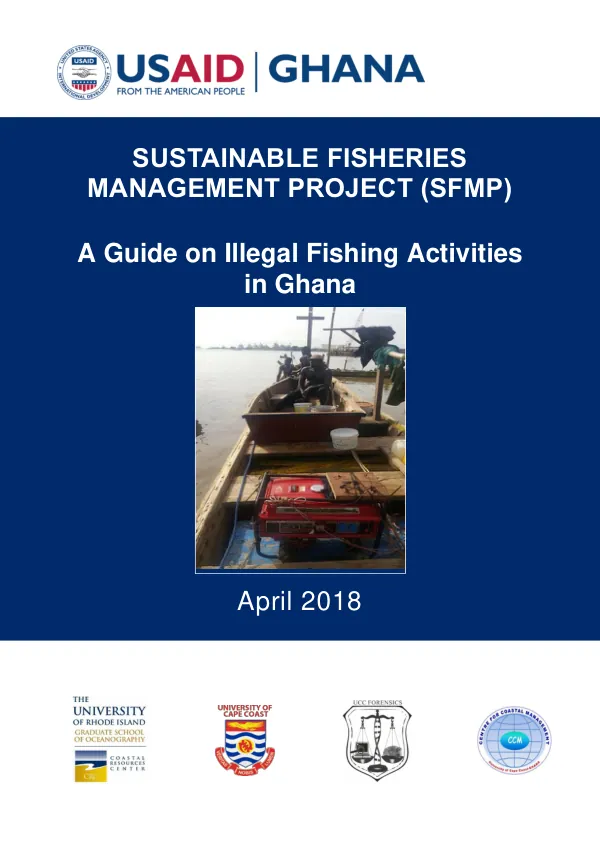
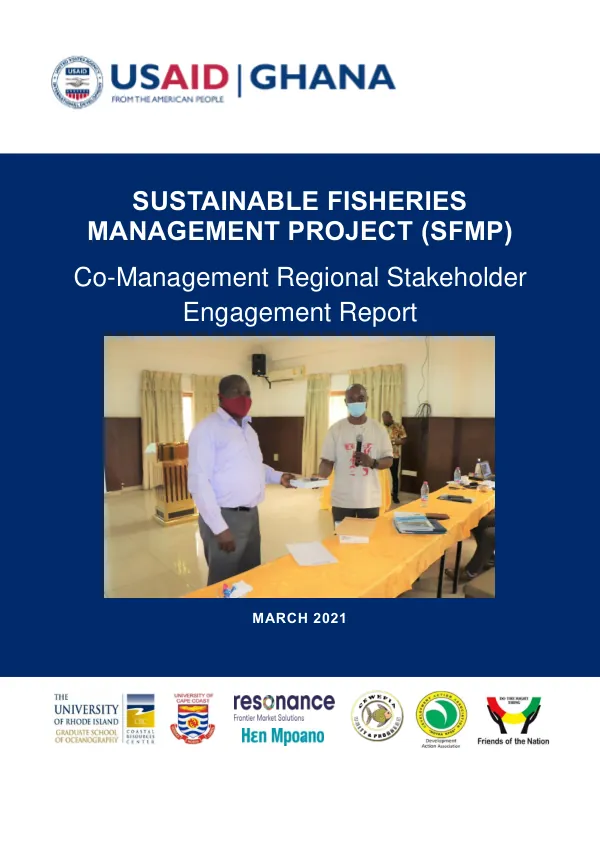
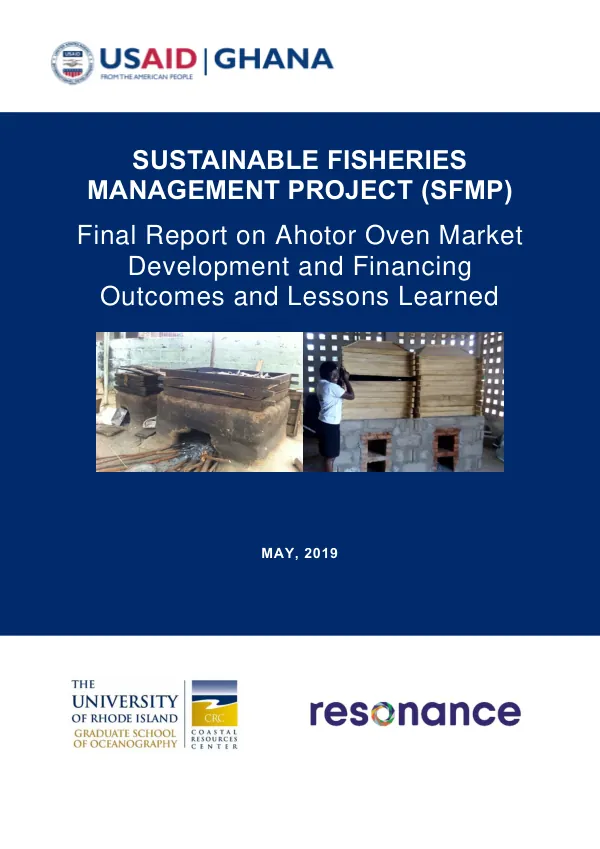
The Sustainable Fisheries Management Project (SFMP) in Ghana was initiated in 2014 with funding from the United States Agency for International Development (USAID).
2015 · 135 pages
Sign in to readA free account is required to download.
Abstract
The project aimed to improve the sustainability of Ghana's fisheries sector through the development of small business enterprises. The project was implemented by the Coastal Resources Center at the Graduate School of Oceanography, University of Rhode Island, in collaboration with local partners. The project focused on providing training and capacity-building programs for small-scale fishermen and fishmongers in the Central and Western Regions of Ghana. The training programs were designed to enhance the skills and knowledge of participants in areas such as business management, marketing, and financial management. The project also aimed to promote the adoption of sustainable fishing practices and improve the livelihoods of small-scale fishermen and their families. The project's training cycle was based on an experiential learning approach, which involved hands-on training and practical exercises. The training cycle consisted of three phases: preparation, implementation, and evaluation. The preparation phase involved the selection of training venues, preparation of logistics, and development of training materials. The implementation phase involved the delivery of training sessions, which included lectures, group discussions, and practical exercises. The evaluation phase involved the assessment of the effectiveness of the training program and the identification of areas for improvement. The project also emphasized the importance of visualization in learning situations. Visualization techniques and media, such as diagrams, charts, and videos, were used to enhance the understanding and retention of training materials. The project's trainers were encouraged to use visualization techniques to engage participants and make the training sessions more interactive and engaging. The project's training materials were designed to be flexible and adaptable to the needs of different training sessions. The materials included a range of activities, such as group discussions, case studies, and role-playing exercises, which were designed to promote active learning and participation. The project's trainers were also encouraged to use a range of teaching techniques, such as storytelling and games, to make the training sessions more engaging and interactive. The project's training programs were delivered in a range of settings, including community centers, schools, and fishing villages. The training sessions were typically conducted in a group setting, with participants ranging in size from 10 to 50 people. The project's trainers were experienced professionals who had a strong background in fisheries management and small business development. The project's evaluation framework was based on a range of indicators, including the number of participants trained, the level of knowledge and skills acquired, and the impact of the training program on the livelihoods of small-scale fishermen and their families. The project's evaluation team used a range of data collection methods, including surveys, interviews, and focus group discussions, to assess the effectiveness of the training program. The project's findings indicated that the training program was effective in improving the knowledge and skills of small-scale fishermen and fishmongers. The project's participants reported a significant increase in their knowledge and skills in areas such as business management, marketing, and financial management. The project's evaluation team also found that the training program had a positive impact on the livelihoods of small-scale fishermen and their families, with many participants reporting an increase in their income and a reduction in their poverty levels. The project's recommendations emphasized the importance of continued support for small-scale fishermen and fishmongers in Ghana. The project's team recommended that the government of Ghana and other stakeholders continue to provide support for the development of small business enterprises in the fisheries sector. The project's team also recommended that the government of Ghana and other stakeholders continue to promote the adoption of sustainable fishing practices and improve the livelihoods of small-scale fishermen and their families.