USAID DEC
Multi-Stakeholder Workshop to Design a Citizen Watch on Water Initiative for Fisheries Co-management in Ghana
Sign inCOASTAL RESOURCES CENTER
Multi-Stakeholder Workshop to Design a Citizen Watch on Water Initiative for Fisheries Co-management in Ghana
The Ghana Sustainable Fisheries Management Project (SFMP) initiated a multi-stakeholder workshop to design a Citizen Watch on Water (CWOW) initiative for fisheries co-management in Ghana.
2016 · 21 pages
Sign in to readA free account is required to download.
Abstract
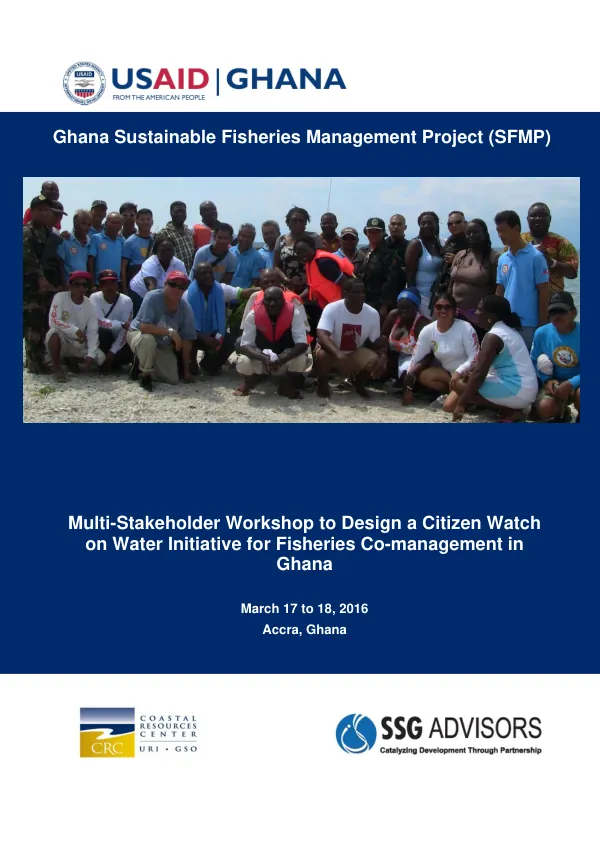
The workshop took place on March 17-18, 2016, in Accra, Ghana. The primary objective of the workshop was to create a framework for the initial development and implementation of a community-based fisheries monitoring and enforcement program. The workshop drew upon the successes and challenges of the Philippine Bantay Dagat program, which was presented by Filipino conservation expert Romy Trono. The Bantay Dagat program involves fisherfolk and local coastal communities volunteering to aid in the detection of illegal fishing and enforcement of coastal and marine laws. Study tour participants from Ghana recognized the potential benefits of developing a similar community-based monitoring and enforcement program to support effective co-management of fisheries in Ghana. During the workshop, participants engaged in discussions and presentations on the current reality of illegal fishing and conservation efforts in Ghana. Atty. Mario Maderazo from the Philippines presented an overview of the key policy, legal, institutional, and regulatory foundations for the Bantay Dagat program in the Philippines. Atty. Tuinese Edward Amuzu presented a review of current Ghanaian laws and policies vis-à-vis the Citizen Watch program, including identified gaps and key recommendations. Atty. Amuzu's recommendations included establishing the Citizen Watch initiative under Sections 2(2)(o) and 94(4) of the Fisheries Act, 2002 (Act 625), and developing a Memorandum of Understanding on the implementation of the Citizen Watch initiative by the various coastal District, Municipal, and Metropolitan assemblies. He also suggested the establishment of an inter-agency taskforce to support the Citizen Watch initiative and proposed amendments to the Fisheries Act to specifically make provision for the Citizen Watch initiative. Participants then split up into their stakeholder groups to discuss and share their reactions to the Legal Recommendations. The Enforcement Group preferred Recommendation No. 4, which outlined the responsibility and funding for the Citizen Watch initiative. The Fishermen Group agreed with all recommendations, provided they go through cabinet approval under the name CBFMCs. The Government Group preferred Recommendation i, which involved sending a communique to the Minister of Fisheries and Aquaculture Development (MOFAD) containing the request for the amendment of the Fisheries Act 625 and the development of a National Policy. The Fish Processors Group generally agreed to all recommendations, with an emphasis on high participation of women in the initiative. They also suggested that processors and traders be sensitized to not patronize illegally caught fish and that CF who allow illegal activities must be sanctioned. In the final session, participants worked together to develop a shared vision for the Citizen Watch program in the near term. They identified key elements of a successful Citizen Watch initiative, including no political interference, holistic and effective fishers' empowerment, regular and adequate logistics, clear legal and institutional framework, adequate and appropriate incentives, continuous and effective education, effective stakeholder collaboration, and availability of quality fish.
Related documents