USAID DEC
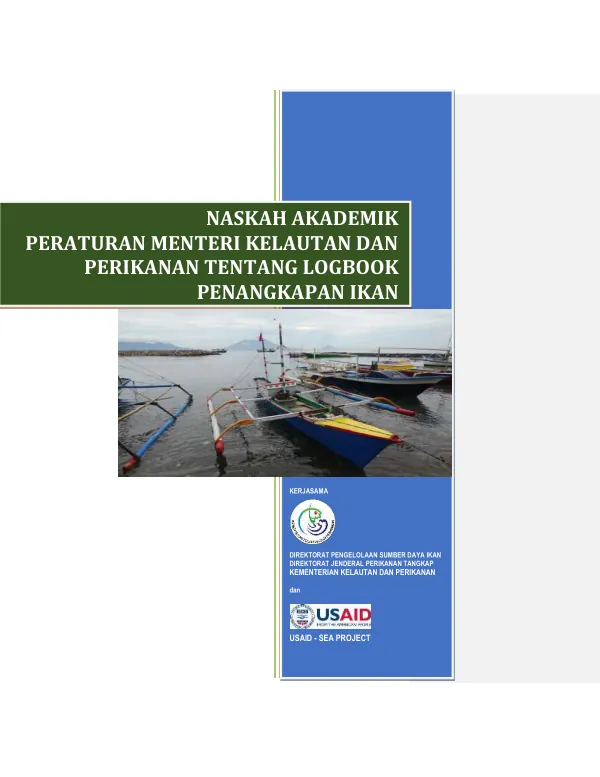
Naskah Akademik Permen KP tentang Log Book Penangkapan Ikan
The Ministry of Maritime Affairs and Fisheries' Directorate of Fisheries Resource Management and the Directorate General of Capture Fisheries, in collaboration with the USAID-SEA Project, have developed a draft of the Minister of Maritime Affairs and Fisheries Regulation regarding the Logbook of Fish Catch.
2019 · 75 pages
Sign in to readA free account is required to download.
Abstract
The regulation aims to improve the accuracy of fish catch data, which is essential for sustainable fisheries management. The regulation is based on the understanding that accurate data is crucial for effective fisheries management. The current logbook system has several limitations, including a complex format that makes it difficult for fishermen to fill out, unclear sanctions, and a lack of incentives for small-scale fishermen. Additionally, the current system does not provide a clear mechanism for data sharing and analysis. The regulation aims to address these limitations by simplifying the logbook format, establishing clear sanctions and incentives, and improving data sharing and analysis. The regulation also aims to promote sustainable fisheries management by encouraging fishermen to adopt responsible fishing practices. The regulation is based on several principles, including the need for accurate and reliable data, the importance of sustainable fisheries management, and the need to promote responsible fishing practices. The regulation also takes into account the global trend of small-scale fisheries, which account for more than 90% of the world's fisheries. The regulation is divided into several sections, including the introduction, analysis of the current logbook system, and the proposed changes to the regulation. The regulation also includes a discussion of the benefits of accurate data, the importance of sustainable fisheries management, and the need to promote responsible fishing practices. The regulation is expected to have several benefits, including improved accuracy of fish catch data, increased transparency and accountability in fisheries management, and improved sustainability of fisheries resources. The regulation is also expected to promote responsible fishing practices and encourage fishermen to adopt more sustainable fishing methods. The regulation is based on several international and national standards, including the Food and Agriculture Organization (FAO) guidelines for small-scale fisheries and the Indonesian Ministry of Maritime Affairs and Fisheries' regulations on fisheries management. The regulation also takes into account the recommendations of several international and national organizations, including the World Bank and the Indonesian National Committee for Fisheries. The regulation is expected to be implemented in several stages, including the development of a new logbook format, the establishment of clear sanctions and incentives, and the improvement of data sharing and analysis. The regulation is also expected to be reviewed and updated regularly to ensure that it remains effective and relevant. The regulation is expected to have a significant impact on the fisheries sector in Indonesia, including improved accuracy of fish catch data, increased transparency and accountability in fisheries management, and improved sustainability of fisheries resources. The regulation is also expected to promote responsible fishing practices and encourage fishermen to adopt more sustainable fishing methods. The regulation is