USAID DEC
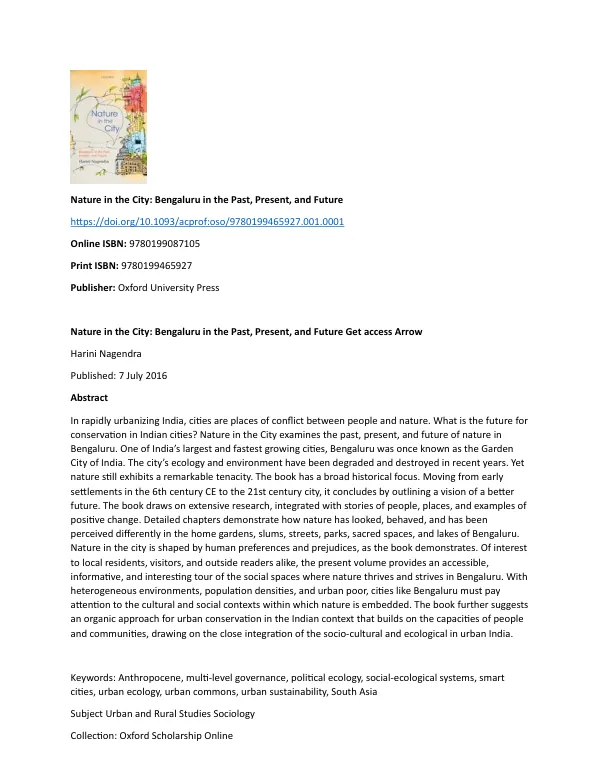
Nature in the City: Bengaluru in the Past, Present, and Future
Bengaluru, once known as the Garden City of India, has undergone significant ecological degradation and destruction in recent years.
2016 · 1 pages
Sign in to readA free account is required to download.
Abstract
The city's rapid urbanization has led to a decline in its natural environment, yet nature still exhibits remarkable tenacity. The city's ecology and environment have been shaped by human preferences and prejudices, as demonstrated by the varying perceptions of nature in different areas of Bengaluru. Home gardens, slums, streets, parks, sacred spaces, and lakes in Bengaluru have distinct characteristics and functions. Home gardens, for instance, have been a vital component of the city's ecosystem, providing a range of ecosystem services, including air and water filtration, and habitat creation for urban wildlife. In contrast, slums have often been viewed as areas of environmental degradation, yet they also contain pockets of greenery and community-managed spaces that support biodiversity. The city's parks and green spaces have played a crucial role in maintaining ecological balance and providing recreational areas for residents. However, these spaces have also been subject to degradation and neglect, highlighting the need for effective management and conservation strategies. Sacred spaces, such as temples and mosques, have been important sites for nature conservation, with many communities actively managing and protecting these areas. Bengaluru's lakes have been a vital component of the city's ecosystem, providing water, habitat, and recreational areas for residents. However, these lakes have also been subject to pollution, degradation, and encroachment, highlighting the need for effective management and conservation strategies. The city's urban poor have been disproportionately affected by environmental degradation, with many living in areas with limited access to green spaces and natural resources. The book suggests an organic approach for urban conservation in the Indian context, building on the capacities of people and communities, and drawing on the close integration of the socio-cultural and ecological in urban India. This approach recognizes the importance of cultural and social contexts in shaping urban ecosystems and emphasizes the need for inclusive and participatory conservation strategies. By adopting this approach, Bengaluru can work towards creating a more sustainable and equitable urban environment that balances human needs with ecological imperatives.