IRC
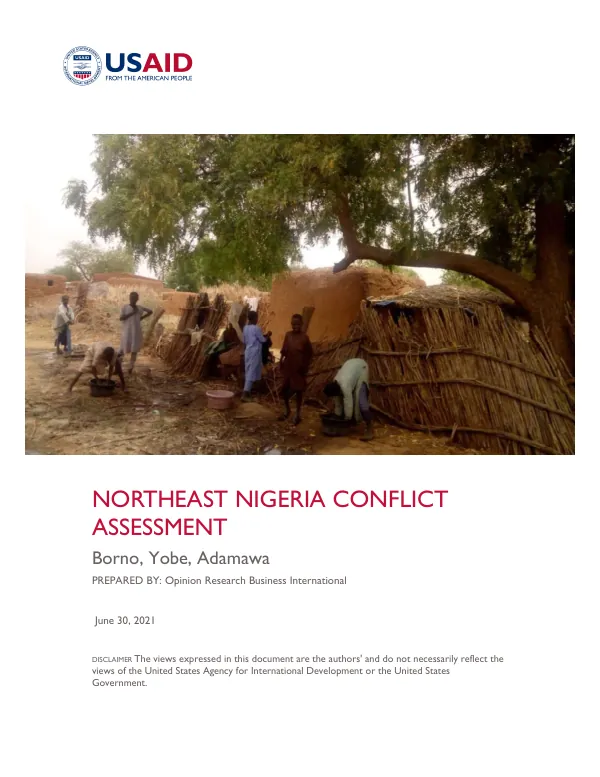
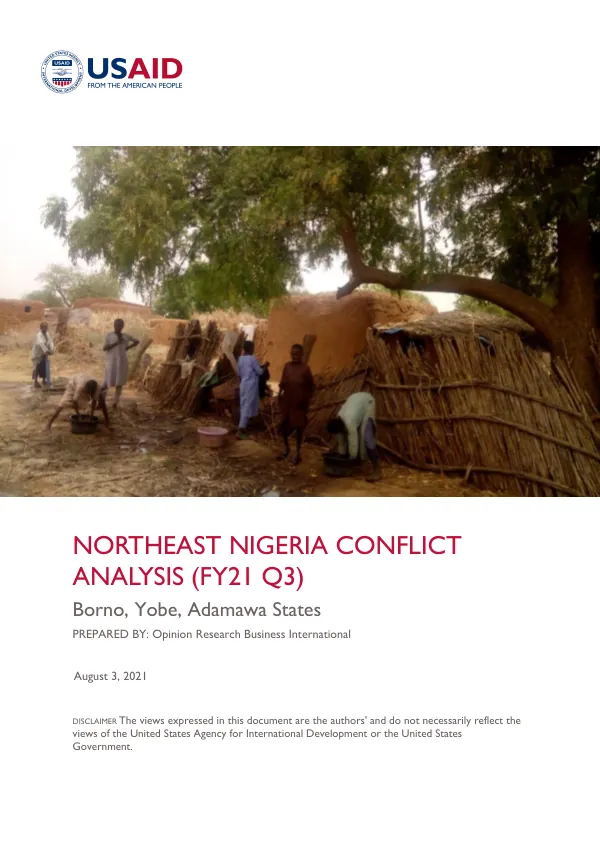
NORTHEAST NIGERIA CONFLICT ANALYSIS (FY21 Q3)
The conflict in Northeast Nigeria is a complex and multifaceted issue, with various factors contributing to its persistence.
2021 · 34 pages
Sign in to readA free account is required to download.
Abstract
The region of Borno, Adamawa, and Yobe (BAY) states has been plagued by violent insurgencies, most notably the groups Boko Haram and ISWAP. These insurgencies have resulted in mass evictions of communities, leading to an internal humanitarian crisis that exacerbates resource competition and deepens tensions in the region. In Borno state, the economy and lack of education were identified as paramount issues by respondents in the Mawar Kaila IDP camp and host community. The general insecurity of Borno state is not reported in the immediate community, as both host and IDP populations rely on self-policing and vigilantes to keep crime down. The relationship between both populations is positive, but their needs remain divergent, which calls for more specific needs analysis between the communities. In Adamawa state, security remains the largest issue plaguing the Wuro Bulude population of Mubi North LGA. The community's IDP population is reeling from the dissolution of the formal IDP camp, and security forces are ineffective. The population is terrorized by gangs of young men referred to as Shila boys, and there is distrust between the host and IDP populations as they compete for limited resources. In Yobe state, the basic needs of the greater population of Abbari community (Damaturu LGA) are not being met. The community struggles with food insecurity due to the absence of humanitarian assistance for the last 6 months. The lack of accessible farmland has made the community unable to provide for itself, further exacerbating the impact of the absence of humanitarian aid. The relationship between host and IDP populations is positive, due in large part to community strengthening efforts by humanitarian organizations. The conflict in Northeast Nigeria is characterized by a complex web of factors, including poverty, lack of education, and insecurity. The relationship between host and IDP populations is often positive, but their needs remain divergent, and competition for limited resources can lead to tension. Addressing these issues will require a comprehensive approach that takes into account the specific needs of each community and addresses the root causes of the conflict. The analysis of the conflict in Northeast Nigeria highlights the need for a nuanced understanding of the context in which respondents live. The study used a combination of qualitative and quantitative methods, including key informant interviews and focus group discussions, to gather data on the conflict dynamics and drivers in the region. The results of the study provide a detailed understanding of the conflict in Northeast Nigeria and highlight the need for a comprehensive approach to addressing the root causes of the conflict. The study's findings have important implications for policymakers and practitioners working in the region. The analysis highlights the need for a more nuanced understanding of the conflict dynamics and drivers in Northeast Nigeria and the importance of addressing the root causes of the conflict. The study's recommendations, including the need for more specific needs analysis between host and IDP populations and the importance of addressing poverty, lack of education, and insecurity, provide a framework for policymakers and practitioners to develop effective strategies for addressing the conflict in Northeast Nigeria. The conflict in Northeast Nigeria is a complex and multifaceted issue that requires a comprehensive approach to address its root causes. The analysis of the conflict highlights the need for a nuanced understanding of the context in which respondents live and the importance of addressing poverty, lack of education, and insecurity. The study's recommendations provide a framework for policymakers and practitioners to develop effective strategies for addressing the conflict in Northeast Nigeria and promoting peace and stability in the region.
Related documents