INTERNATIONAL CHILDREN'S FUND, INC.
Pakistan Complex Emergency and Floods – July 8, 2011
The complex emergency and floods in Pakistan have resulted in significant displacement and humanitarian needs.
2011 · 6 pages
Sign in to readA free account is required to download.
Abstract
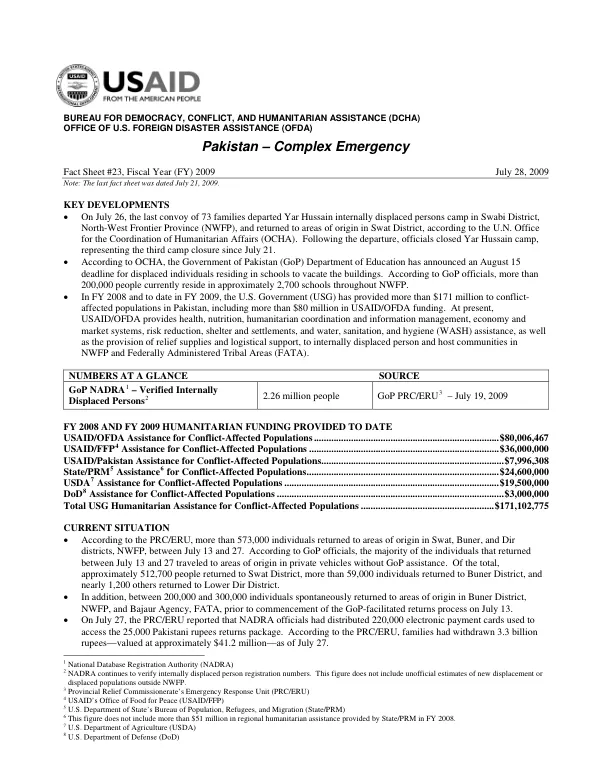
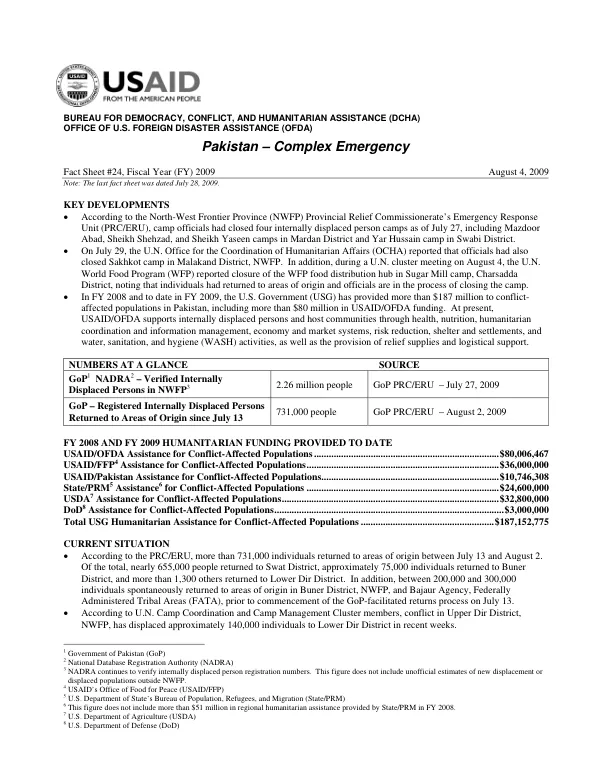
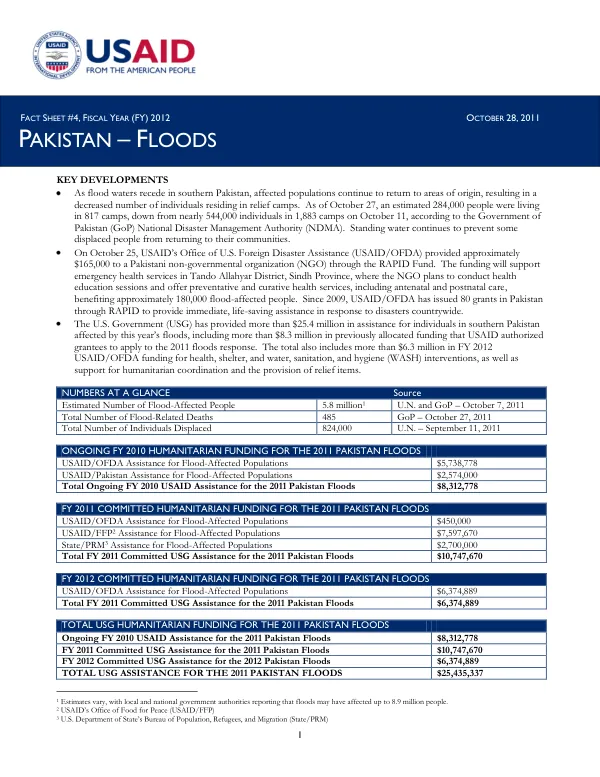
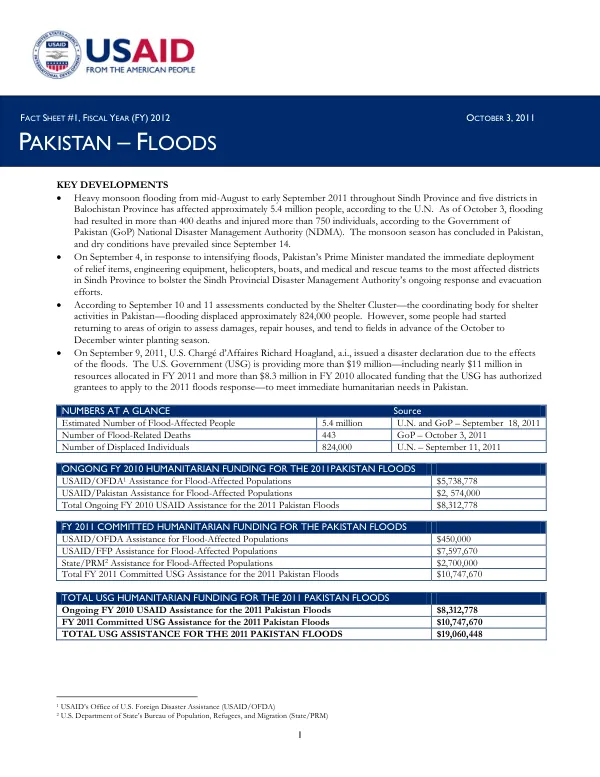
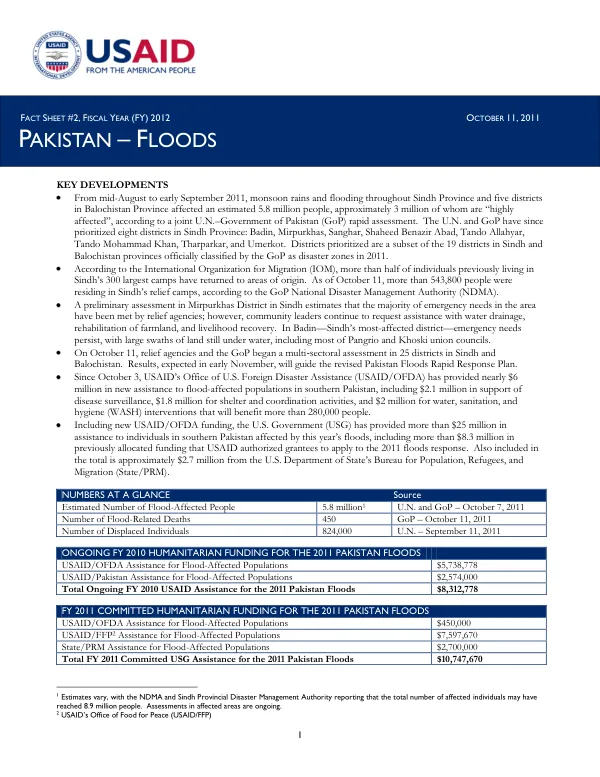
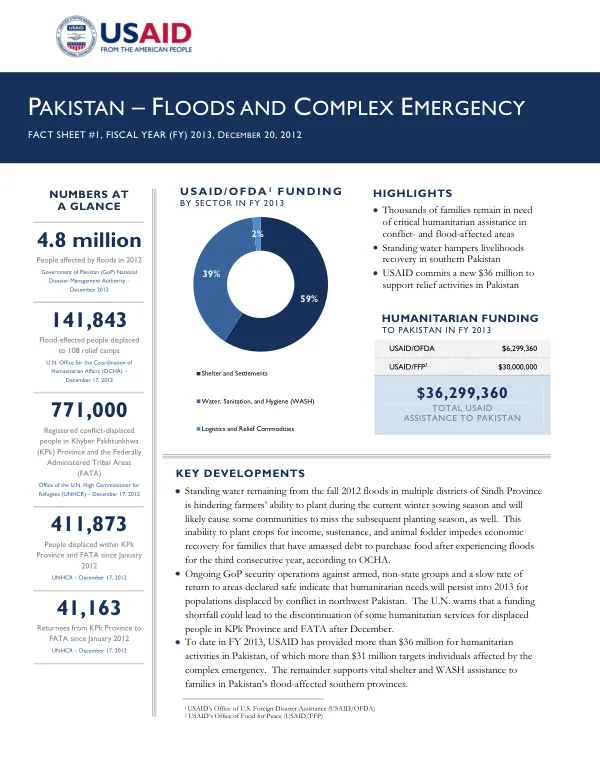
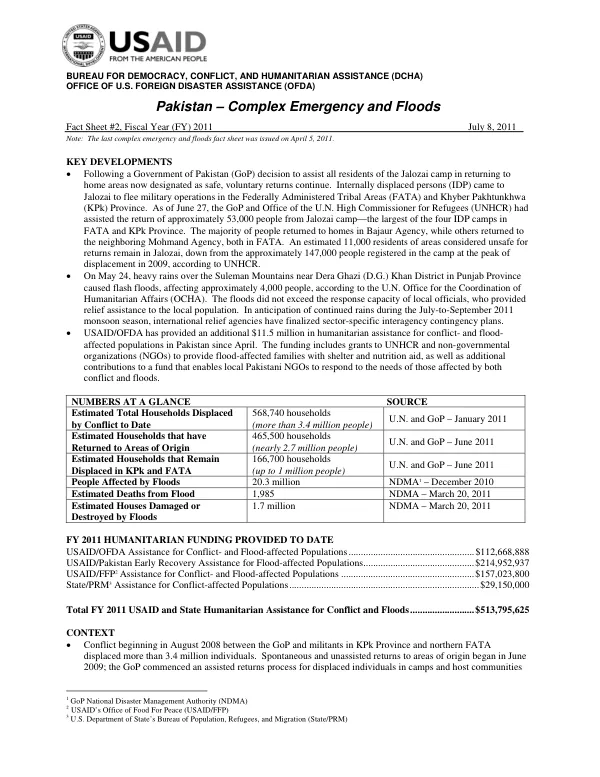
Following a Government of Pakistan decision to assist all residents of the Jalozai camp in returning to home areas now designated as safe, voluntary returns continue. As of June 27, the Government of Pakistan and the Office of the U.N. High Commissioner for Refugees had assisted the return of approximately 53,000 people from Jalozai camp, the largest of the four IDP camps in FATA and KPk Province. The majority of people returned to homes in Bajaur Agency, while others returned to the neighboring Mohmand Agency, both in FATA. Heavy rains over the Suleman Mountains near Dera Ghazi Khan District in Punjab Province caused flash floods on May 24, affecting approximately 4,000 people. The floods did not exceed the response capacity of local officials, who provided relief assistance to the local population. In anticipation of continued rains during the July-to-September 2011 monsoon season, international relief agencies have finalized sector-specific interagency contingency plans. The overall security situation in Pakistan remains volatile and unpredictable, with ongoing security incidents, sectarian violence, and military operations continuing to result in displacement and related humanitarian needs. Unusually heavy rainfall and flooding in late July and August 2010 affected nearly 20.3 million people in 78 of Pakistan's 141 districts, with more than 75 percent of affected families located in Sindh and Punjab provinces. As a result, more than 12 million people required immediate humanitarian assistance. The Government of Pakistan has declared all of Bajaur Agency, with exception of the Loi Sam area, as safe for returns, providing the impetus for IDPs to elect to depart Jalozai and other camps for home areas. Relief agencies are providing a two-month transition package to returning families, including hygiene kits, water purification tablets, and a two-month supply of food or the cash equivalent. Families identified as vulnerable also receive vitamins and nutrition supplements for children and pregnant or lactating women, medicines, delivery and neonatal kits, and vaccinations and de-worming services for children. To address the shelter needs of flood-affected returnees, USAID/OFDA has provided an additional $6 million for UNHCR shelter activities nationwide, as well as more than $4 million for an NGO program that provides transitional shelters to families in Dadu District, Sindh Province. The program employs local skilled masons for technical oversight and provides cash-for-work assistance to facilitate emergency economic recovery for beneficiaries who assist in clearing plots or constructing single-family shelters. Humanitarian coordination and flood contingency planning are ongoing efforts to prepare for the current monsoon season. The Government of Pakistan-established Early Recovery Working Groups continue to operate at the national and provincial levels under the coordination of NDMA, the U.N. Development Program, and provincial disaster management authorities. USAID/OFDA grantees joined other humanitarian agencies to participate in an OCHA-led interagency contingency planning process, using lessons learned and basic needs identified during the response to the 2010 floods to prepare for the current monsoon season. In response to increased disease vulnerability in flood-affected areas, relief agencies conducted a measles vaccination campaign in Gilgit-Baltistan Province during the last week of June and in Azad Jammu and Kashmir during the first week of July. As of May, humanitarian organizations had vaccinated 10.5 million children against measles and 11.7 million youths against polio in flood-affected areas. UNICEF is also supporting maternal and child health and nutrition services in the Jalozai and Nahqi displacement camps by providing health centers, delivery rooms, basic emergency obstetric and neonatal services, and ambulances for transporting complicated cases to established health facilities. USAID/OFDA has been supporting NGOs to provide health and nutrition services to flood-affected populations. The funding includes grants to UNHCR and NGOs to provide shelter and nutrition aid to flood-affected families, as well as additional contributions to a fund that enables local Pakistani NGOs to respond to the needs of those affected by both conflict and floods.
Related documents