USAID DEC
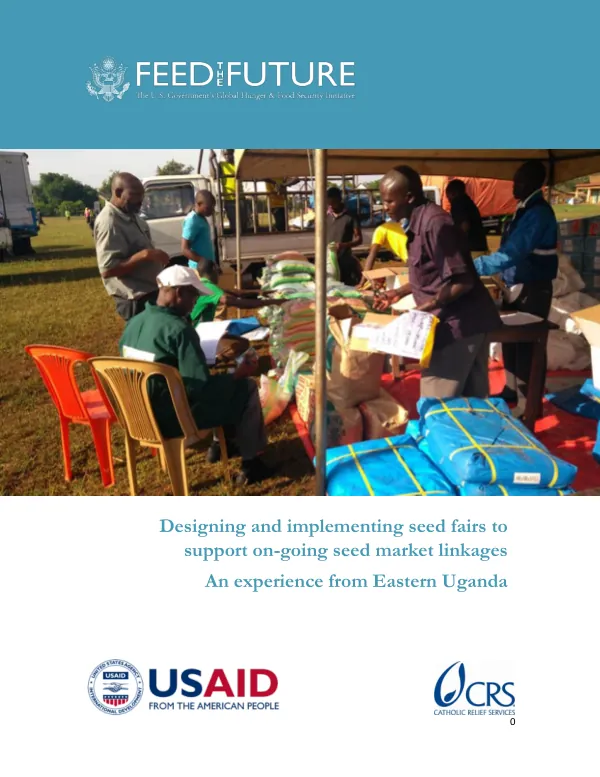
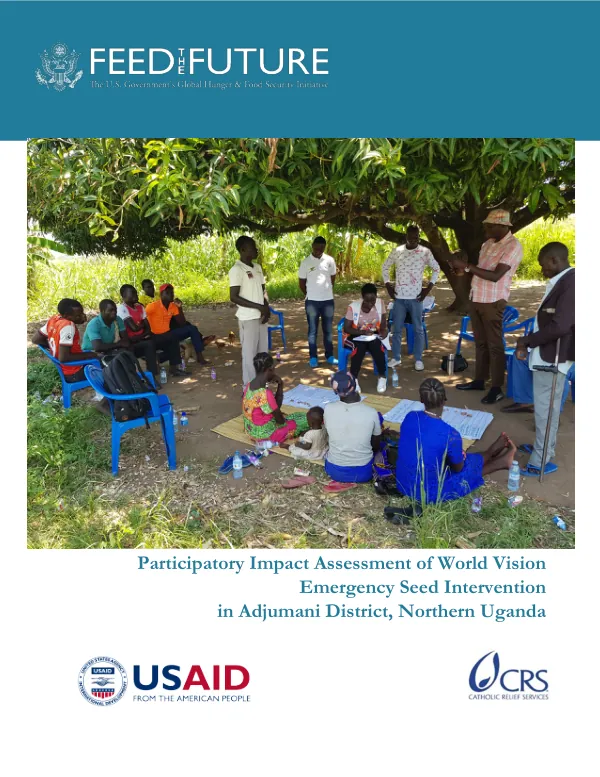
Participatory Impact Assessment of World Vision Emergency Seed Intervention in Adjumani District, Northern Uganda
Sign inCATHOLIC RELIEF SERVICES ORGANIZATION
Participatory Impact Assessment of World Vision Emergency Seed Intervention in Adjumani District, Northern Uganda
The Feed the Future Global Supporting Seed Systems for Development activity, a cooperative agreement between USAID and Catholic Relief Services, aimed to improve the functioning of high-impact integrated seed systems in Adjumani District, Northern Uganda.
2023 · 70 pages
Sign in to readA free account is required to download.
Abstract
The activity, which began on August 24, 2018, and concluded on August 23, 2023, focused on enhancing crop and varietal diversity, seed management practices, and food security among smallholder farmers. The Participatory Impact Assessment (PIA) of the World Vision Emergency Seed Intervention in Adjumani District was conducted to evaluate the impacts of the activity on seed systems and seed markets. The assessment involved a range of methods, including Focus Group Discussions (FGDs), Key Informant Interviews (KIIs), and a review of existing data. The PIA aimed to understand the dynamics of seed systems in Adjumani District, including informal seed systems, formal seed systems, and intermediary seed systems. The assessment found that the World Vision Emergency Seed Intervention had a positive impact on crop and varietal diversity in the district. Seeds received by World Vision-supported farmer groups included a range of crop varieties, including maize, beans, and cassava. The intervention also led to an increase in seed saving by farmers, with many farmers reporting that they were able to save and replant seeds from their harvests. However, the assessment also noted that off-farm seed sources and acquisition remained a challenge for many farmers in the district. In terms of food security, the assessment found that the World Vision Emergency Seed Intervention had a positive impact on production trends in the district. Farmers who received seeds and support from World Vision reported higher yields and improved food security compared to those who did not receive support. The assessment also found that the intervention had a positive impact on expenditure from crop sales, with many farmers reporting increased income from the sale of their crops. The assessment also evaluated the impacts of the World Vision Emergency Seed Intervention on seed systems actors, including informal seed system actors, local seed businesses, and agro-input dealers. The assessment found that the intervention had a positive impact on informal seed system actors, with many farmers reporting that they were able to access high-quality seeds through informal channels. However, the assessment also noted that the intervention had a negative impact on local seed businesses, with many businesses reporting a decline in sales due to the increased availability of free seeds from World Vision. The assessment concluded that the World Vision Emergency Seed Intervention had a positive impact on seed systems and seed markets in Adjumani District. The intervention improved crop and varietal diversity, seed management practices, and food security among smallholder farmers. However, the assessment also noted that the intervention had some negative impacts, including a decline in sales for local seed businesses. The assessment recommended that future interventions focus on building the capacity of local seed businesses and improving the availability of high-quality seeds in the district. The assessment also highlighted the importance of understanding seed systems in Adjumani District, including informal seed systems, formal seed systems, and intermediary seed systems. The assessment noted that seed systems in the district were complex and dynamic, and that future interventions should take into account the needs and preferences of different seed system actors. The assessment also recommended that future interventions focus on building the capacity of farmers to manage and save seeds, and on improving the availability of high-quality seeds in the district.