MENDEZ ENGLAND AND ASSOCIATES
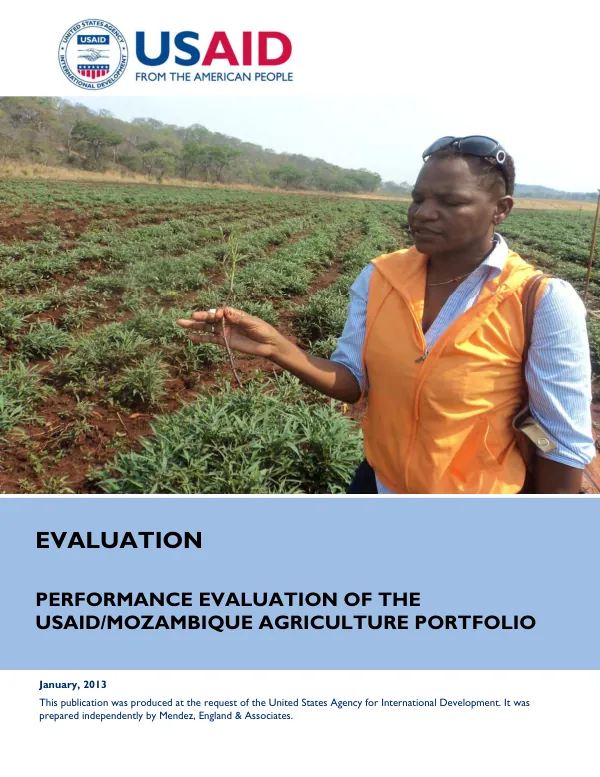
Performance Evaluation of the USAID/Mozambique Agriculture Portfolio
The USAID/Mozambique Agriculture Portfolio performance evaluation was conducted in January 2013 by Mendez, England & Associates.
2013 · 426 pages
Sign in to readA free account is required to download.
Abstract
The evaluation aimed to assess the effectiveness, impact, sustainability, and coordination of the portfolio's activities. The evaluation covered the period from 2008 to 2012 and focused on the Agricultural Service Clusters (ASCs) and the Agri-Input Market Strengthening Project (AIMS). The evaluation identified several key findings and conclusions. In terms of effectiveness, the evaluation found that the portfolio's interventions led to increased availability, dissemination, and adoption of improved technologies among project beneficiaries. The evaluation also found that the portfolio's activities resulted in increased agricultural productivity, sales, and access to financial resources among targeted beneficiaries. Additionally, the evaluation found that the portfolio's public-private partnerships were effective in advancing project objectives. The evaluation also assessed the impact of the portfolio's activities on food security, nutrition, and rural income growth. The evaluation found that the portfolio's interventions had a positive impact on food security, nutrition, and rural income growth. The evaluation also found that the portfolio's activities contributed to the development of associations and institutions that can sustain the gains achieved. In terms of sustainability, the evaluation found that the portfolio's work with local institutions was effective in building capacity and promoting sustainability. The evaluation also found that the associations developed and nurtured by USAID's past programs were sustainable and continued to operate after the completion of the project. The evaluation also assessed the coordination and harmonization of the portfolio's activities with other USG programs, other donors, and the Government of Mozambique. The evaluation found that the portfolio's activities were well-coordinated and harmonized with other programs and stakeholders. However, the evaluation also identified several challenges and success stories related to coordination and harmonization. The evaluation concluded that the USAID/Mozambique Agriculture Portfolio was effective in achieving its objectives and had a positive impact on food security, nutrition, and rural income growth. The evaluation also recommended several actions to improve the portfolio's effectiveness, sustainability, and coordination. The evaluation identified several key recommendations, including the need to continue supporting the development of associations and institutions, improving the coordination and harmonization of activities with other programs and stakeholders, and strengthening the portfolio's monitoring and evaluation systems. The evaluation also recommended that the portfolio continue to focus on building the capacity of local institutions and promoting sustainability. The evaluation's findings and recommendations are relevant to the ongoing efforts to improve the effectiveness, impact, and sustainability of the USAID/Mozambique Agriculture Portfolio. The evaluation's conclusions and recommendations can inform the development of future programs and activities aimed at improving agricultural productivity, food security, and rural income growth in Mozambique. The evaluation's methodology included a review of project documents, interviews with stakeholders, and a survey of project beneficiaries. The evaluation's data collection and analysis were conducted in accordance with the USAID Evaluation Policy and the OECD-DAC Evaluation Criteria.
Related documents