USAID DEC
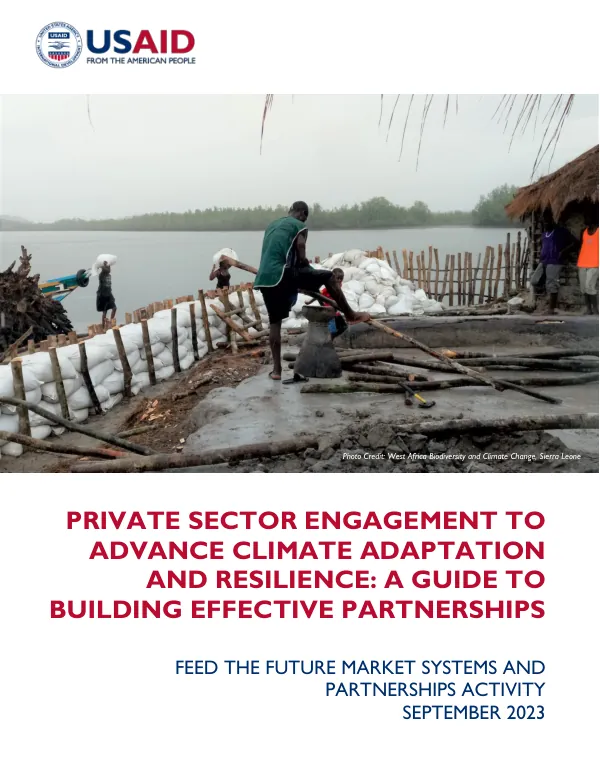
Private Sector Engagement to Advance Climate Adaptation and Resilience: A Guide to Building Effective Partnerships
Sign inDAI
Private Sector Engagement to Advance Climate Adaptation and Resilience: A Guide to Building Effective Partnerships
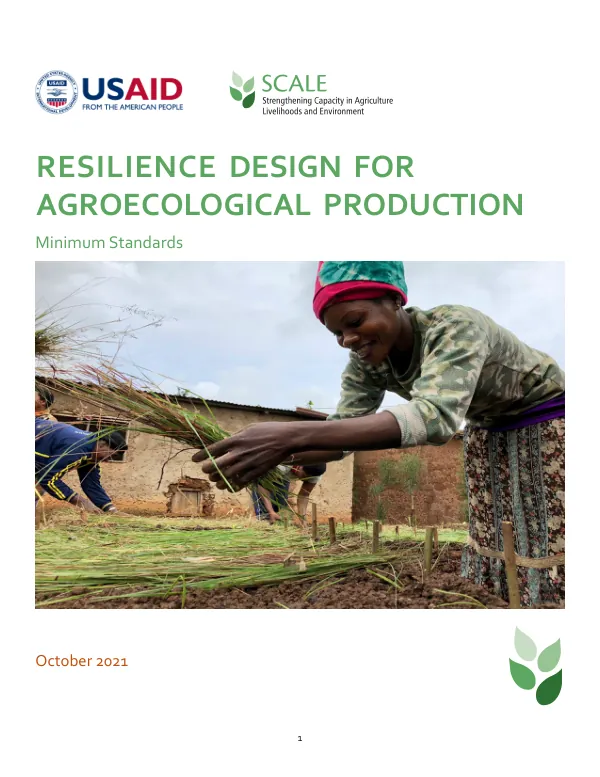
More than 2,500 farmers received training in sustainable agriculture practices during the first year, with demonstration plots showing yield improvements of 60% when applying the recommended practices.
2023 · 99 pages
Sign in to readA free account is required to download.
Abstract
The private sector plays a critical role in advancing climate adaptation and resilience. Despite the monumental long-term economic and societal costs of failing to adapt to climate change, adaptation efforts have not generated widespread action. Companies need to anticipate and address the risks posed by climate risks to their operations and supply chains. This includes physical risks that damage company assets, sourcing and logistics disruptions, and market risks that can impact a company's market and reputation. The private sector can innovate and commercialize new products and services, refine business models, and leverage opportunities across various sectors. Partnerships between the private sector and development organizations can address financial, knowledge, and implementation barriers. This includes fostering learning and strengthening capacity on risk management, developing adaptation-specific guidance, and advancing other adaptation solutions. The Feed the Future Market Systems and Partnerships Activity is advancing private sector engagement to advance climate adaptation and resilience. The activity aims to build effective partnerships between the private sector and development organizations. The activity focuses on strategic opportunity identification, strategic partnership identification, and partnership blueprints. The activity also includes vignettes that showcase successful partnerships and lessons learned. The activity aims to address the gaps limiting private sector investment in climate adaptation. This includes a lack of awareness and knowledge of climate risk management and limited communication regarding the urgency of action. The activity also aims to close the climate adaptation gaps by providing adaptation-specific guidance on risk management and fostering learning around adaptation solutions. The activity has identified six key areas of engagement with the private sector. These areas include financial institutions, multinational companies, and local companies. The activity also includes partnerships with development organizations and public sector initiatives. The activity aims to serve as a bridge between the private sector and relevant public sector initiatives. The activity has developed a strategic opportunity identification tool for engaging the private sector on climate adaptation. The tool includes five steps: identifying climate risks and adaptation solutions, assessing policy and regulatory frameworks, identifying strategic partners, selecting partnership blueprints, and designing partnerships. The activity has also developed six partnership blueprints that showcase successful partnerships and lessons learned. The activity aims to advance climate adaptation and resilience by building effective partnerships between the private sector and development organizations. The activity focuses on strategic opportunity identification, strategic partnership identification, and partnership blueprints. The activity also includes vignettes that showcase successful partnerships and lessons learned.