TETRA TECH
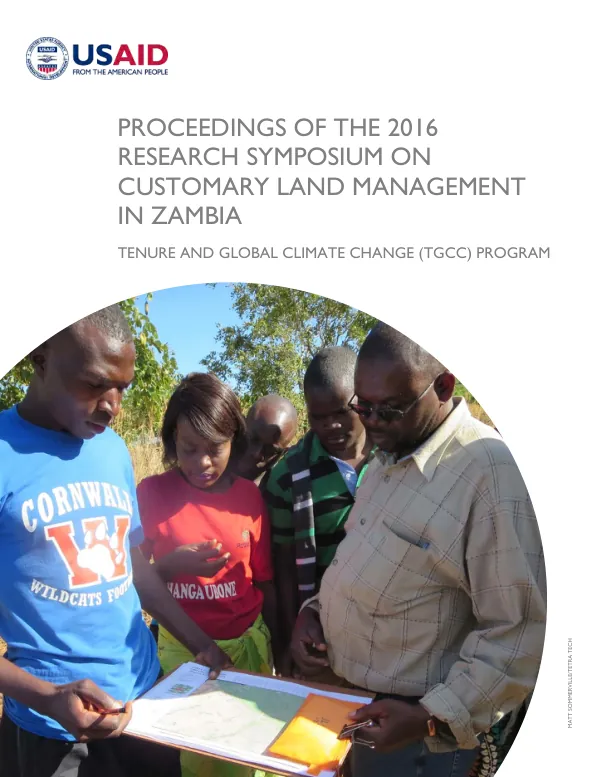
Proceedings of the 2016 Research Symposium on Customary Land Management in Zambia
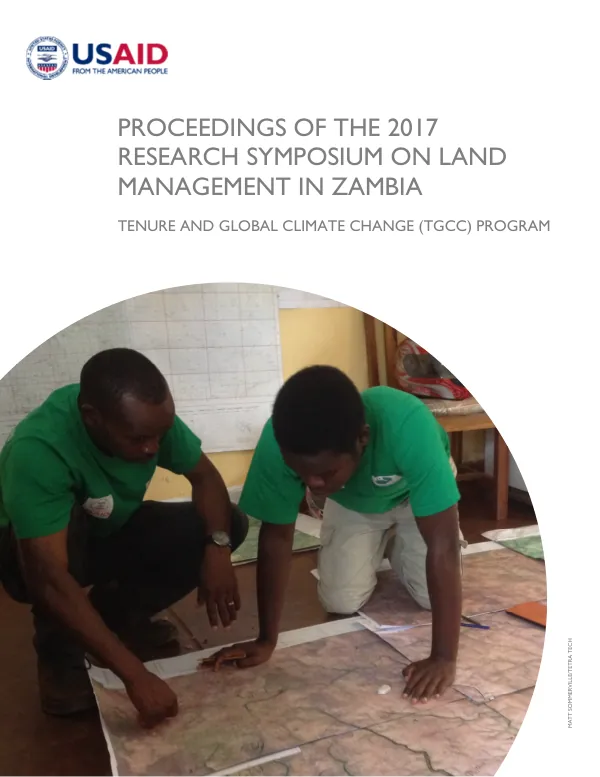
The Zambia Customary Land Management Research Symposium was held on April 6 and 7, 2016, at the Mulungushi Conference Center.
2016 · 22 pages
Sign in to readA free account is required to download.
Abstract
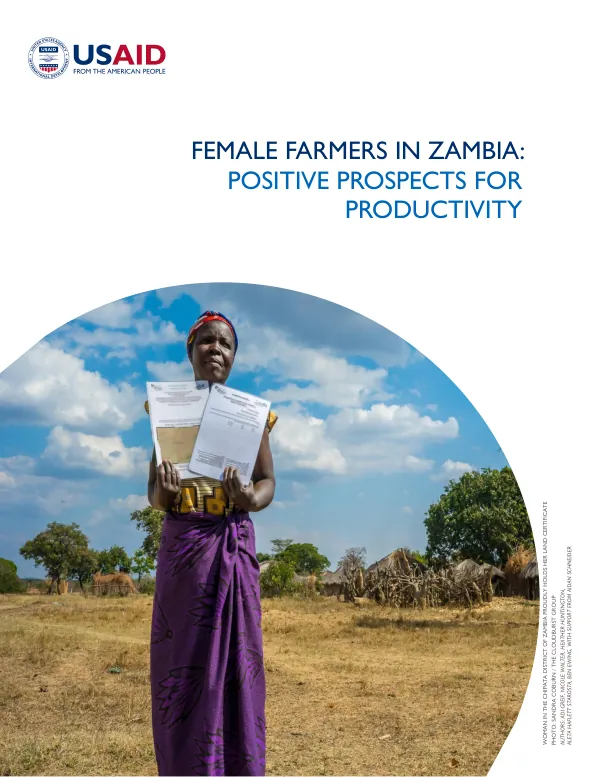
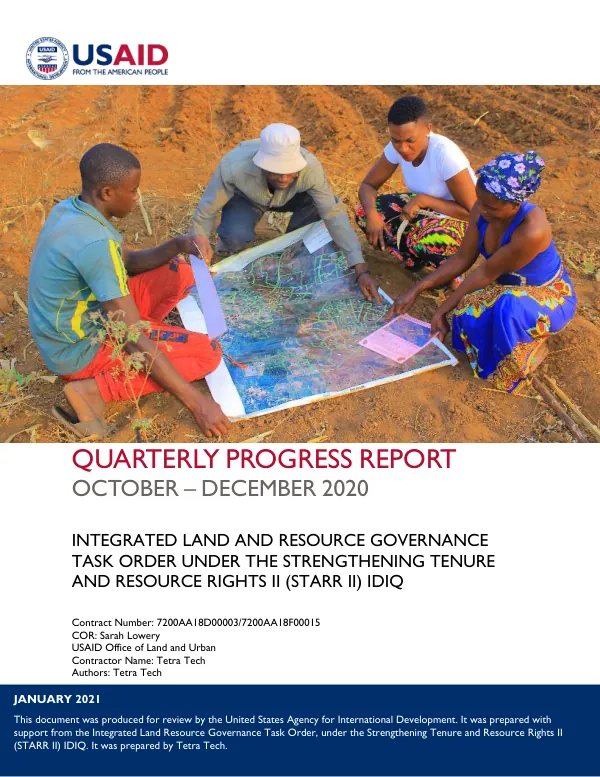
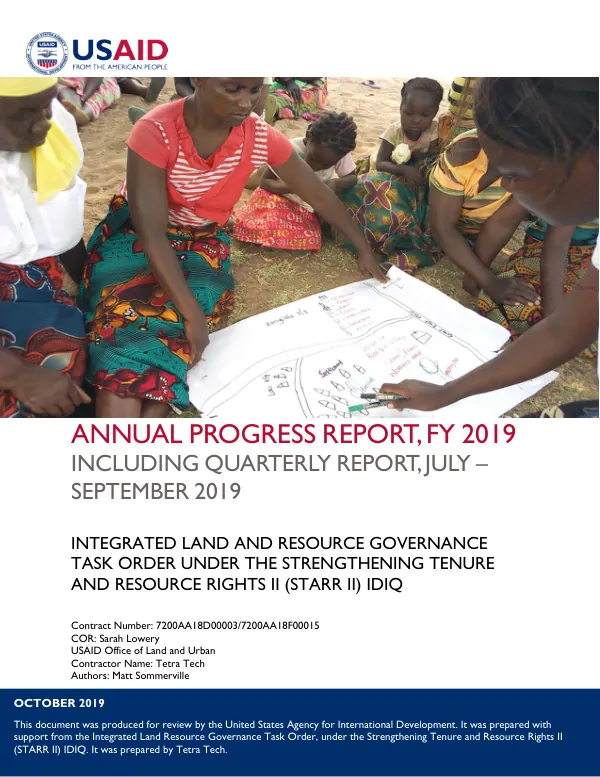
The meeting aimed to share research activities and outputs that were being undertaken in Zambia in support of improving customary land tenure, administration, and management. The symposium was attended by participants drawn from various academic institutions, local authorities, representatives of traditional leaders, civil society organizations (CSOs), and development actors in Zambia. The symposium served as a check-in for the Tenure Governance and Climate Change (TGCC) program's work in Zambia, supporting government, civil society, traditional authorities, and communities to communicate on land administration and governance. Since July 2014, TGCC has supported systematic documentation of customary land in Eastern Province through the use of mobile technologies in coordination with traditional authorities and local CSOs. The program has also supported national land policy development through support to national consultations, as well as CSO consultations aimed at improving land tenure governance and administration. The symposium provided a platform for the meeting of minds and aimed at strengthening knowledge and sharing research products among researchers and stakeholders. The objectives of the symposium included consolidating research information, identifying gaps in land tenure research in Zambia, identifying priority research topics/areas that require further investigation, and examining land issues in a holistic and integrated manner to create a community of practice that will enhance collaboration and value addition. Technical presentations were made by researchers from various institutions on land tenure, governance, and administration. Dr. Augustine Mulolwa from the University of Zambia (UNZA) presented draft findings of the Land Governance Assessment Framework (LGAF) process and land governance study undertaken to provide an assessment and audit of Zambia's land outlook. The presentation illuminated both positive and negative factors that had a bearing on land governance and administration in Zambia. The LGAF panels focused on land tenure recognition, institutional arrangements, dispute resolution, transparent processes, the economic benefit of transfer of public land to private use, public land management, urban land use, planning and development, rights to forest and common lands, rural land use regulations, provision of land information, land valuation and taxation, and the review of institutional arrangements and policies. The draft research findings also submitted key policy recommendations for linking the LGAF process with other land governance initiatives in Zambia. The symposium also featured presentations on impact evaluation on customary land management, customary land documentation, managing the forest commons, and customary land, agricultural productivity, and large-scale investments. The platform served to promote communication among researchers, implementers, and government representatives working to use data to inform policy on land tenure governance and administration in Zambia.