USAID
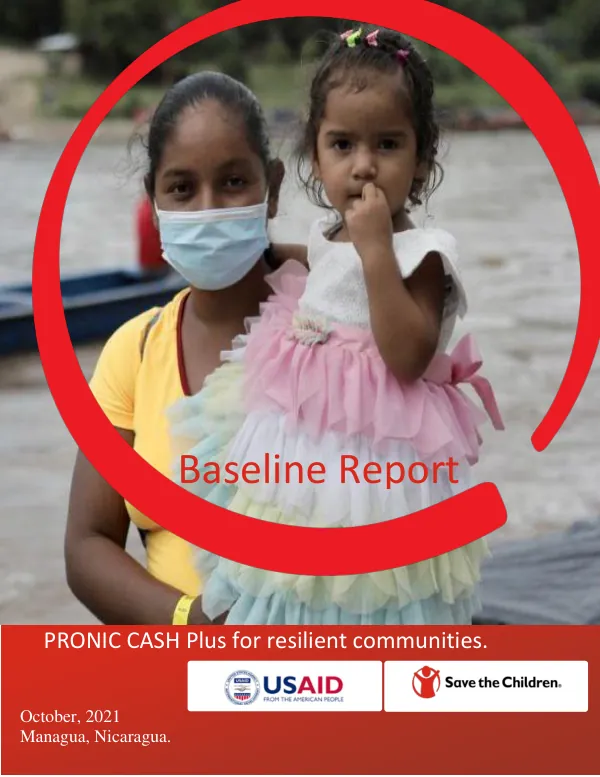
PRONIC Baseline Report: October 2021 - Nicaragua
The PRONIC CASH Plus for Resilient Communities project in Nicaragua aims to provide humanitarian assistance to vulnerable and at-risk households affected by hurricanes ETA and IOTA.
2021 · 19 pages
Sign in to readA free account is required to download.
Abstract
The project has selected two population groups: hurricane-affected families in Jinotega and Matagalpa, including the indigenous region of Alto Wangki, and hurricane-affected families on the riverbanks of the department of Leon. The project's goal is to improve access to basic needs and livelihoods through multipurpose cash assistance, livelihoods, and agriculture support, as well as increase access to quality preventive health and hygienic measures in community health care. The baseline report, conducted in October 2021, employed a quantitative household survey to 357 households. The survey aimed to establish baseline values for key indicators established in the project's Information Technology Template (ITT). The report also provides additional relevant information across various sector interventions. The survey instrument was standardized, validated, and adapted to the Nicaraguan context, and enumerators received training on the tool and how to obtain verbal consent from each household. The results of the survey indicate that the majority of respondents were women (70%), with an average age of 40 years and a reported average household size of 6 members. In terms of land tenure, 66% of respondents had access to 0-1 manzana for food production, while 25% had access to 2-5 manzanas. Regarding monthly household income, 97% of households reported an income below $198, which represents only 45% of the national food basket cost. The key indicator results show that households stated they are able to meet their basic needs in the following percentages: all of them (1%), almost all of them (4%), some of them (23%), and none of them (73%). The results also indicate that 66% of respondents have access to 0-1 manzana for food production, and 25% have access to 2-5 manzanas. Additionally, 97% of households reported an income below $198, which represents only 45% of the national food basket cost. The project aims to distribute three transfers of $135 USD per month for three consecutive months to 1,900 vulnerable and at-risk households in 10 municipalities. The project will cover almost 100% of indigenous Mayagna and Miskito communities living in extreme poverty conditions, with an income of under $2 a day. The project's implementation will focus on improving access to basic needs and livelihoods, as well as increasing access to quality preventive health and hygienic measures in community health care. The baseline report provides a comprehensive overview of the project's objectives, methods, and results. The report highlights the challenges faced by the respondents, including limited access to land, low income, and difficulty meeting basic needs. The project's implementation will aim to address these challenges and improve the living conditions of the target population.