USAID DEC
Quality of management and treatment services for sick children at patent and proprietary medicine vendors (PPMVs) in two states in Nigeria
Sign inFEDERAL MINISTRY OF HEALTH
Quality of management and treatment services for sick children at patent and proprietary medicine vendors (PPMVs) in two states in Nigeria
The Maternal and Child Survival Program, in collaboration with public and private stakeholders, is working to improve the quality of integrated community case management (iCCM) services for childhood malaria, diarrhea, and pneumonia provided by Patent and Proprietary Medicine Vendors (PPMVs) in Nigeria.
2018 · 1 pages
Sign in to readA free account is required to download.
Abstract
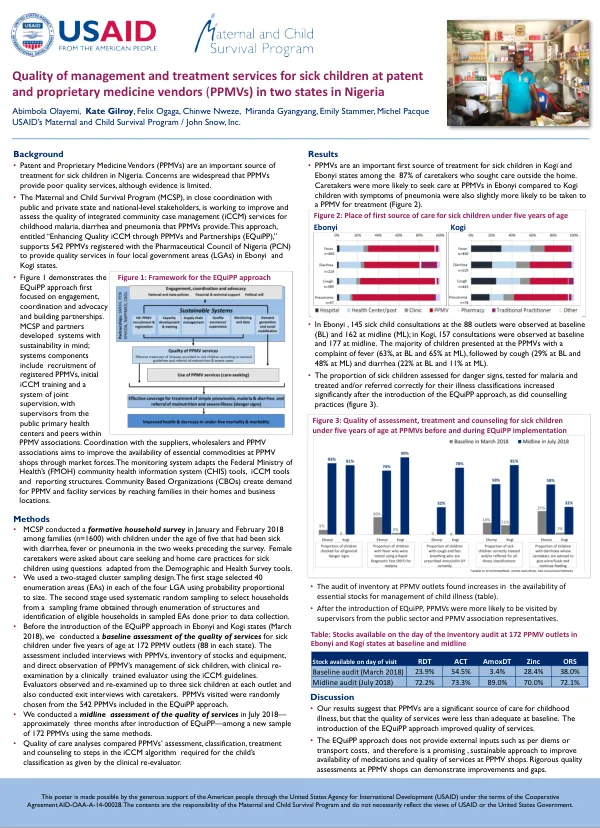
The program, entitled "Enhancing Quality iCCM through PPMVs and Partnerships (EQuiPP)," supports 542 PPMVs registered with the Pharmaceutical Council of Nigeria (PCN) to provide quality services in four local government areas (LGAs) in Ebonyi and Kogi states. PPMVs are an important source of treatment for sick children in Nigeria, with 87% of caretakers seeking care outside the home. In Ebonyi and Kogi states, PPMVs are the primary source of care for sick children, with caretakers more likely to seek care at PPMVs in Ebonyi compared to Kogi. The majority of children presented at the PPMVs with a complaint of fever, followed by cough and diarrhea. However, the quality of services provided by PPMVs was less than adequate at baseline, with significant gaps in the assessment, treatment, and counseling of sick children. The EQuiPP approach focuses on engagement, coordination, and advocacy, as well as building partnerships with PPMV associations, suppliers, wholesalers, and the public primary health centers. The program developed systems with sustainability in mind, including recruitment of registered PPMVs, initial iCCM training, and a system of joint supervision. The EQuiPP approach also includes a monitoring system that adapts the Federal Ministry of Health's (FMOH) community health information system (CHIS) tools, iCCM tools, and reporting structures. A formative household survey conducted in January and February 2018 among families with children under the age of five who had been sick with diarrhea, fever, or pneumonia in the two weeks preceding the survey found that the proportion of sick children assessed for danger signs, tested for malaria, and treated and/or referred correctly for their illness classifications increased significantly after the introduction of the EQuiPP approach. The audit of inventory at PPMV outlets also found increases in the availability of essential stocks for the management of child illness. The EQuiPP approach does not provide external inputs such as per diems or transport costs, making it a promising and sustainable approach to improve the availability of medications and quality of services at PPMV shops. Rigorous quality assessments at PPMV shops can demonstrate improvements and gaps in the quality of services provided. The results of the EQuiPP approach suggest that PPMVs are a significant source of care for childhood illness, and that the quality of services can be improved through targeted interventions and partnerships.