USAID DEC
Regular Appraisal of Program Implementation in Districts (RAPID): A Supportive Supervision Approach to Improve Essential Newborn Care in Haryana-India
Sign inUSAID DEC
Regular Appraisal of Program Implementation in Districts (RAPID): A Supportive Supervision Approach to Improve Essential Newborn Care in Haryana-India
The Regular Appraisal of Program Implementation in Districts (RAPID) initiative was launched in Haryana, India, to improve essential newborn care.
2014 · 42 pages
Sign in to readA free account is required to download.
Abstract
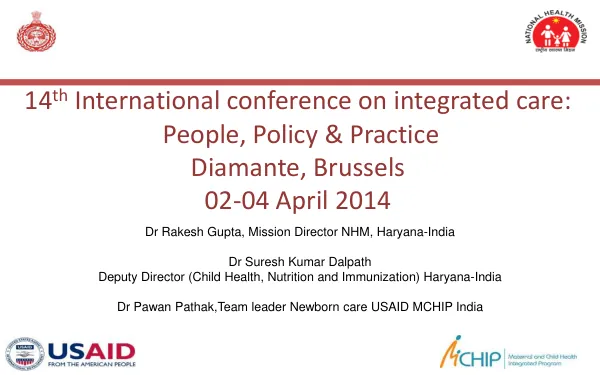
This supportive supervision approach aimed to enhance the quality of care provided to newborns in the state. The initiative was led by Dr. Rakesh Gupta, Mission Director of the National Health Mission (NHM) in Haryana, in collaboration with Dr. Suresh Kumar Dalpath, Deputy Director (Child Health, Nutrition, and Immunization), and Dr. Pawan Pathak, Team Leader of Newborn Care at USAID's MCHIP India. The RAPID initiative was implemented in the context of a critical global scenario, where newborn and child deaths occur predominantly in 24 countries, with 50% of these deaths occurring in just five countries: India, Nigeria, the Democratic Republic of Congo, Pakistan, and Ethiopia. In India, under-five mortality rate stood at 42 deaths per 1,000 live births in 2011, with around 9 million neonatal deaths occurring annually. India accounted for 29% of all first-day deaths globally, with approximately 300,000 neonatal deaths occurring each year. The state of Haryana has a population of 25.3 million, with a density of 573 people per square kilometer. The literacy rate in Haryana was 76.64% for males and 85.38% for females in 2011. The birth rate in Haryana was 21.6 per 1,000 population in 2013, while the death rate was 6.8 per 1,000 population. Haryana has a well-established health facility infrastructure, with 21 district hospitals, 109 community health centers, 357 primary health centers, and 2,610 sub-centers. These facilities provide a range of services, including deliveries, emergency cesarean sections, antenatal check-ups, and newborn stabilizing units. The state has made significant progress in improving key health indicators, including a maternal mortality rate of 146 deaths per 100,000 live births, an infant mortality rate of 42 deaths per 1,000 live births, and a neonatal mortality rate of 28 deaths per 1,000 live births. The RAPID initiative aimed to build on this progress by improving the quality of care provided to newborns in Haryana. The initiative focused on supportive supervision, which involved regular monitoring and feedback to healthcare providers to enhance the quality of care. The initiative also aimed to improve institutional delivery rates, which stood at 79.7% in 2013, and full immunization rates, which were 54% in 2007-08. The RAPID initiative was expected to contribute to the state's goal of reducing under-five mortality rates to 32 deaths per 1,000 live births by 2017.