USAID | PROJECTO DELIVER
Scaling Up Pre-Service Training in Ghana
Scaling Up Pre-Service Training in Ghana began in 2015 with the goal of integrating health supply chain management into the curriculum of pharmacy and nursing students.
2015 · 1 pages
Sign in to readA free account is required to download.
Abstract
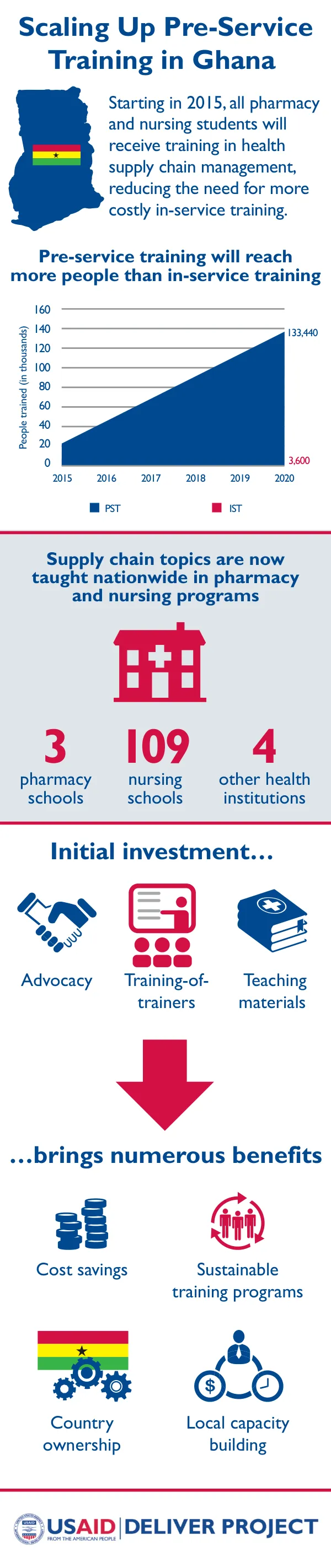
This initiative aimed to reduce the need for costly in-service training by providing students with foundational knowledge in supply chain management. As a result, pre-service training has the potential to reach a larger number of individuals compared to in-service training. The pre-service training program has expanded nationwide, with supply chain topics now being taught in pharmacy, nursing, and other health schools. By 2020, the program had reached 133,440 people, a significant increase from the 3,600 individuals who received in-service training during the same year. The widespread adoption of pre-service training has been facilitated by the development of training-of-teaching trainers and the creation of advocacy materials. The initial investment in pre-service training has yielded numerous benefits, including cost savings and the establishment of sustainable training programs. By building local capacity and promoting country ownership, the program has contributed to the development of a more self-sufficient health system in Ghana. The USAID | DELIVER PROJECT has played a key role in supporting the implementation of pre-service training, providing resources and expertise to help scale up the program. The pre-service training program has been designed to equip students with the knowledge and skills necessary to manage health supply chains effectively. By integrating supply chain management into the curriculum, students are better prepared to address the complex challenges associated with healthcare delivery in Ghana. The program's focus on building local capacity and promoting country ownership has helped to ensure the long-term sustainability of the initiative. The success of the pre-service training program in Ghana has significant implications for the country's healthcare system. By reducing the need for costly in-service training and increasing the number of individuals with knowledge of supply chain management, the program has the potential to improve healthcare outcomes and reduce costs. As the program continues to expand, it is likely to have a lasting impact on the development of Ghana's health system.