CREATIVE ASSOCIATES INTERNATIONAL INC.
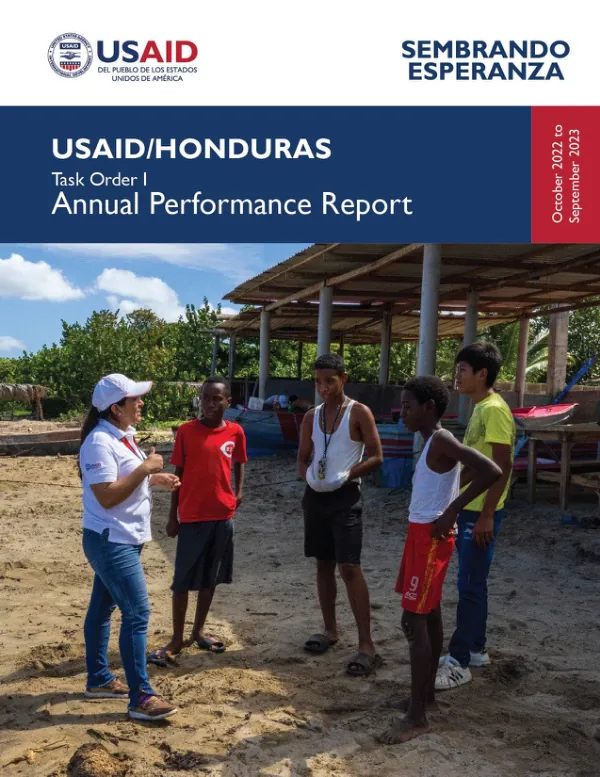
Sembrando Esperanza Activity (SE) Final Report
The Sembrando Esperanza Activity (SE) is a project implemented by a consortium of five organizations, including Creative Associates International, Asociación para una Sociedad más Justa (ASJ), Fundación Nacional para el Desarrollo de Honduras (FUNADEH), Centro de Desarrollo Humano (CDH), and Comisión de Acción Social Menonita (CASM).
2024 · 64 pages
Sign in to readA free account is required to download.
Abstract
The project aims to develop and implement human security approaches that address the intersection between threats, risks, and vulnerabilities that fuel crime and insecurity driving migration. The project has three main objectives: to increase collective efficacy in target locations, to expand comprehensive family and youth-centered services, and to increase evidence-driven advisory capabilities. The project is implemented in three regions: the north coast, central, and western regions, with each region having a Regional Coordination Lead Organization (RCLO) responsible for coordinating interventions. In the first project year, the SE project completed most of the foundational activities and initiated activities that build the capacity of youth leaders to become agents of change. The consortium members delivered dynamic and participatory training sessions, training of trainers, and workshops to build the capacity of youth leaders. The project is implemented in accordance with the U.S. Strategy for Addressing the Root Causes of Migration in Central America, which aims to address the root causes of migration by addressing economic, political, environmental, health, and security dynamics. The project is also aligned with USAID/Honduras' Development Objective 3, which focuses on countering and preventing violence, extortion, and other crimes perpetrated by criminal gangs, trafficking networks, and other organized criminal groups. The project has made significant progress in its first year, with most foundational activities completed and activities initiated to build the capacity of youth leaders. The project has also established a strong partnership with local organizations and government institutions, which will be crucial for the project's success. The project's success will be measured by the achievement of its three main objectives: increasing collective efficacy in target locations, expanding comprehensive family and youth-centered services, and increasing evidence-driven advisory capabilities. The project's impact will be evaluated through regular monitoring and evaluation activities, which will provide insights into the project's effectiveness and areas for improvement. The project's implementation is led by a consortium of five organizations, with each organization bringing its expertise and experience to the project. The consortium members have a strong track record of implementing projects that address the root causes of migration and promoting human security. The project's budget is allocated to support the implementation of the project's activities, including the training of youth leaders, the establishment of community-based organizations, and the provision of technical assistance to local organizations. The project's budget is also allocated to support the project's monitoring and evaluation activities, which will provide insights into the project's effectiveness and areas for improvement. The project's implementation is expected to have a positive impact on the lives of thousands of people in Honduras, particularly in the north coast, central, and western regions. The project's success will depend on the effective implementation of its activities, the establishment of strong partnerships with local organizations and government institutions, and the project's ability to adapt to changing circumstances and challenges. The project's implementation is expected to be completed by September 2023, with a final evaluation to be conducted to assess the project's impact and effectiveness. The project's lessons learned and best practices will be documented and shared with stakeholders, including local organizations, government institutions, and international partners. The project's success will contribute to the achievement of the U.S. Strategy for Addressing the Root Causes of Migration in Central America, which aims to address the root causes of migration by addressing economic, political, environmental, health, and security dynamics. The project's success will also contribute to the achievement of USAID/Honduras' Development Objective 3, which focuses on countering and preventing violence, extortion, and other crimes perpetrated by criminal gangs, trafficking networks, and other organized criminal groups. The project's implementation is expected to be completed by September 2023, with a final evaluation to be conducted to assess the project's impact and effectiveness. The project's lessons learned and best practices will