ABT ASSOCIATES
Sources of Family Planning: Ghana
Modern Contraceptive Use in Ghana Modern contraceptive use in Ghana has increased significantly since 2008, with 18% of women of reproductive age using modern contraception.
2019 · 4 pages
Sign in to readA free account is required to download.
Abstract
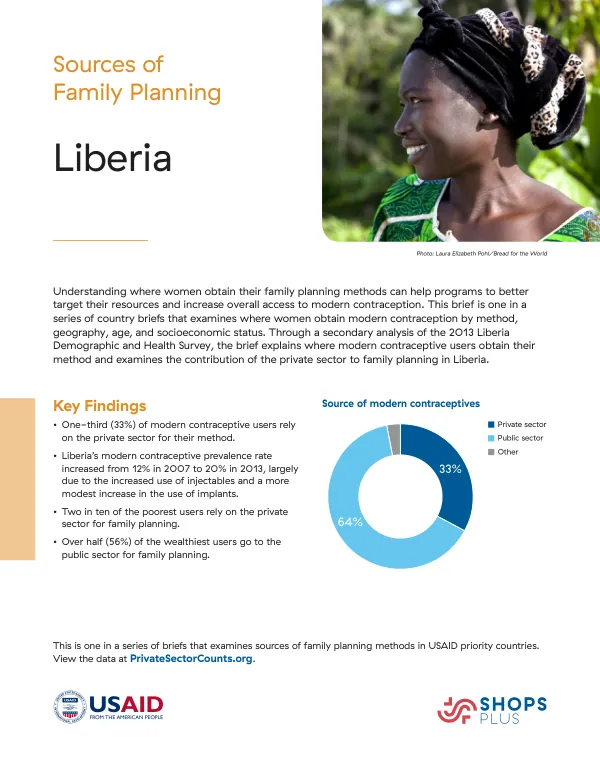
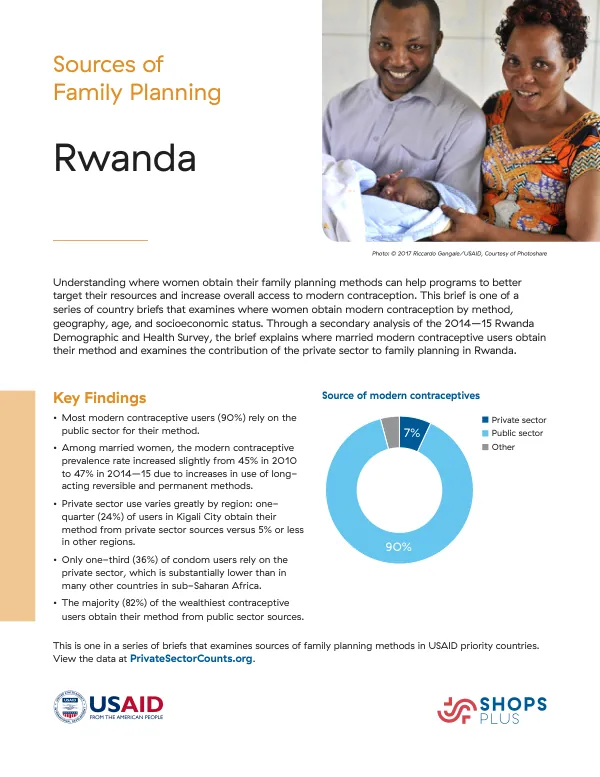
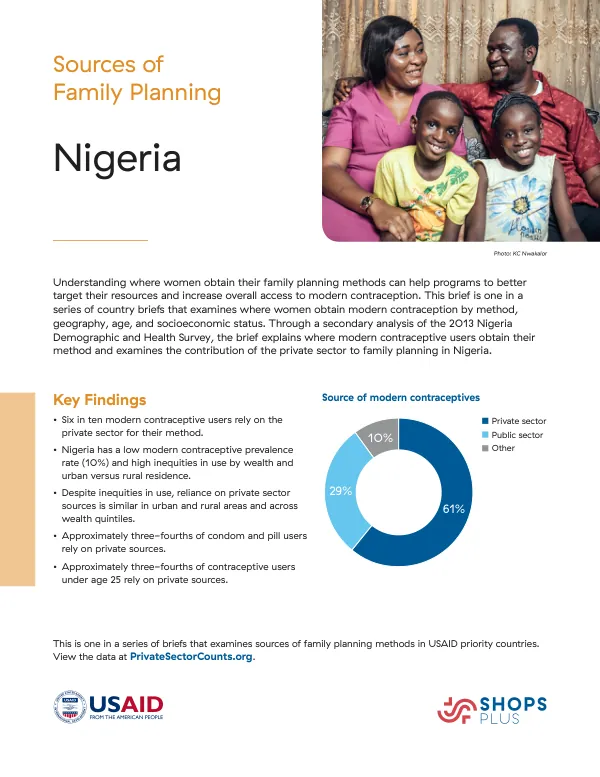
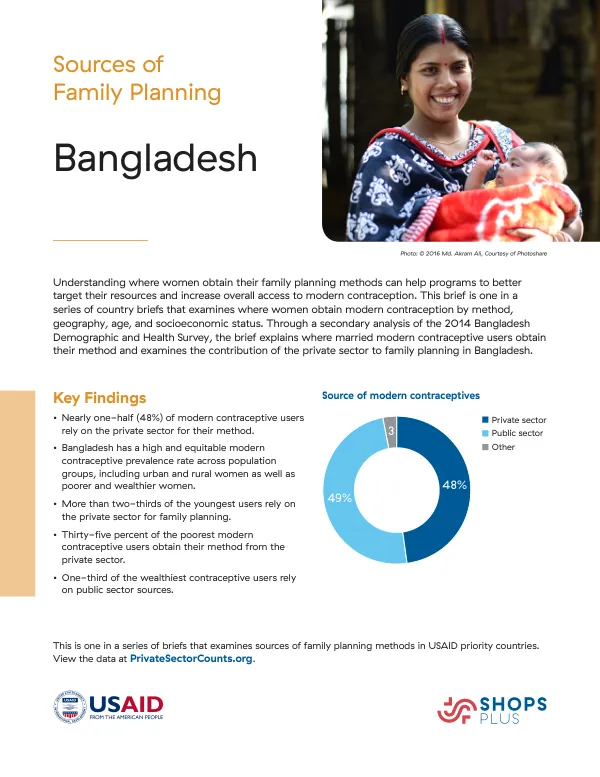
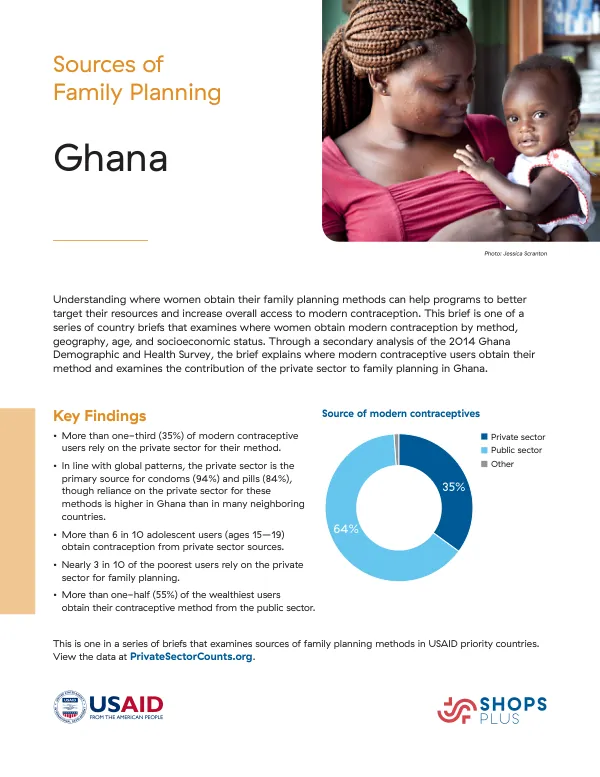
The modern contraceptive prevalence rate (mCPR) among married women is 22%, while among unmarried women, it is 14%. The majority of modern contraceptive users rely on the public sector for their method, with 64% of users obtaining their method from public sources. However, the private sector is also an important source, with 35% of users relying on private sector sources. The private sector is the primary source for condoms and pills, with 94% and 84% of users obtaining these methods from private sector sources, respectively. In contrast, injectable contraceptives, which are the leading method in Ghana, are primarily sourced from the public sector, with 96% of users obtaining these methods from public sources. The use of long-acting reversible contraceptives and permanent methods (LARCs and PMs) has increased significantly since 2008, with 6% of users relying on these methods in 2014. Contraceptive use varies significantly by age, with younger women being more likely to use the private sector. Among private sector users, 86% obtain their method from a private pharmacy or shop, 11% from a private hospital or clinic, and 2% from a non-governmental organization (NGO). Urban users are more likely to purchase their method from the private sector than rural users, with 44% of urban users relying on private sector sources compared to 29% of rural users. The modern contraceptive prevalence rate is higher in rural areas (20%) than in urban areas (15%), possibly due to the Community-based Health Planning and Services program, which primarily targets rural areas. Contraceptive sources vary by region, with private sector reliance highest in the Western region (45%) and lowest in the Upper West region (16%). The private sector has the potential to contribute more to the provision of modern contraceptives, particularly for urban and wealthier women. Strategies to increase access to lower-priced generic DMPA-Plus products, expand injectable contraceptives through drug shops, and scale up private sector social franchising programs with access to implants under price guarantees could improve the availability of modern contraceptives through the private sector. The Government of Ghana has identified full financing for commodity security in the public and private sectors as a key strategic family planning priority. The government aims to undertake a market segmentation analysis to better allocate government services away from the wealthiest and towards the poorest, using a total market approach. This will provide greater opportunities for the private sector to serve population segments with the ability to pay for contraceptive services, fostering a more efficient and sustainable family planning market.
Related documents