ABT ASSOCIATES
Sources of Family Planning: Nigeria
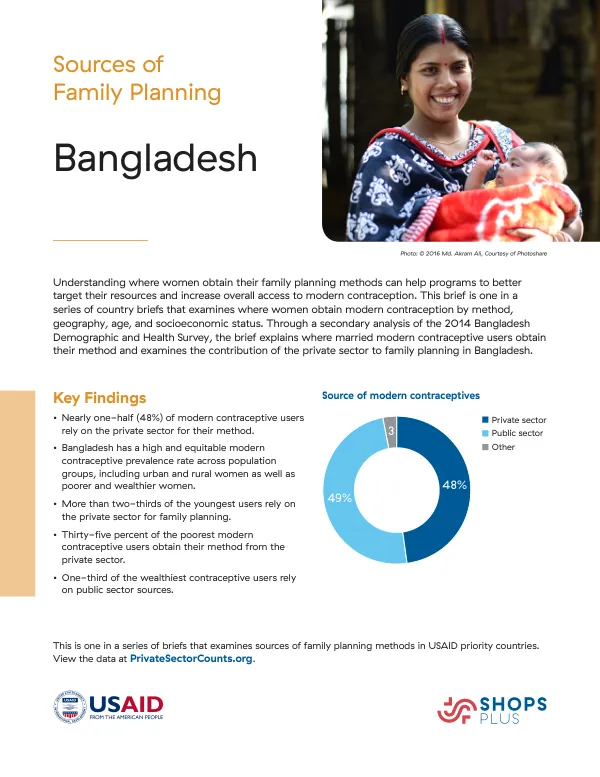
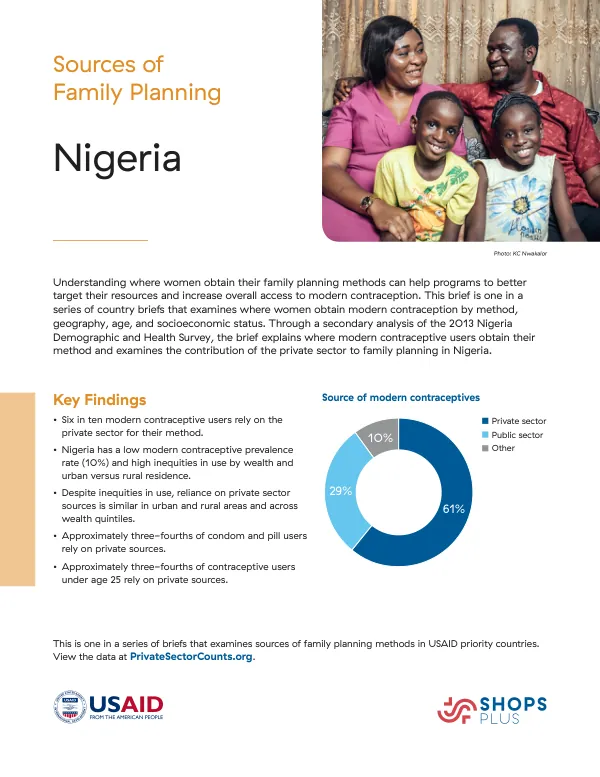
Nigeria has a low modern contraceptive prevalence rate (mCPR) of 10%, with high inequities in use by wealth and urban versus rural residence.
2019 · 4 pages
Sign in to readA free account is required to download.
Abstract
The private sector is the primary source of modern contraceptives, with 61% of users relying on private sector sources. This reliance is similar in urban and rural areas and across wealth quintiles. Among all women of reproductive age in Nigeria, just one in ten use modern contraception. The modern contraceptive prevalence rate (mCPR) among married women is 5%, while among unmarried women it is 15%. Condoms are the most common form of contraception, representing half of all modern contraceptives. The private sector is the primary source for short-acting methods (SAMs), with 78% of users relying on private sector sources. Condoms remain the most common form of contraception in Nigeria, with 9% of users relying on them. The private sector is also the primary source for pill users, with 73% obtaining their method from a private source. The private sector's contribution to method mix is significant, with 61% of users relying on private sector sources. Nigeria's mCPR is higher in urban areas (16%) than in rural areas (7%). However, urban and rural contraceptive users are equally likely to purchase their method from the private sector. Contraceptive source varies by region, with private sector use highest in the South South zone (72%) and lowest in the North West and North East zones (47% and 34%, respectively). Unmarried contraceptive users are more likely to rely on private sources (78%) and are also more likely to use condoms (78%). The private sector sources used by users are mainly pharmacies, patent medicine sellers, or shops (81%). Another 18% rely on hospitals or clinics, and 1% rely on NGOs. Among private sector condom users, 93% obtain their method from a pharmacy or patent medicine seller, and the majority use brands promoted through social marketing. Contraceptive source is similar in urban and rural Nigeria, with 62% of users in urban areas and 33% in rural areas relying on private sector sources. Nigeria has a high reliance on short-acting methods (SAMs), with 9% of users relying on them. The private sector is the primary source for SAMs, with 78% of users relying on private sector sources. Condoms are the most common form of contraception in Nigeria, representing half of all modern contraceptives. The private sector is also the primary source for pill users, with 73% obtaining their method from a private source. The mCPR is more than seven times higher among Nigeria's wealthiest than poorest women (18% vs. 2.4%). Among the poorest users, more than half (56%) rely on private sources, while 35% use public sources. Similarly, nearly two-thirds (63%) of the wealthiest users rely on the private sector, while just over one-quarter (28%) use public sector.
Related documents