ABT ASSOCIATES
Sources of Family Planning: Nepal
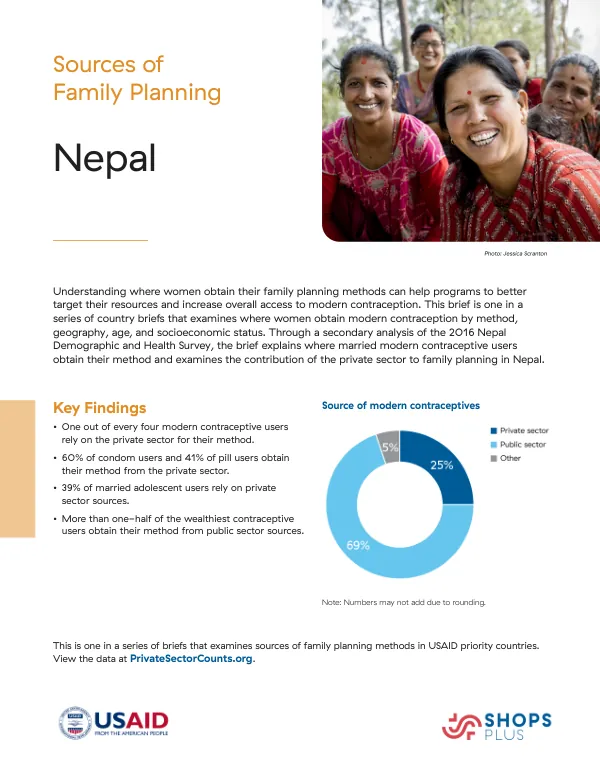
The modern contraceptive prevalence rate in Nepal is 43 percent among married women, with a slight increase in the use of implants and a decrease in sterilization between 2011 and 2016.
2016 · 4 pages
Sign in to readA free account is required to download.
Abstract
The split between short-acting methods and long-acting reversible contraceptives and permanent methods remains unchanged. Sterilization is the leading family planning method, followed by injectables. The public sector is the primary source of modern contraceptives in Nepal, accounting for 69 percent of users. A quarter of users rely on the private sector, while 5 percent use other sources. Among sterilized women, 75 percent received the procedure from a public source, 16 percent from a private source, and 11 percent from unspecified "other" sources. Injectables are primarily obtained from public sources, with 74 percent of users relying on public sources and 26 percent on private sources. Condoms are the most commonly sought method from the private sector, with 60 percent of users relying on private sector sources. Private sector sterilization clients typically receive the procedure at a Marie Stopes, Family Planning Association of Nepal, or other NGO clinic, while private condom users typically rely on pharmacies. Urban contraceptive users are nearly twice as likely to purchase their method from the private sector compared with rural users. Nepal has an equitable modern contraceptive prevalence rate across urban and rural areas, with a slight difference in the use of private sector sources. Urban users are more likely to rely on private sector sources, with 31 percent of users relying on private sector sources compared with 16 percent in rural areas. The mountain zone has the lowest private sector use, with 7 percent of users relying on private sector sources. Younger contraceptive users are more likely to rely on private sector sources, with 39 percent of married adolescent users ages 15 to 19 relying on private sector sources. The method mix varies across age categories, with injectables being the most popular contraceptive among users younger than 25. Sterilization is the most popular method among older users, while condoms are more commonly used among younger users. In contrast to global patterns, the poorest and wealthiest Nepali women have equal modern contraceptive prevalence rates, with 43 and 42 percent, respectively. The poorest and wealthiest users rely on private sector sources at different rates, with 13 percent of the poorest users and 39 percent of the wealthiest users relying on private sector sources. More than half of the wealthiest contraceptive users in Nepal use the public sector. The private sector plays a critical role in increasing contraceptive access and choice in Nepal, particularly among married adolescents. Strengthening social marketing and the private sector could help increase contraceptive access and choice, particularly in rural areas. Expanding the role of the private sector for the wealthiest Nepali women could also foster a more efficient market, leaving public resources for increasing access and choice among the country's poorest women.
Related documents