INTERNATIONAL CHILDREN'S FUND, INC.
Sri Lanka Complex Emergency Fact Sheet #11, Fiscal Year (FY) 2009
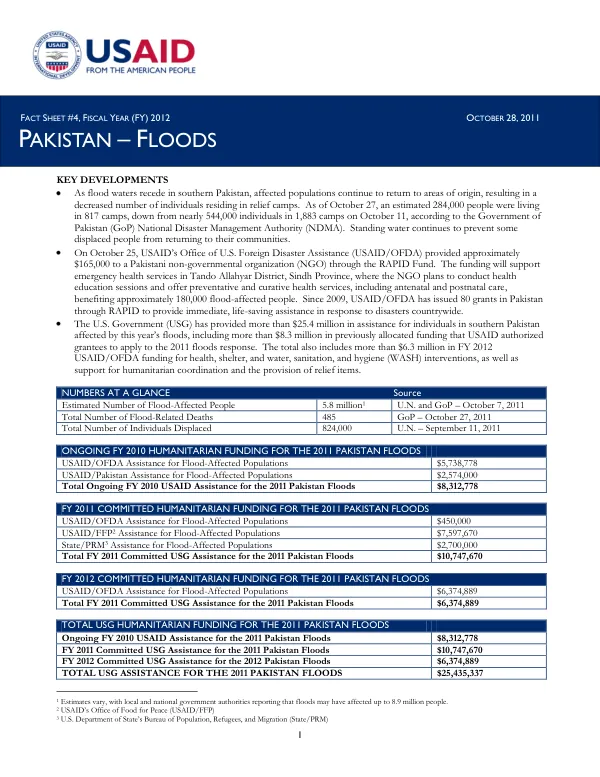
The complex emergency in Sri Lanka began in late October 2008, with over 276,000 internally displaced persons (IDPs) moving from the former conflict zone into Government of Sri Lanka (GoSL)-controlled territory.
2009 · 4 pages
Sign in to readA free account is required to download.
Abstract
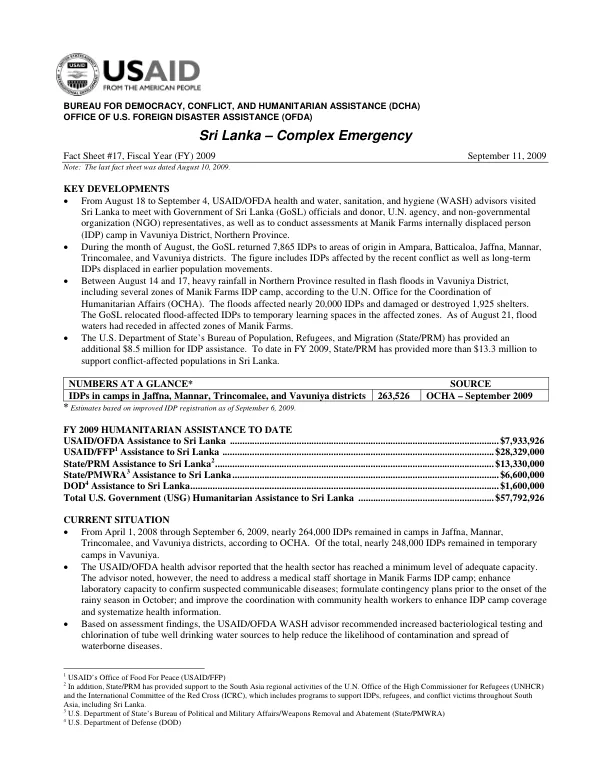
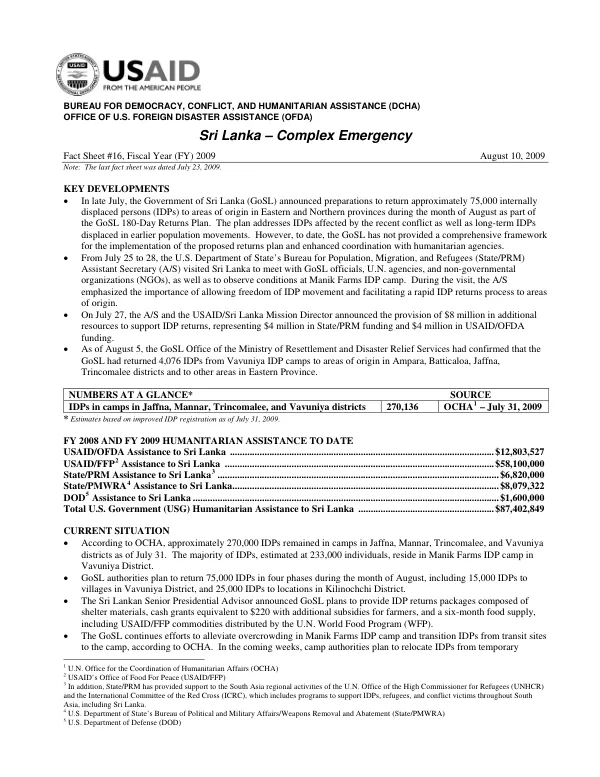
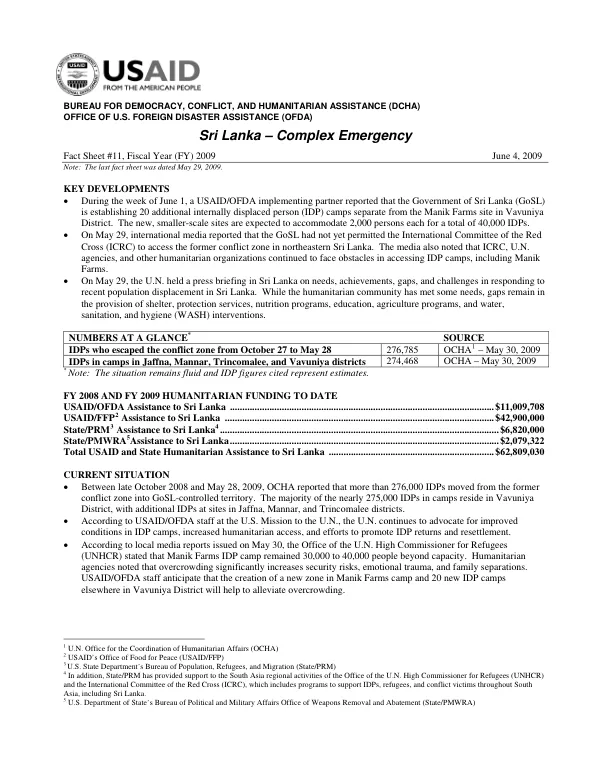
The majority of the nearly 275,000 IDPs in camps reside in Vavuniya District, with additional IDPs at sites in Jaffna, Mannar, and Trincomalee districts. The U.N. continues to advocate for improved conditions in IDP camps, increased humanitarian access, and efforts to promote IDP returns and resettlement. The Government of Sri Lanka is establishing 20 additional IDP camps separate from the Manik Farms site in Vavuniya District, with each camp expected to accommodate 2,000 persons. The creation of these new camps is intended to alleviate overcrowding in the existing camps, which has resulted in significant security risks, emotional trauma, and family separations. The Office of the U.N. High Commissioner for Refugees (UNHCR) has reported that Manik Farms IDP camp remains 30,000 to 40,000 people beyond capacity. Humanitarian agencies have distributed emergency relief supplies, including bed sheets, kitchen sets, mosquito nets, plastic mats, water containers, and clothing, to IDPs in camps. The U.N. World Food Program (WFP) has distributed approximately 1,785 metric tons of food aid in IDP sites in Vavuniya District between May 1 and 23. Protection teams have been able to visit transit sites in Vavuniya District, but a lack of access has hampered protection monitoring in all zones of Manik Farms IDP camp. The Government of Sri Lanka has requested assistance with site design, shelter, and water, sanitation, and hygiene (WASH) facilities for the new IDP camps. USAID/OFDA staff are following up on additional information about these sites. The creation of a new zone in Manik Farms IDP camp, Zone 5, is an administrative division to assist authorities with managing the camp more efficiently. USAID/OFDA staff are confirming reports that GoSL authorities are transferring approximately 6,350 IDPs from transit sites to Manik Farms IDP camp. Gaps in WASH services in camps remain a significant concern to USAID/OFDA. The WASH cluster in Vavuniya District has reported that challenges include access to camps, overcrowding, lack of morbidity and mortality data, and limited coordination with GoSL agencies. Humanitarian agencies and GoSL authorities have provided more than 3,000 hygiene facilities and approximately 2,000 waste receptacles for IDP populations, but significant gaps remain in hygiene facilities and hygiene promotion activities. USAID/OFDA has provided more than $6 million to assist IDPs and returnees in FY 2009, including support for health, logistics, protection, disaster risk reduction, agriculture and food security, economy and market systems, shelter and settlements, humanitarian coordination and information management, and WASH programs. USAID/FFP has provided 19,490 metric tons of P.L. 480 Title II emergency food assistance, valued at $14.3 million, to WFP. State/PRM has provided $4.8 million to ICRC and UNHCR to support conflict-affected Sri Lankans.