FAMILY HEALTH INTERNATIONAL
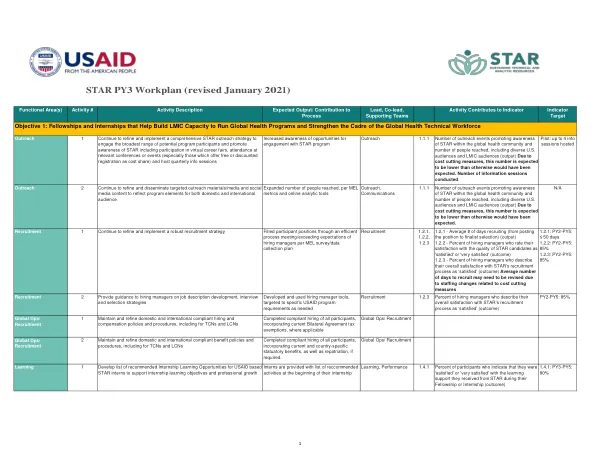
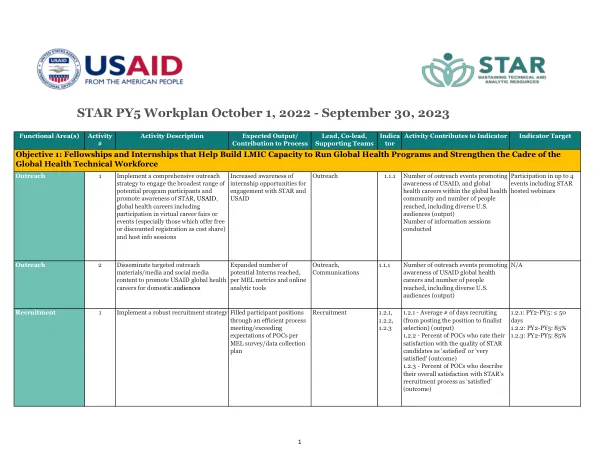
STAR PY5 Workplan October 1, 2022 - September 30, 2023
The STAR program, implemented by USAID, aims to build the capacity of low- and middle-income countries (LMICs) to run global health programs and strengthen the global health technical workforce.
2022 · 15 pages
Sign in to readA free account is required to download.
Abstract
A key component of this effort is the provision of fellowships and internships to support the development of the next generation of global health leaders. To achieve this goal, the STAR program has established a comprehensive outreach strategy to engage a broad range of potential program participants and promote awareness of USAID global health careers. This includes participation in virtual career fairs and events, as well as hosting information sessions. The program also disseminates targeted outreach materials and social media content to promote USAID global health careers for domestic audiences. The recruitment strategy for the STAR program involves implementing a robust recruitment process that meets the expectations of program officers (POCs). This includes providing guidance to hiring POCs on job description development, interview and selection strategies, and maintaining and refining domestic and international compliant hiring and compensation policies and procedures. The STAR program also places a strong emphasis on learning and professional development. This includes developing and maintaining a list of recommended internship learning opportunities for USAID-based STAR interns, providing guidance to fellows to inform the development of their individual learning plans, and curating and implementing virtual learning activities that are professionally relevant to a significant number of STAR participants. In addition, the STAR program continues to develop opportunities for USAID Global Health to engage with academic institutions through fellowships, internships, dissertation research, faculty sabbaticals, and technical expertise. This includes partnering with institutions such as Princeton, Harvard, Purdue, and Johns Hopkins University to provide internship and fellowship opportunities for students focused on global health. The program also partners with AMP Health to second management consultant partners to national malaria and TB programs in up to 6 countries to build MoH capacity in overall health leadership and management. This includes conducting various management training workshops for MoH participants. The STAR program delivers orientation content and refines related materials for fellows and interns, with the goal of preparing them for their internships and fellowships. The program also provides continued guidance to support the use of STAR Performance Management tools, such as GOALS and Quarterly Check-ins, to assess fellows' performance and satisfaction with the placement. Overall, the STAR program is committed to building the capacity of LMICs to run global health programs and strengthening the global health technical workforce through a comprehensive approach that includes outreach, recruitment, learning, and performance management.
Related documents