USAID DEC
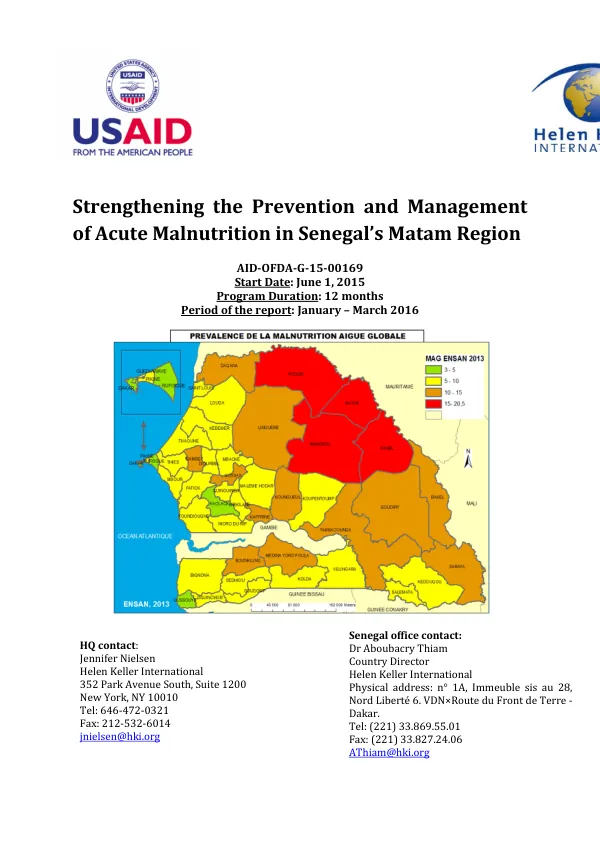
Strengthening the Prevention and Management of Acute Malnutrition in Senegal’s Matam Region
Sign inACTION CONTRE LA FAIM
Strengthening the Prevention and Management of Acute Malnutrition in Senegal’s Matam Region
However, this document focuses on a different project, "Strengthening the Prevention and Management of Acute Malnutrition in Senegal's Matam Region," which started in June 2015.
2016 · 9 pages
Sign in to readA free account is required to download.
Abstract
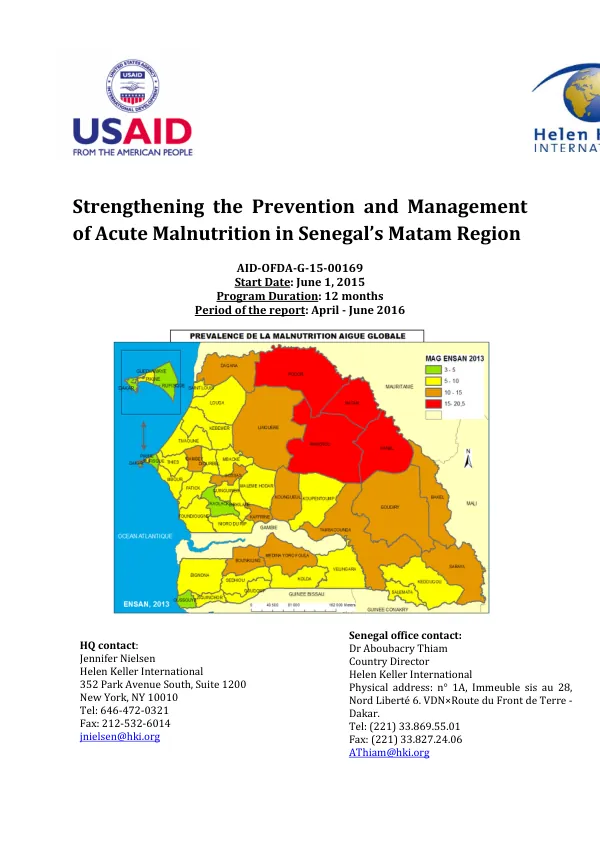
The project is coordinated by Helen Keller International (HKI) in collaboration with the medical authorities for Matam region. The project aims to strengthen the capacity of health workers and communities to implement the national protocol for the community management of acute malnutrition (CMAM) and to promote adoption of essential nutrition and hygiene actions in three health districts (Kanel, Thilogne, and Matam) in Matam Region. The project targets geographic and technical gaps in coverage and services, building on existing efforts by partners such as Action Contre La Faim (ACF) and Union pour la Solidarité et l'Entraide (USE). The project's main objective is to strengthen the prevention and treatment of acute malnutrition through the community management of acute malnutrition and behavior change related to essential nutrition and hygiene actions. The project focuses on two main areas: the management of moderate acute malnutrition (MAM) and the management of severe acute malnutrition (SAM). In terms of MAM management, the project aims to strengthen the capacity of health workers and communities to identify and treat MAM cases. The project targets 66 sites in the three health districts, with a focus on training health care providers and volunteers in prevention and management of MAM. The project also aims to improve the cure/recovery rate of children under 5 treated for MAM, with a target of greater than 50%. The project has made significant progress in MAM management, with a cumulative total of 22,618 children admitted for MAM services as of the fourth quarter of the project. The cure/recovery rate of children under 5 treated for MAM has also improved, with a cumulative total of 95.4% as of the fourth quarter. The dropout rate among children under 5 treated for MAM has also decreased, with a cumulative total of 0.3% as of the fourth quarter. In terms of SAM management, the project aims to strengthen the capacity of health workers and communities to identify and treat SAM cases. The project targets 4 sites in the three health districts, with a focus on training health care providers and volunteers in prevention and management of SAM. The project also aims to improve the recovery/cure rate of children under 5 treated for SAM, with a target of greater than 75%. The project has made significant progress in SAM management, with a cumulative total of 998 children admitted for SAM treatment with complications as of the fourth quarter. The recovery/cure rate of children under 5 treated for SAM has also improved, with a cumulative total of 89.0% as of the fourth quarter. The dropout rate among children under 5 treated for SAM has also decreased, with a cumulative total of 1.9% as of the fourth quarter. The project also focuses on nutritional education and behavior change, with a target of reaching 13,200 beneficiaries through radios. The project has made significant progress in this area, with a cumulative total of 2,351 beneficiaries receiving nutritional education in communities as of the fourth quarter. Overall, the project has made significant progress in strengthening the prevention and management of acute malnutrition in Senegal's Matam Region. The project has improved the cure/recovery rate of children under 5 treated for MAM and SAM, decreased the dropout rate among children under 5 treated for MAM and SAM, and increased the number of beneficiaries receiving nutritional education in communities.