THE WORLD FOOD PROGRAMME
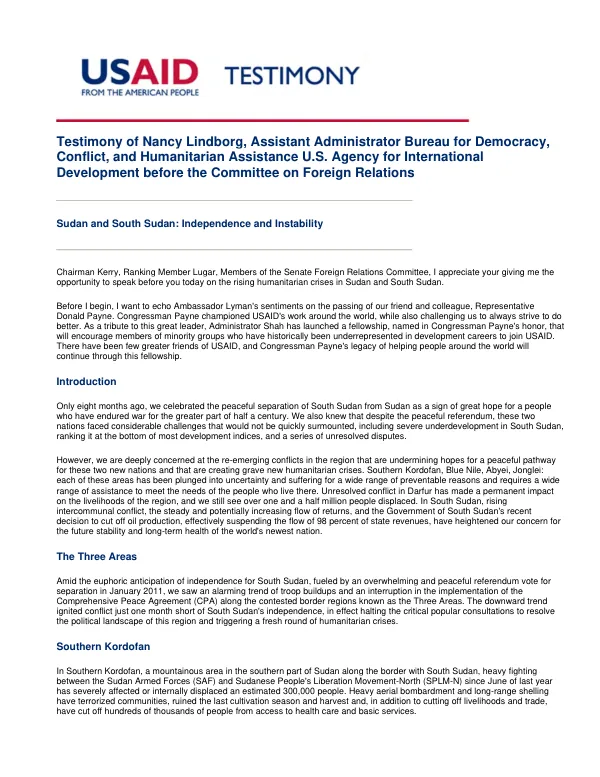
Sudan and South Sudan: Independence and Instability
The humanitarian crisis in Sudan and South Sudan has escalated in recent months, with severe consequences for the populations affected.
2012 · 5 pages
Sign in to readA free account is required to download.
Abstract
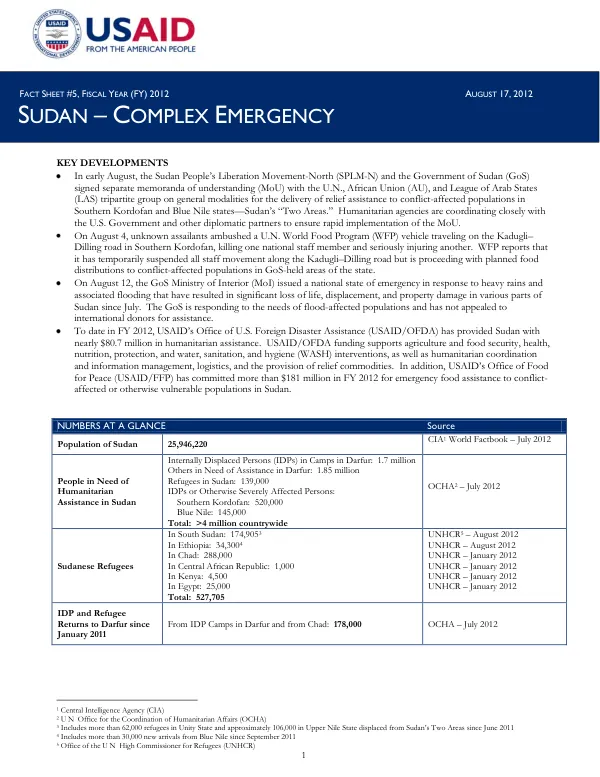
The conflict in Southern Kordofan has resulted in an estimated 300,000 people being internally displaced or severely affected, with 55,000 people making dangerous escapes into South Sudan or seeking refuge elsewhere inside Sudan. The situation in Blue Nile is equally dire, with over 110,000 people displaced and approximately 60,000 severely affected or internally displaced within the region. The conflict in Southern Kordofan has been marked by heavy fighting between the Sudan Armed Forces (SAF) and the Sudan People's Liberation Movement-North (SPLM-N), with aerial bombardment and long-range shelling causing widespread destruction and terrorizing communities. The Government of Sudan has restricted international humanitarian access, making it difficult for aid to reach those in need. USAID food security experts estimate that 200,000-250,000 people in Southern Kordofan may face a food emergency by the end of April if the violence and restrictions on humanitarian access continue. In Blue Nile, fighting erupted almost three months after Southern Kordofan, resulting in similarly disturbing levels of displacement. Approximately 60,000 people are estimated to be severely affected or internally displaced within the region. The rainy season, beginning in mid-May, will limit the ability of vulnerable populations to exit Blue Nile and seek protection in neighboring countries. The Abyei Area, a site of conflict and tension, remains unresolved, with the final status of Abyei still to be determined. A military operation conducted by the Sudan Armed Forces and subsequent fighting caused 110,000 people to move southward toward Agok and to destinations across South Sudan. USAID partners had prepositioned supplies in key hubs to enable a rapid response if needed, and after the May conflict, they were able to distribute essential items such as plastic sheeting, blankets, water containers, and soap. The United States is working with international partners to press for access to affected communities through an intensive diplomatic campaign. Current efforts are focused on getting a positive Government of Sudan response to the tripartite proposal of the UN, the African Union, and the League of Arab States on assessment, access, and monitoring of humanitarian assistance to all civilians in Southern Kordofan and Blue Nile. Should the Government of Sudan sign this agreement, USAID partners and the UN are ready to conduct assessments and immediately deliver food and humanitarian assistance to those in need. The United States is committed to preventing the humanitarian situation from worsening further and is exploring options for providing indirect support in a worst-case scenario in which the Government of Sudan continues to refuse to open humanitarian access. The situation in Sudan and South Sudan is complex and requires a coordinated response from the international community to address the humanitarian needs of those affected.
Related documents