USAID
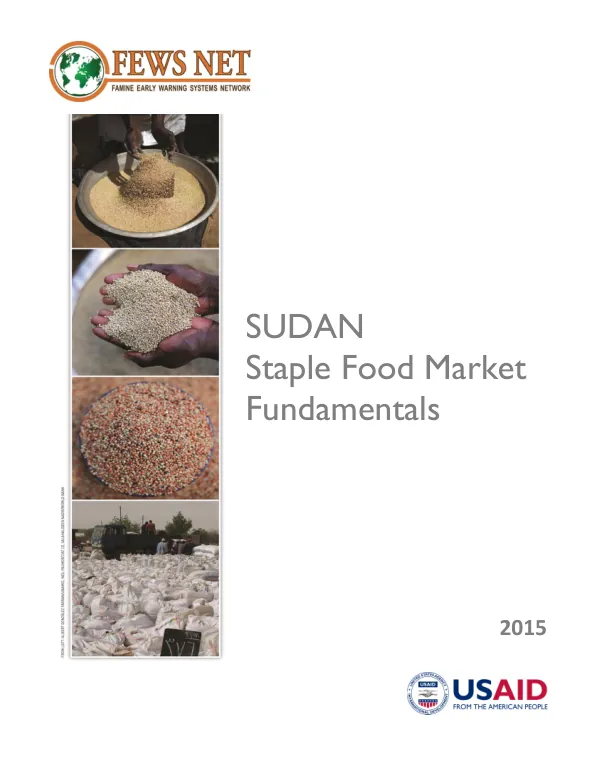
Sudan Staple Food Market Fundamentals
Sudan's staple food market fundamentals are critical to understanding the country's food security situation.
2015 · 47 pages
Sign in to readA free account is required to download.
Abstract
The National Food Supply is characterized by a reliance on sorghum, wheat, and millet, with sorghum being the primary staple crop. Sudan's agricultural sector is vulnerable to climate variability, with rainfall levels varying significantly across the country. The average rainfall levels in Sudan are depicted in Figure 4, showing a decline in rainfall from 2000 to 2012. The National Food Demand is driven by a growing population, with an estimated 40% of the population living below the poverty line. The demand for wheat and sorghum is increasing, driven by urbanization and changes in dietary preferences. The wheat consumption trends in Sudan are shown in Figure 2, indicating a steady increase in wheat consumption over the past decade. Sorghum is a key crop in Sudan, accounting for over 70% of the country's cereal production. The sorghum market is characterized by a complex network of traders, with key actors including the Sudan Grain Trade Company, the Sudanese Ministry of Agriculture, and the private sector. The sorghum trade markets are concentrated in the states of Gedaref, Kassala, and Red Sea, with the Gedaref market being the largest. The sorghum price trends in Sudan are shown in Figure 13, indicating a steady increase in prices over the past decade. Wheat is another critical crop in Sudan, with the country relying heavily on imports to meet domestic demand. The wheat production trends in Sudan are shown in Figure 2, indicating a decline in production over the past decade. The wheat import trends are also increasing, driven by a growing demand for wheat in urban areas. The wheat price trends in Sudan are shown in Figure 14, indicating a steady increase in prices over the past decade. Millet is a minor crop in Sudan, accounting for less than 10% of the country's cereal production. The millet market is characterized by a limited number of traders, with key actors including the Sudan Grain Trade Company and the private sector. The millet trade markets are concentrated in the states of Gedaref, Kassala, and Red Sea, with the Gedaref market being the largest. The millet price trends in Sudan are shown in Figure 14, indicating a steady increase in prices over the past decade. The market monitoring plan for Sudan's staple food market is critical to understanding the country's food security situation. The plan involves monitoring key indicators such as rainfall, temperature, and crop yields, as well as market prices and trade flows. The plan also involves conducting regular surveys and focus groups with farmers, traders, and consumers to gather information on market trends and consumer behavior. The market monitoring plan is essential for informing decision-makers and supporting emergency response planning in Sudan.
Related documents