GOVERNMENT OF TAJIKISTAN
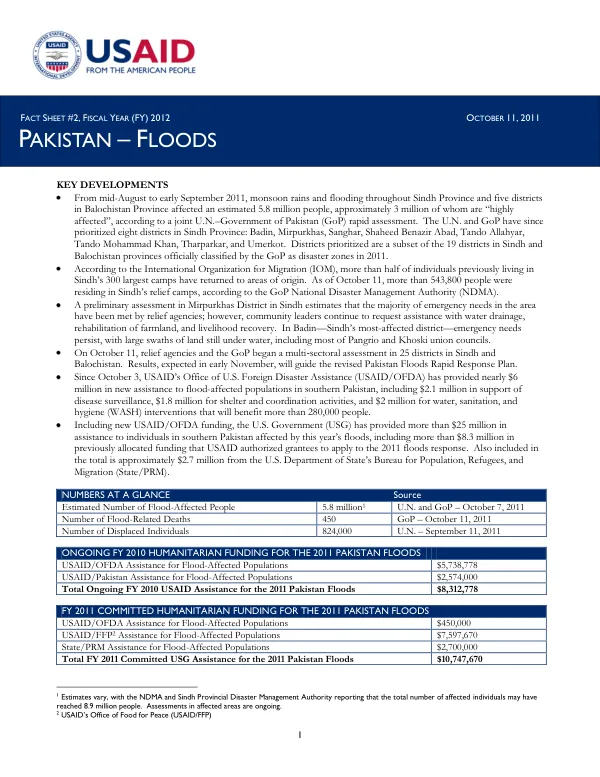
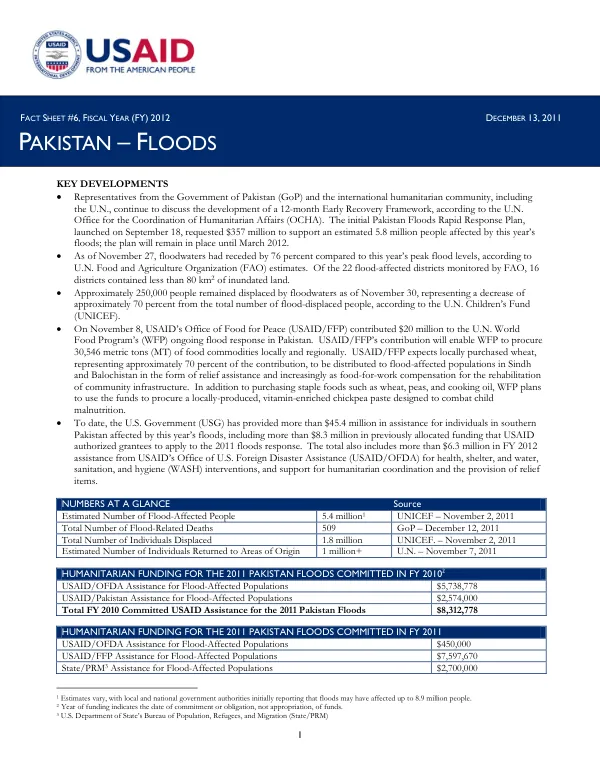
USAID-DCHA Pakistan Floods Fact Sheet #6 - FY 2012
The Government of Pakistan (GoP) and the international humanitarian community, including the U.N., continue to discuss the development of a 12-month Early Recovery Framework.
2012 · 4 pages
Sign in to readA free account is required to download.
Abstract
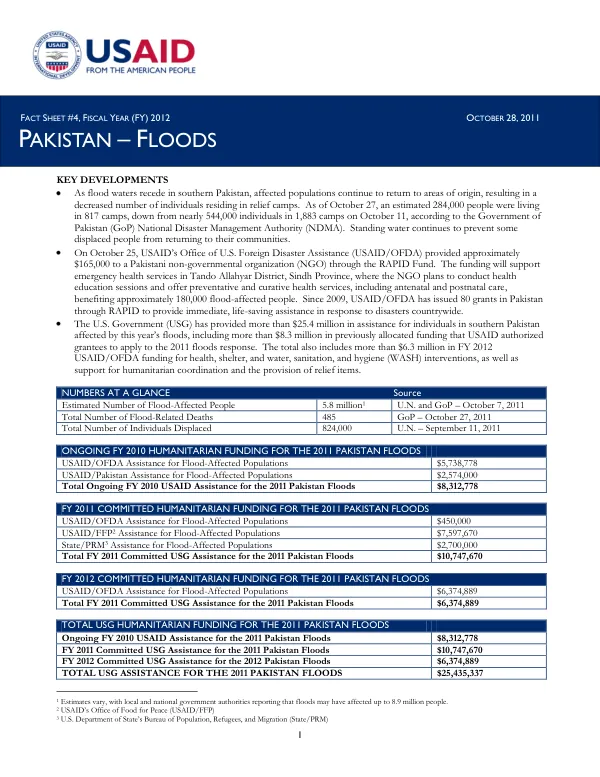
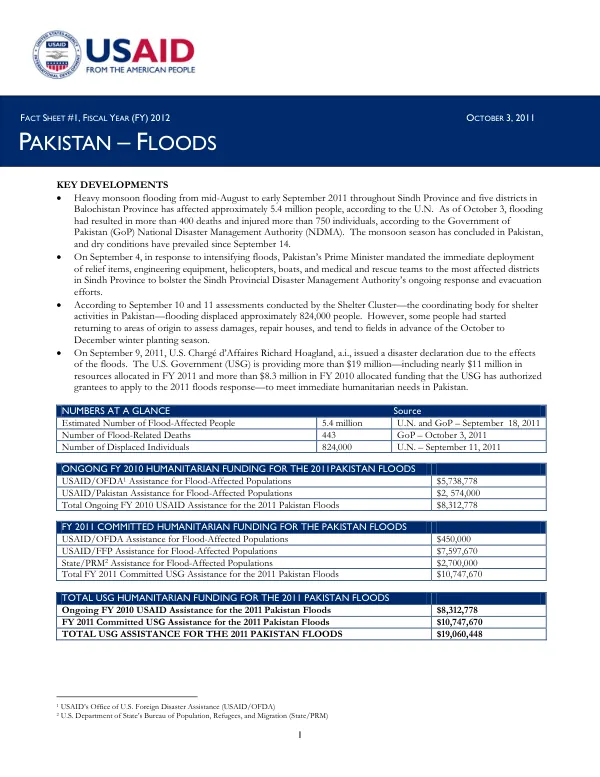
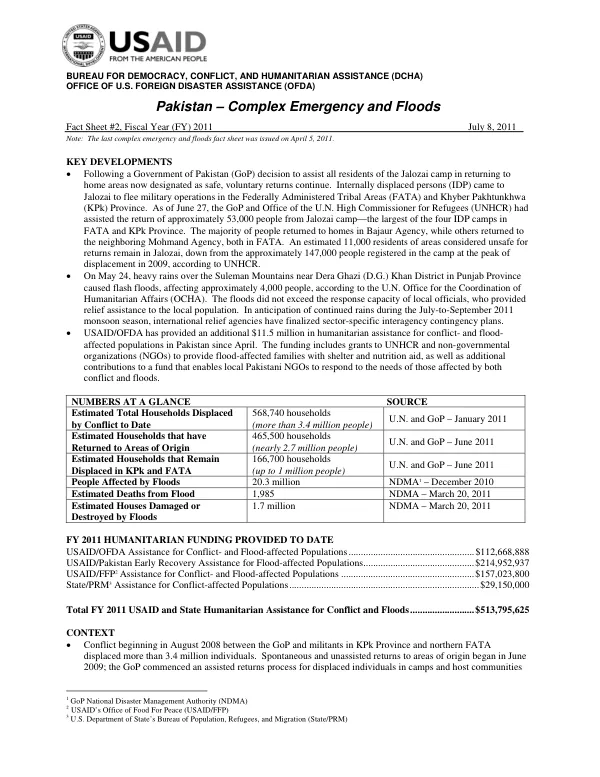
The initial Pakistan Floods Rapid Response Plan, launched on September 18, requested $357 million to support an estimated 5.8 million people affected by this year's floods. The plan will remain in place until March 2012. As of November 27, floodwaters had receded by 76 percent compared to this year's peak flood levels, according to U.N. Food and Agriculture Organization (FAO) estimates. Of the 22 flood-affected districts monitored by FAO, 16 districts contained less than 80 km2 of inundated land. Approximately 250,000 people remained displaced by floodwaters as of November 30, representing a decrease of approximately 70 percent from the total number of flood-displaced people, according to the U.N. Children's Fund (UNICEF). The U.S. Government (USG) has provided more than $45.4 million in assistance for individuals in southern Pakistan affected by this year's floods. This includes more than $8.3 million in previously allocated funding that USAID authorized grantees to apply to the 2011 floods response. The total also includes more than $6.3 million in FY 2012 assistance from USAID's Office of U.S. Foreign Disaster Assistance (USAID/OFDA) for health, shelter, and water, sanitation, and hygiene (WASH) interventions, and support for humanitarian coordination and the provision of relief items. The 2011 floods occurred as Pakistanis continued to recover from the 2010 monsoon floods that affected approximately 18 million people countrywide. Families continue to rebuild homes and restore livelihoods more than a year after last year's disaster—one of the worst in Pakistan's history. More than $922 million provided by the USG in response to the 2010 floods emergency assisted relief organizations to establish a presence in Balochistan and Sindh provinces, facilitating a timely and more cost-effective response in 2011. As part of early recovery efforts, members of the Shelter Cluster have begun assessing flood-damaged houses to better inform future shelter construction and to suggest simple disaster risk reduction (DRR) technologies that can be used within traditional housing models. In response to substantial returns to areas of origin, WASH Cluster members have begun working with the GoP Public Health Engineering Department to repair water supply infrastructure and sanitation facilities in flood-damaged areas, according to UNICEF. The humanitarian community is currently evaluating Pakistan's flood protection infrastructure, which were assessed as part of the November 2011 Multi-Sector Needs Assessment.