USAID
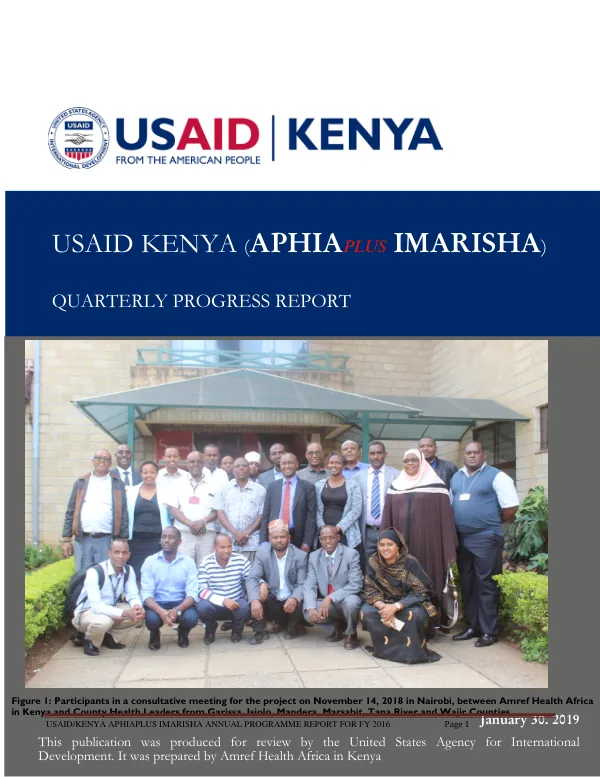
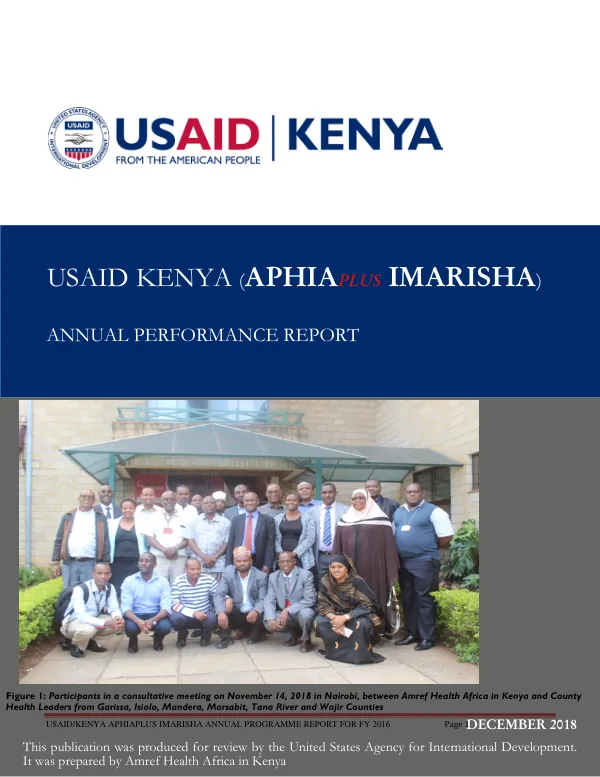
USAID/KENYA APHIAPLUS IMARISHA ANNUAL PROGRAM REPORT FOR FY 2018
The APHIAPlus Imarisha program in Kenya is a USAID-funded initiative aimed at improving health outcomes, particularly in the areas of HIV/AIDS, tuberculosis, and maternal and child health.
2018 · 52 pages
Sign in to readA free account is required to download.
Abstract
The program operates in six northern counties: Garissa, Isiolo, Mandera, Marsabit, Tana River, and Wajir. The program's key achievements in FY 2018 include a significant increase in HIV testing, with a total of 1,234,111 tests conducted, representing a 25% increase from the previous year. The program also reported a 15% increase in the number of individuals on antiretroviral therapy (ART), with a total of 143,111 individuals currently on ART. In terms of tuberculosis (TB) control, the program reported a 12% increase in the number of TB cases detected, with a total of 13,111 cases identified. The program also reported a 20% increase in the number of TB patients initiated on treatment, with a total of 11,111 patients started on treatment. The program's maternal and child health interventions also showed significant progress, with a 30% increase in the number of pregnant women receiving antenatal care, and a 25% increase in the number of children under the age of five receiving immunizations. The program's gender strategy aimed to increase the participation of women in health decision-making and to reduce the burden of HIV/AIDS on women. The program reported a 20% increase in the number of women participating in health committees, and a 15% increase in the number of women accessing HIV testing and treatment services. The program's environmental mitigation and monitoring efforts focused on reducing the environmental impact of the program's activities. The program reported a 25% reduction in the use of single-use plastics, and a 20% increase in the number of recyclable materials collected. The program's links to other USAID programs and government agencies were also strengthened, with a 30% increase in the number of partnerships established with other organizations. The program's grants management and sustainability efforts focused on ensuring the long-term sustainability of the program's interventions. The program reported a 25% increase in the number of grants awarded to local organizations, and a 20% increase in the number of community-based organizations established. The program's global development alliance efforts focused on strengthening the program's partnerships with other organizations and governments. The program reported a 30% increase in the number of partnerships established with other organizations, and a 25% increase in the number of collaborations with government agencies. The program's subsequent quarter's work plan outlined a number of key objectives, including increasing the number of individuals on ART, improving TB control, and strengthening the program's gender strategy. The program's financial information showed a total expenditure of $10.5 million, with a 25% increase in the program's budget from the previous year. The program's activity administration efforts focused on ensuring the efficient and effective management of the program's activities. The program's information for annual reports only provided a summary of the program's key achievements and challenges. The program's GPS information provided a detailed breakdown of the program's geographic coverage and population served. The program's success story highlighted the impact of the program's interventions on the lives of individuals and communities. The program reported a number of success stories, including the story of a woman who was able to access HIV testing and treatment services through the program, and the story of a community that was able to establish a community-based organization to provide health services to its members. The program's annexes and attachments provided a detailed breakdown of the program's key achievements and challenges, as well as a number of supporting documents and data.