USAID DEC
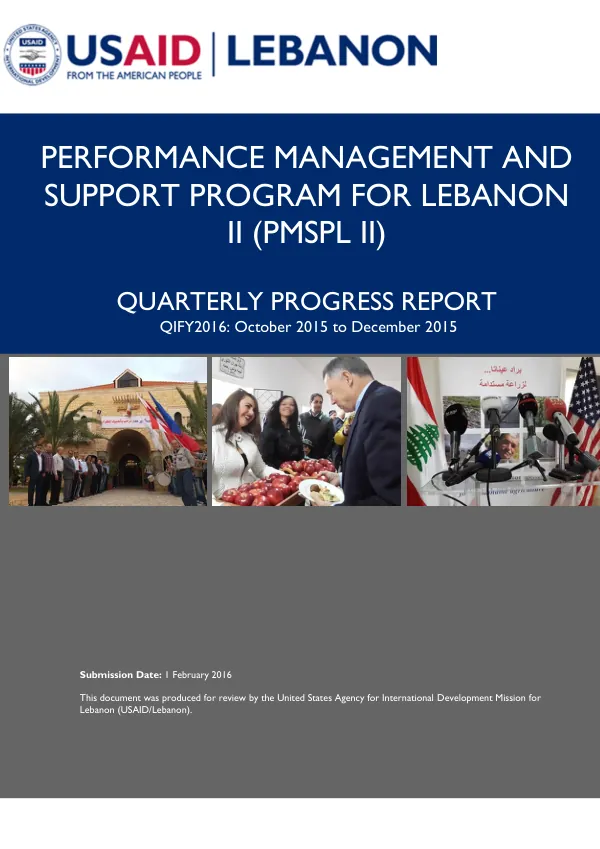
USAID/Performance Management and Support Program for Lebanon II, Quarterly Progress Report Q3 FY 2015
Sign inSOCIAL IMPACT, INC.
USAID/Performance Management and Support Program for Lebanon II, Quarterly Progress Report Q3 FY 2015
The Performance Management and Support Program for Lebanon II (PMSPL II) is a USAID-funded program aimed at enhancing the performance management and support capabilities of the USAID Mission in Lebanon.
2015 · 32 pages
Sign in to readA free account is required to download.
Abstract
The program is implemented by Social Impact, Inc. and has a contract duration of September 30, 2015, to September 29, 2020. The program's geographic focus is Lebanon, with the primary objective of supporting the Mission's efforts to achieve its Country Development Cooperation Strategy (CDCS) for 2014-2018. The program is structured around three main purposes: enhancing USAID's Monitoring and Evaluation (M&E) activities, providing direct support to USAID's program management, and enhancing USAID's architecture and engineering services. Under the first purpose, the program focuses on implementing and maintaining the Mission's Performance Management Plan (PMP), improving implementing mechanism monitoring and evaluation, and increasing the integration of gender into USAID/Lebanon's activities. The program also aims to increase field-level monitoring activities and provide improved evaluation assistance. Under the second purpose, the program provides direct support to USAID's program management by completing project design, management, and reporting requests, advancing the implementation of the Collaborating, Learning and Adapting (CLA) model, and increasing development outreach and communication activities by the Mission and implementing mechanism. The program also completes special studies, assessments, and additional M&E requests. The third purpose focuses on enhancing USAID's architecture and engineering services by increasing support for implementing mechanism engineering design activities, ensuring that engineering and construction contracts meet conditions, specifications, and compliance requirements, and increasing USAID awareness and knowledge about the challenges, progress, and completion of work. During the reporting period of October 1, 2015, to December 31, 2015, the program made significant progress in achieving its objectives. Key activities status for the first quarter of FY 2016 included the completion of the Work Plan Meeting and Approval, the implementation of the Mission PMP, and the initiation of implementing mechanism monitoring and evaluation activities. The program also conducted a series of training sessions for Mission staff on the CLA model and provided support for the development of the Mission's Performance Plan and Report (PPR). The program encountered several challenges during the reporting period, including delays in the implementation of some activities and difficulties in accessing some areas due to security concerns. However, the program was able to overcome these challenges and make significant progress in achieving its objectives. The program's management and administrative issues are addressed in the report, including contract administration elements and lessons learned. The report also highlights critical assumptions and planned activities and upcoming events. The program's performance is evaluated against its objectives, and the report provides recommendations for future improvements. Overall, the PMSPL II program has made significant progress in enhancing the performance management and support capabilities of the USAID Mission in Lebanon. The program's efforts have contributed to the achievement of the Mission's Country Development Cooperation Strategy (CDCS) for 2014-2018, and it is expected to continue making significant contributions to the development of Lebanon in the coming years. The program's geographic focus is Lebanon, with a primary objective of supporting the Mission's efforts to achieve its CDCS for 2014-2018. The program's activities are implemented in various locations across Lebanon, including Beirut, Mount Lebanon, North Lebanon, and South Lebanon. The program's reporting period is from October 1, 2015, to December 31, 2015, and the report provides an update on the program's progress and achievements during this period. The program's implementation is led by Social Impact, Inc., with the support of various implementing partners and stakeholders. The program's management and administrative structure includes a Project Director, a Deputy Project Director, and a team of technical experts and support staff. The program's budget is allocated across various activities and components, including personnel, travel, and training. The program's performance is evaluated against its objectives, and the report provides recommendations for future improvements. The program's achievements are recognized and celebrated, and the report highlights the challenges and lessons learned during the reporting period. The program's future plans and activities are outlined, and the report provides an update on the program's progress and achievements.
Related documents