INTRAHEALTH
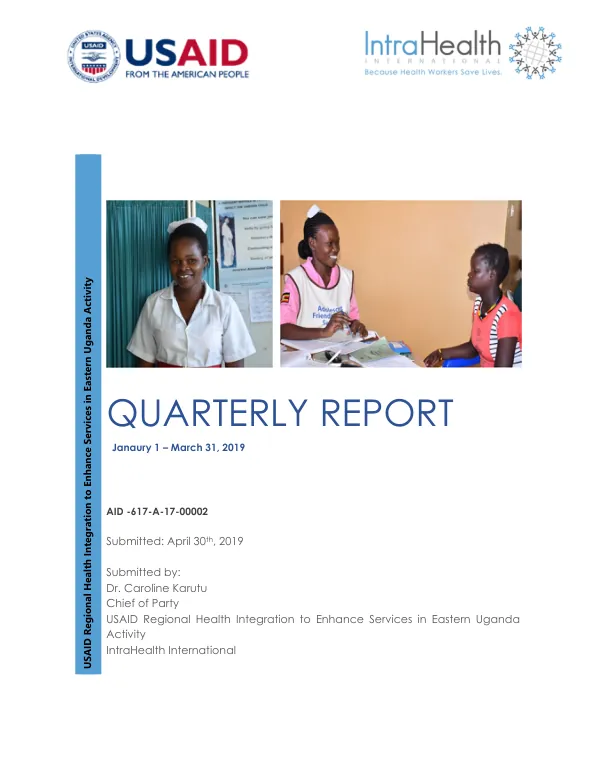
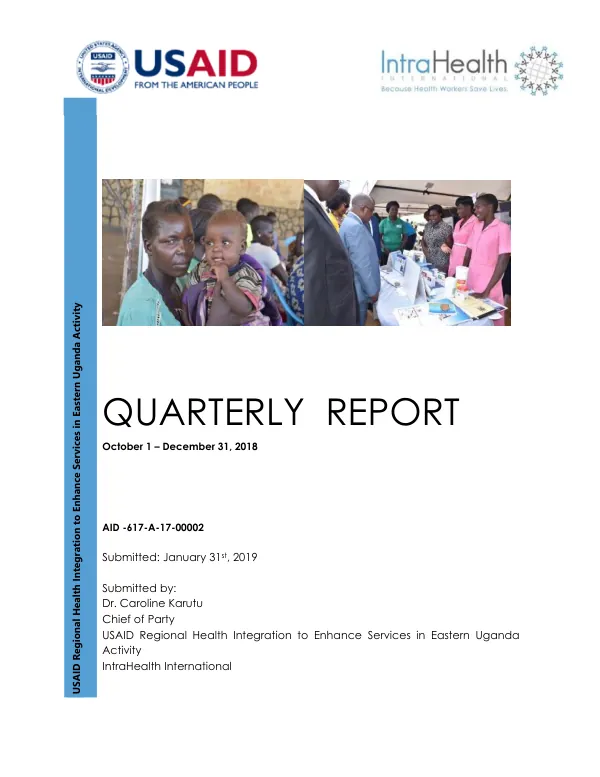
USAID RHITES-E Quarterly Report
The Regional Health Integration to Enhance Services in Eastern Uganda Activity, funded by the United States Agency for International Development (USAID), aims to improve the availability and access to health services in Eastern Uganda.
2018 · 194 pages
Sign in to readA free account is required to download.
Abstract
The activity is implemented by IntraHealth International and focuses on strengthening the health system, improving the quality of care, and increasing the availability of health services. The activity is guided by the Country Development Cooperation Strategy (CDCS) and the Health Sector Development Plan (HSDP). The main purpose of the activity is to increase the availability and access to health services, particularly for key and priority populations, including women, children, and people living with HIV/AIDS. The activity also aims to improve the quality of care and reduce maternal and child mortality rates. The activity is implemented in 13 districts in Eastern Uganda, with a focus on improving the availability and access to health services, particularly in rural areas. The activity is implemented through a collaborative approach, involving the Ministry of Health, district health teams, and community-based organizations. The activity also involves the use of technology, including mobile health platforms and geographic information systems, to improve the availability and access to health services. The activity has made significant progress in improving the availability and access to health services, particularly for key and priority populations. The activity has increased the availability of health services, including antenatal care, delivery services, and post-natal care. The activity has also improved the quality of care, particularly in rural areas, through the provision of training and equipment to health workers. The activity has also made significant progress in improving the availability and access to HIV/AIDS services, particularly for key and priority populations. The activity has increased the availability of HIV testing and counseling services, as well as antiretroviral therapy (ART) services. The activity has also improved the quality of care, particularly in rural areas, through the provision of training and equipment to health workers. The activity has also made significant progress in improving the availability and access to family planning services, particularly for key and priority populations. The activity has increased the availability of family planning services, including modern contraceptive methods, and has improved the quality of care, particularly in rural areas, through the provision of training and equipment to health workers. The activity has also made significant progress in improving the availability and access to maternal and child health services, particularly for key and priority populations. The activity has increased the availability of maternal and child health services, including antenatal care, delivery services, and post-natal care, and has improved the quality of care, particularly in rural areas, through the provision of training and equipment to health workers. The activity has also made significant progress in improving the availability and access to tuberculosis (TB) services, particularly for key and priority populations. The activity has increased the availability of TB services, including diagnosis and treatment, and has improved the quality of care, particularly in rural areas, through the provision of training and equipment to health workers. The activity has also made significant progress in improving the availability and access to malaria services, particularly for key and priority populations. The activity has increased the availability of malaria services, including diagnosis and treatment, and has improved the quality of care, particularly in rural areas, through the provision of training and equipment to health workers. The activity has also made significant progress in improving the availability and access to reproductive health services, particularly for key and priority populations. The activity has increased the availability of reproductive health services, including family planning, maternal and child health, and HIV/AIDS services, and has improved the quality of care, particularly in rural areas, through the provision of training and equipment to health workers. The activity has also made significant progress in improving the availability and access to health workforce services, particularly for key and priority populations. The activity has increased the availability of health workforce services, including training and recruitment, and has improved the quality of care, particularly in rural areas, through the provision of equipment and supplies to health workers. The activity has also made significant progress in improving the availability and access to health information systems, particularly for key and priority populations. The activity has increased the availability of health information systems, including the District Health Information Software 2 (DHIS2), and has improved the quality of care, particularly in rural areas, through the provision of training and equipment to health workers. The activity has also made significant progress in improving the availability and access to health financing services, particularly for key and priority populations. The activity has increased the availability of health financing services, including the National Health Insurance Scheme, and has improved the quality of care, particularly in rural areas, through the provision of training and equipment to health workers. The activity has also made significant progress in improving the availability and access to health governance services, particularly for key and priority populations. The activity has increased the availability of health governance services, including the strengthening of district health management teams, and has improved the quality of care, particularly in rural areas, through the provision of training and equipment to health workers. The activity has also made significant progress in improving the availability and access to health research services, particularly