USAID
Weekly activity updates 1st -5th October 2012
The East African Federation of Freight Forwarders Associations (FEAFFA) provided weekly activity updates from October 1st to 5th, 2012.
2012 · 1 pages
Sign in to readA free account is required to download.
Abstract
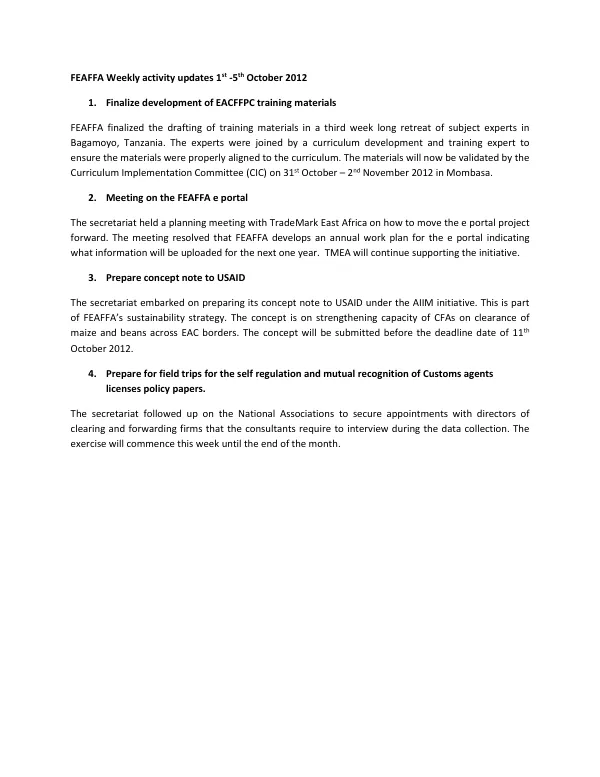
FEAFFA finalized the drafting of training materials in a three-week retreat of subject experts in Bagamoyo, Tanzania. The experts were joined by a curriculum development and training expert to ensure the materials were properly aligned to the curriculum. The materials will be validated by the Curriculum Implementation Committee (CIC) on October 31st to November 2nd, 2012, in Mombasa. The secretariat held a planning meeting with TradeMark East Africa to discuss the FEAFFA e-portal project. The meeting resolved that FEAFFA develops an annual work plan for the e-portal, indicating what information will be uploaded for the next year. TradeMark East Africa will continue supporting the initiative. This development aims to enhance the efficiency and effectiveness of the e-portal. FEAFFA's secretariat embarked on preparing a concept note to USAID under the African Initiative for Investment and Market (AIIM) initiative. This is part of FEAFFA's sustainability strategy, focusing on strengthening the capacity of Customs and Freight Associations (CFAs) on clearance of maize and beans across East African borders. The concept note is to be submitted before the deadline date of October 11th, 2012. The secretariat also followed up on securing appointments with directors of clearing and forwarding firms for the consultants to interview during data collection for the self-regulation and mutual recognition of Customs agents' licenses policy papers. The exercise will commence this week and continue until the end of the month. This effort aims to gather valuable insights and information to inform policy development. The FEAFFA secretariat's activities during this period demonstrate a commitment to capacity building, policy development, and sustainability. The organization's efforts to strengthen its training materials, e-portal, and policy frameworks are crucial to enhancing the efficiency and effectiveness of customs clearance processes in the East African region.
Related documents