USAID DEC
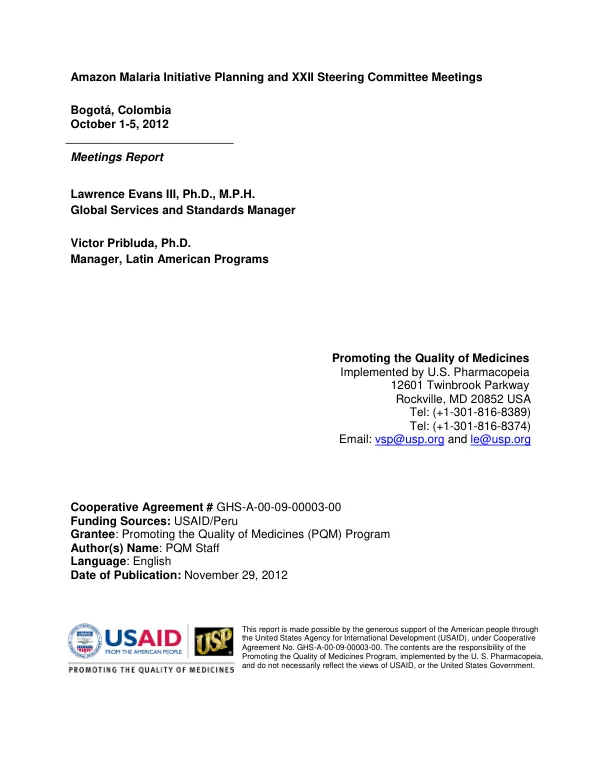
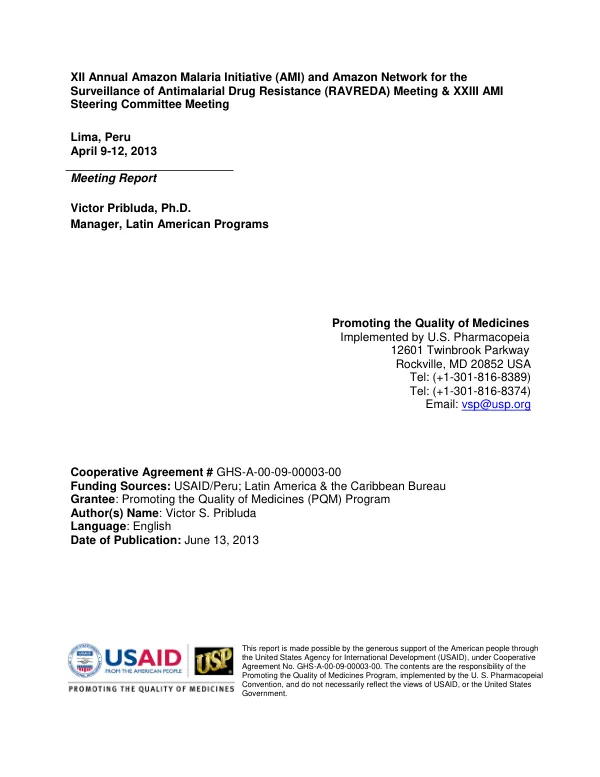
XII Annual Amazon Malaria Initiative (AMI) and Amazon Network for the Surveillance of Antimalarial Drug Resistance (RAVREDA) Meeting & XXIII AMI Steering Committee Meeting
Sign inPAN AMERICAN WORLD HEALTH ORGANIZATION
XII Annual Amazon Malaria Initiative (AMI) and Amazon Network for the Surveillance of Antimalarial Drug Resistance (RAVREDA) Meeting & XXIII AMI Steering Committee Meeting
The Amazon Malaria Initiative (AMI) and Amazon Network for the Surveillance of Antimalarial Drug Resistance (RAVREDA) Meeting & XXIII AMI Steering Committee Meeting took place in Lima, Peru, from April 9-12, 2013.
2013 · 28 pages
Sign in to readA free account is required to download.
Abstract
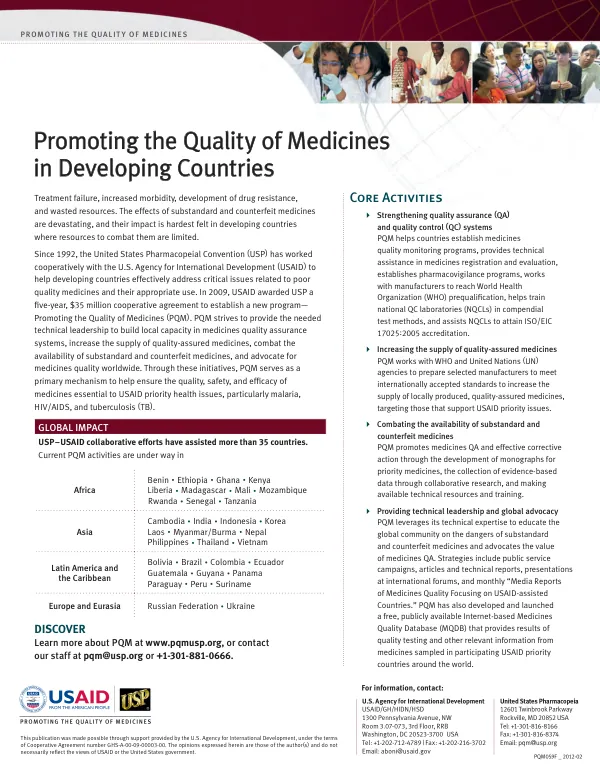
The purpose of the joint meetings was to allow partners to exchange information about achievements, contributions, and lessons learned related to malaria control efforts in the Latin America and Caribbean region. The meetings also provided a platform for partners to discuss visions for the future of AMI. Country and international partners participated in the meetings, including representatives from Bolivia, Brazil, Colombia, Ecuador, Guyana, Peru, and Suriname. The meetings were attended by the Promoting the Quality of Medicines (PQM) program staff, who met one-on-one with country representatives to discuss current activities and begin planning FY 2014 activities. The PQM program, funded by the U.S. Agency for International Development (USAID), provides technical assistance to ensure the availability of good quality medicines and strengthen quality assurance and quality control (QA/QC) systems in participating countries. The program has been providing assistance to AMI since 2001, first through the USP Drug Quality and Information (DQI) program and, currently, through the PQM program. During the meetings, PQM gave four presentations, including a summary of antimalarials quality monitoring in AMI and the status of the three-level approach implementation. The presentations elicited great interest, particularly given the apparent onset of resistance to artemisinin derivatives, as reported by Guyana and Suriname. USAID recommended that PQM prepare policy briefs that summarize program results and recommendations for distribution among AMI stakeholders. The XXIII AMI Semi-annual Steering Committee Meeting was held on April 12, 2013, and the main points addressed during the meeting included PQM and other partners presenting their activities and accomplishments, as well as discussing future plans, strategic approaches, and other pertinent issues. The meeting also focused on concerns arising from the reemergence or increased number of malaria cases in certain countries, as well as the apparent resistance to artemisinin derivatives in the Americas. The meetings highlighted the importance of collaboration and coordination among international partners and country stakeholders to prevent and control malaria in the region. The PQM program continues to play a crucial role in ensuring the availability of good quality medicines and strengthening QA/QC systems in participating countries. The Promoting the Quality of Medicines (PQM) program is the successor of the Drug Quality and Information (DQI) program implemented by the United States Pharmacopeia (USP). PQM is USAID's response to the growing challenge posed by the proliferation of counterfeit and substandard medicines. By providing technical assistance to developing countries, PQM helps build local capacity in medicine quality assurance systems, increase the supply of quality medicines to priority USAID health programs, and ensure the quality and safety of medicines globally. The PQM program has been providing assistance to AMI since 2001, first through the USP Drug Quality and Information (DQI) program and, currently, through the PQM program. PQM provides assistance to ensure the availability of good quality medicines and strengthen quality assurance and quality control (QA/QC) systems in participating countries. The program has been working closely with international partners and country stakeholders to prevent and control malaria in the region. The meetings also highlighted the importance of addressing the concerns arising from the reemergence or increased number of malaria cases in certain countries, as well as the apparent resistance to artemisinin derivatives in the Americas. The PQM program continues to play a crucial role in ensuring the availability of good quality medicines and strengthening QA/QC systems in participating countries. The PQM program has been working closely with international partners and country stakeholders to prevent and control malaria in the region. The program has been providing technical assistance to ensure the availability of good quality medicines and strengthen QA/QC systems in participating countries. The PQM program continues to play a crucial role in ensuring the quality and safety of medicines globally.
Related documents